Keeping Up With Changing Childcare Laws
Childcare compliance isn't just about following rules—it's about building systematic approaches that protect children, support staff, and ensure your center's long-term viability. Today, childcare centers across North America face an increasingly complex regulatory landscape, with new health and safety protocols, updated licensing requirements, and evolving educational standards emerging regularly.
The stakes have never been higher. Non-compliance can result in hefty fines, license suspension, or even closure — our guide on common childcare licensing pitfalls covers the violations that most often lead to trouble. More importantly, regulatory frameworks exist to ensure the highest quality care for the children in your program. For childcare centers looking to build robust compliance management systems, this comprehensive guide provides actionable strategies, implementation timelines, and professional development frameworks that work for both US and Canadian childcare providers.
Understanding the Current Compliance Landscape
The Evolving Regulatory Environment
Childcare regulations have undergone significant changes in recent years, driven by:
- Enhanced health and safety protocols following pandemic-related updates
- Increased focus on inclusive education and accessibility requirements
- Stricter background check procedures for staff and volunteers
- Updated nutrition and meal service standards reflecting current dietary guidelines
- Technology integration requirements for record-keeping and communication
- Mental health and trauma-informed care requirements in select jurisdictions
Geographic Variations and Considerations
United States: Childcare regulations vary significantly by state, with federal guidelines providing minimum standards through the Child Care and Development Block Grant Act. States may impose additional requirements for licensing, staff qualifications, and facility standards.
Canada: Provincial and territorial governments regulate childcare, with each jurisdiction having distinct licensing requirements, staff qualification standards, and operational guidelines. For new owners, our complete guide to navigating childcare regulations breaks down the federal-provincial framework in detail. The Canada-wide Early Learning and Child Care (CWELCC) system has introduced new compliance requirements in participating provinces, including the CAD $22/day fee cap effective January 1, 2025.
Common Compliance Challenges Facing Centers
- Information Overload: Difficulty tracking changes across multiple regulatory sources
- Staff Turnover Impact: New employees requiring immediate compliance training
- Resource Constraints: Limited time and budget for compliance management
- Documentation Requirements: Maintaining accurate records across multiple systems
- Cross-Jurisdictional Operations: Centers operating in multiple states or provinces
Building Your Compliance Management System
Phase 1: Assessment and Foundation (Weeks 1-2)
Current State Analysis
Before implementing new systems, conduct a comprehensive compliance audit:
Documentation Review:
- Collect all current policies and procedures
- Review staff qualification records
- Examine facility inspection reports
- Assess training documentation
- Analyze incident and accident reports
Regulatory Mapping:
- Identify all applicable federal/national regulations
- List state/provincial requirements
- Note local municipal bylaws and zoning requirements
- Document specialized program requirements (if applicable)
Gap Analysis:
- Compare current practices to regulatory requirements
- Identify areas of non-compliance or risk
- Prioritize gaps based on potential impact and regulatory authority
- Create timeline for addressing deficiencies
Stakeholder Engagement
Staff Input Sessions:
- Conduct anonymous surveys about compliance challenges
- Hold focus groups with different staff levels
- Document current informal compliance practices
- Identify staff champions for compliance initiatives
Parent and Family Considerations:
- Review family handbook alignment with regulations
- Assess communication methods for regulatory updates
- Consider family notification requirements for policy changes
Phase 2: System Design and Implementation (Weeks 3-8)
Information Management Framework
Regulatory Tracking System:
Create a centralized system for monitoring regulatory changes:
- Primary Sources:
- State/provincial licensing departments
- Health department regulations
- Education ministry updates
- Municipal zoning and fire safety requirements
- Information Organization:
- Categorize by compliance area (health, safety, education, etc.)
- Priority levels based on implementation timelines
- Impact assessment for each regulatory change
- Implementation cost and resource requirements
- Alert and Notification Systems:
- Set up Google Alerts for key regulatory terms
- Subscribe to official government newsletters
- Join professional association mailing lists
- Create internal notification protocols
Policy and Procedure Development
Policy Framework Structure:
- Core Policy Areas:
- Health and safety protocols
- Staff qualification and training requirements
- Child protection and reporting procedures
- Nutrition and meal service guidelines
- Emergency preparedness and response
- Inclusion and accessibility accommodations
- Policy Update Process:
- Regular review schedule (quarterly minimum)
- Change approval workflow
- Staff notification and training requirements
- Family communication protocols
- Documentation and record-keeping procedures
- Implementation Guidelines:
- Step-by-step procedures for each policy
- Role-specific responsibilities
- Training requirements and timelines
- Monitoring and evaluation methods
- Corrective action procedures
Phase 3: Staff Training and Development (Weeks 6-12)
Comprehensive Training Program Design
Initial Compliance Training:
New staff orientation should include:
- Overview of regulatory framework
- Center-specific policies and procedures
- Role-specific compliance responsibilities
- Documentation and reporting requirements
- Emergency procedures and protocols
Ongoing Professional Development:
- Monthly Compliance Updates:
- Review recent regulatory changes
- Discuss implementation challenges
- Share best practices and solutions
- Practice new procedures and protocols
- Quarterly Deep-Dive Sessions:
- Focus on specific compliance areas
- Invite guest speakers (licensing officials, lawyers)
- Conduct scenario-based training
- Update policies and procedures
- Annual Compliance Review:
- Comprehensive policy review
- Staff competency assessments
- System effectiveness evaluation
- Planning for upcoming regulatory changes
Training Documentation and Tracking
Individual Training Records:
- Track completion of required training modules
- Document competency assessments
- Maintain continuing education records
- Note specialized certifications and renewals
Program-Wide Training Metrics:
- Training completion rates by topic area
- Staff feedback and evaluation scores
- Compliance incident trends post-training
- Cost-benefit analysis of training investments
Technology Integration for Compliance Management
Digital Documentation Systems
Centralized Record Keeping:
Modern childcare management systems like KidzLog can streamline compliance documentation by:
- Automated Staff Tracking: Monitor certification expiration dates and training requirements
- Incident Documentation: Standardized reporting forms with automatic submission to authorities
- Parent Communication: Ensure families receive required notifications and updates
- Inspection Readiness: Generate compliance reports and documentation packages quickly
Cloud-Based Policy Management:
- Centralized policy storage with version control
- Automated staff notifications for policy updates
- Digital signature capabilities for acknowledgment tracking
- Integration with training modules and assessments
Compliance Monitoring Tools
Dashboard and Reporting Features:
- Real-Time Compliance Status:
- Visual indicators for compliance areas
- Upcoming deadline notifications
- Non-compliance risk assessments
- Corrective action tracking
- Regulatory Change Alerts:
- Customizable notification preferences
- Impact assessment tools
- Implementation timeline planning
- Cost estimation capabilities
- Audit Trail Management:
- Complete documentation history
- Change logs and approval records
- Training completion verification
- Inspection preparation tools
Professional Development and Compliance Leadership
Building Compliance Expertise
Individual Professional Development
Compliance Officer Training:
- Regulatory interpretation and analysis
- Risk assessment and management
- Policy development and implementation
- Staff training and development
- Communication and stakeholder engagement
Continuing Education Opportunities:
- Professional association conferences
- Webinar series on regulatory updates
- University courses in early childhood administration
- Legal workshops for childcare providers
Organizational Capacity Building
Internal Expertise Development:
- Cross-train multiple staff in compliance areas
- Create compliance mentorship programs
- Develop internal resource libraries
- Establish peer review processes
External Partnership Building:
- Build relationships with licensing officials
- Connect with legal professionals specializing in childcare
- Join director networks and professional associations
- Participate in community compliance initiatives
Assessment and Documentation Strategies
Compliance Monitoring Framework
Regular Assessment Schedule:
- Daily Operations Checks:
- Staff-to-child ratios
- Health and safety protocols
- Required documentation completion
- Incident and accident reporting
- Weekly Compliance Reviews:
- Policy adherence spot checks
- Training completion updates
- Regulatory deadline monitoring
- Corrective action progress
- Monthly Comprehensive Audits:
- Complete facility inspection
- Staff qualification verification
- Documentation completeness review
- Family communication compliance
Success Metrics and Key Performance Indicators
Quantitative Measures:
- Zero compliance violations during inspections
- 100% staff training completion rates
- Reduced time to implement regulatory changes
- Decreased compliance-related incidents
Qualitative Indicators:
- Staff confidence in compliance procedures
- Positive feedback from licensing officials
- Smooth inspection processes
- Enhanced family trust and satisfaction
Staying Ahead: Emerging Trends
Emerging Trends in Childcare Regulation
Technology and Digital Requirements
Electronic Record Keeping:
- Emerging digital documentation practices
- Cloud storage security requirements
- Data privacy and protection protocols
- Integration with government reporting systems
Communication Technology Standards:
- Required parent communication platforms
- Emergency notification system requirements
- Digital consent and authorization processes
- Social media and digital safety policies
Enhanced Health and Safety Protocols
Mental Health and Wellness Standards:
- Trauma-informed care training requirements
- Mental health screening and support protocols
- Staff wellness program mandates
- Family mental health resource provisions
Environmental Health Regulations:
- Air quality monitoring requirements
- Chemical safety and green cleaning standards
- Outdoor space quality specifications
- Sustainability and environmental education mandates
Preparing for Future Regulatory Changes
Proactive Planning Strategies
Trend Analysis and Monitoring:
- Track legislative developments at all government levels
- Monitor court decisions affecting childcare regulations
- Follow research developments in child development and safety
- Engage with professional associations on emerging issues
Capacity Building for Change:
- Develop change management capabilities
- Build financial reserves for compliance investments
- Create flexible policy frameworks that can adapt quickly
- Establish relationships with implementation support resources
Innovation and Best Practice Development
Leading Practice Implementation:
- Adopt best practices before they become requirements
- Pilot innovative approaches to compliance challenges
- Share successful strategies with the broader childcare community
- Contribute to regulatory development through public consultation
Continuous Improvement Framework:
- Regular review and update of compliance systems
- Staff feedback integration for system improvements
- Technology upgrade planning and implementation
- Performance measurement and optimization
Common Challenges and Solutions
Challenge 1: Information Overload
Problem: Too many regulatory sources and updates to track effectively.
Solutions:
- Implement a tiered information system focusing on primary sources first
- Assign specific staff members to monitor different regulatory areas
- Use technology tools to aggregate and filter regulatory updates
- Create summary reports highlighting only actionable changes
Challenge 2: Resource Constraints
Problem: Limited time and budget for compliance management activities.
Solutions:
- Prioritize compliance investments based on risk assessment
- Leverage free resources from professional associations and government agencies
- Share compliance costs through collaborative purchasing or shared services
- Integrate compliance activities into existing operational routines
Challenge 3: Staff Resistance to Change
Problem: Staff reluctance to adopt new compliance procedures.
Solutions:
- Involve staff in developing compliance solutions
- Clearly communicate the reasons behind regulatory requirements
- Provide adequate training and support for new procedures
- Recognize and reward compliance excellence
Challenge 4: Maintaining Documentation Quality
Problem: Inconsistent or incomplete compliance documentation.
Solutions:
- Implement standardized documentation templates
- Use technology tools with built-in compliance checks
- Conduct regular documentation quality reviews
- Provide ongoing training on documentation best practices
Implementation Timeline and Action Plan
Month 1: Foundation Building
- Week 1-2: Conduct comprehensive compliance audit
- Week 3-4: Design compliance management system framework
Month 2: System Development
- Week 1-2: Implement information tracking systems
- Week 3-4: Develop or update policies and procedures
Month 3: Training and Launch
- Week 1-2: Conduct initial staff training programs
- Week 3-4: Launch compliance monitoring systems
Months 4-6: Optimization and Refinement
- Monthly: Review system effectiveness and make adjustments
- Quarterly: Conduct comprehensive compliance assessments
Ongoing: Continuous Improvement
- Annual: Complete system review and strategic planning
- Continuous: Monitor regulatory changes and update systems
Key Implementation Points
Start small and build systematically:
- Begin with one compliance area and expand gradually
- Focus on high-risk areas first
- Use proven systems before creating custom solutions
Engage your entire team:
- Make compliance everyone's responsibility
- Provide regular training and updates
- Create a culture of continuous improvement
Leverage technology effectively:
- Choose integrated systems that reduce administrative burden
- Automate routine compliance tasks where possible
- Use data analytics to identify trends and improvement opportunities
Build external relationships:
- Maintain open communication with licensing officials
- Network with other childcare providers for best practice sharing
- Engage legal and professional advisory services when needed
Plan for sustainability:
- Build compliance costs into your annual budget
- Cross-train staff to ensure continuity
- Document all processes for consistency and knowledge transfer
Focus on continuous improvement:
- Regularly assess and refine your compliance systems
- Stay informed about emerging trends and best practices
- Invest in professional development for key compliance staff
Integrate with quality improvement:
- Align compliance activities with program quality goals
- Use compliance requirements as opportunities to enhance services
- Communicate compliance achievements to families and stakeholders
Prepare for inspections proactively:
- Conduct regular self-assessments using official inspection criteria
- Maintain inspection-ready documentation at all times — our guide on how childcare centers stay audit-ready walks through practical strategies
- Train staff on inspection procedures and expectations
Building robust compliance management systems protects your center, staff, and families while ensuring the highest quality care. KidzLog's comprehensive childcare management platform includes integrated compliance tracking, automated documentation, and training management tools to streamline your regulatory adherence efforts.
Ready to Simplify and Organize your Daycare?
Get started with KidzLog today!
KidzLog Team
Related Articles
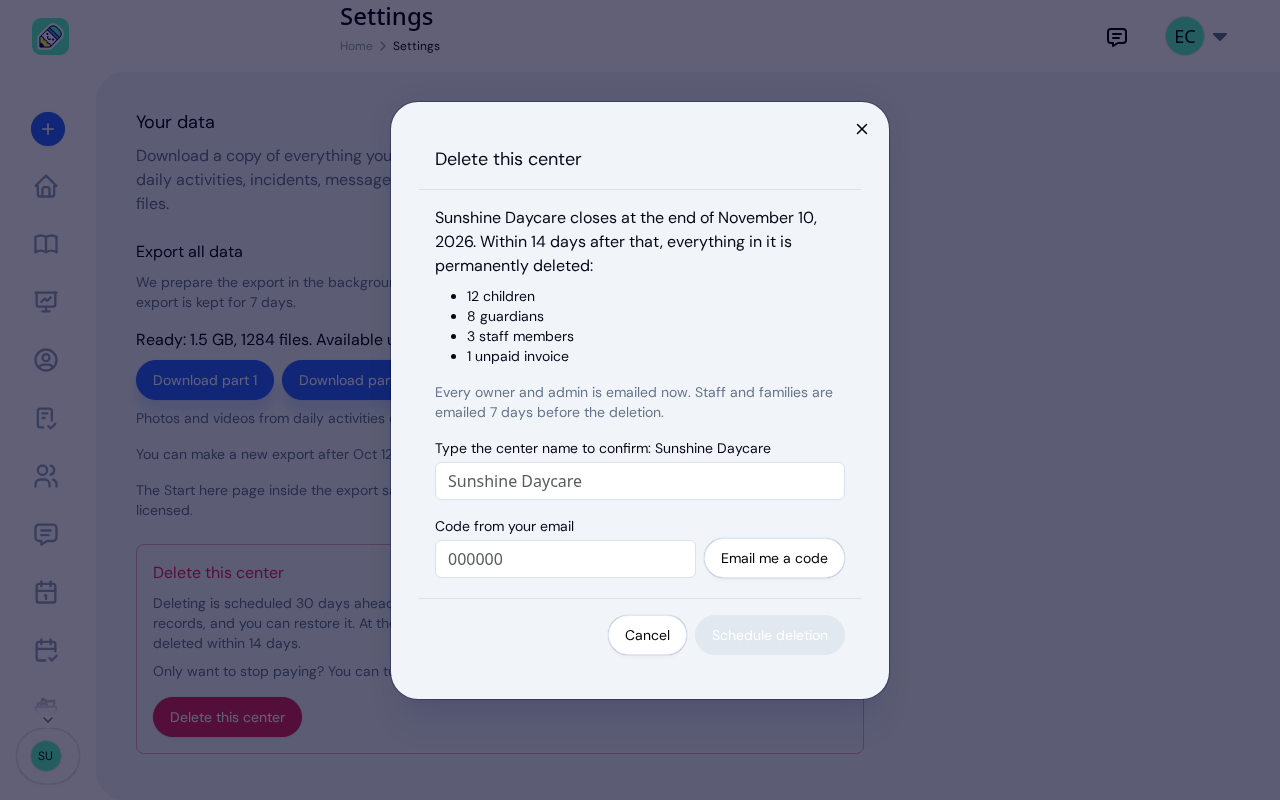
New: Delete Your Center From Settings
Owners can schedule their center's deletion from Settings, keep a full copy of their records, and restore the center...
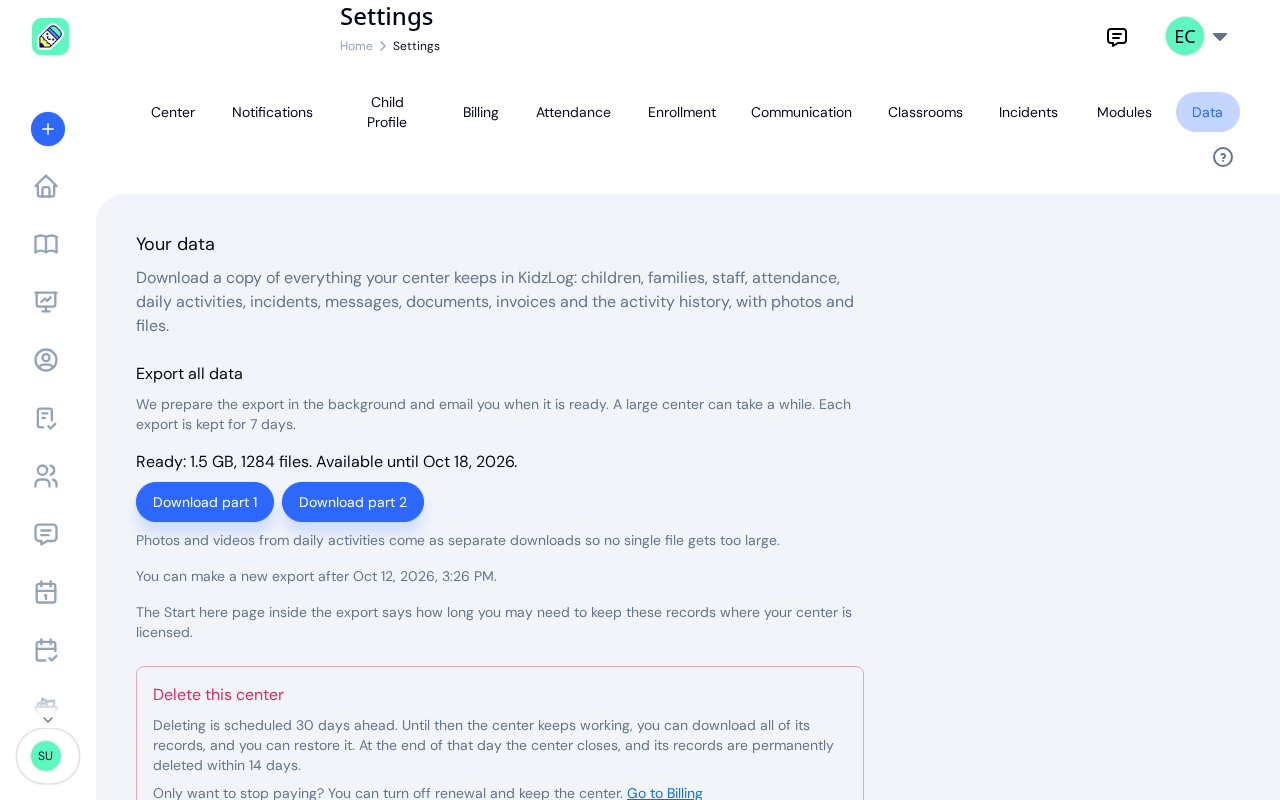
New: Export All of Your Center's Data
Owners can now download everything their center keeps in KidzLog: records as spreadsheets, documents, signatures,...
September Update: Incident Reports and Records
Reopen and correct an approved incident report, choose when parents get the email, send families a note on declined...