What Texas requires on a daycare incident report
Texas gives you the form. A licensed child-care center records serious incidents on Form 7239, Incident or Illness Report, or on its own form if that form holds at least the same information. The director signs it, a parent signs it within 48 hours, and it stays in the child's file for three months after the child leaves. Telling Child Care Regulation is a separate duty, due within two days.
This guide summarizes the Texas HHSC Minimum Standards for Child-Care Centers (Chapter 746, December 2024, revised December 2025) and Form 7239 as of its October 2023 edition. Those documents are the authority, and they change, so check the current versions before relying on any detail here. Home-based operations follow a different chapter, which this guide does not cover.
When a report is required
The standards list five situations that must be recorded on the form:
- an injury that needed medical treatment by a health-care professional, or hospitalization;
- an illness that needed hospitalization;
- an emergency anaphylaxis reaction that needed an unassigned epinephrine auto-injector;
- a child or employee contracting a communicable disease that the Texas Department of State Health Services (DSHS) treats as notifiable;
- any other non-routine situation that placed, or may have placed, a child at risk of injury or harm.
The last one is the broad one. The rule's own examples are forgetting a child in a center vehicle and failing to stop a child wandering away unsupervised. The technical assistance notes printed with the standards add leaving a child unattended in a classroom, letting a child reach hazardous materials, and unsupervised access to water.
Everyday bumps are handled differently. A scraped knee that staff clean and bandage is a less serious injury, and the standards say you tell the parent at pickup. It is not one of the five situations that need Form 7239. Logging them on an internal report is still good practice, and it helps when a parent asks about a pattern later.
What goes on Form 7239
The form has six sections, and which ones you complete depends on what happened. Every report includes Section I (general information) and the two signature sections.
- Injury, or a situation that put a child at risk: Sections I, II, V and VI.
- Illness that needed hospitalization: Sections I, III, V and VI.
- A communicable disease: Sections I, IV, V and VI.
Section I asks for:
- the director's name and your operation number;
- the date and time of the incident or illness;
- whether parents were notified, with the date, the time and who did it;
- whether Child Care Regulation was notified, with the same three details.
Section II, the one most centers use, asks for:
- the child's full name and date of birth, and the caregiver in charge;
- a description of the injury or risk, and how it happened;
- other staff present, and any witnesses;
- whether first aid was given, and what kind;
- whether EMS was called, and at what time;
- whether the child was taken for medical care, and by whom.
Section III, for an illness that needed hospitalization, goes further. It adds medication and dosage, fever and temperature, when medical treatment was received, whether an allergy plan was enacted, the anaphylaxis and auto-injector questions (including whether the auto-injector use was reported to DSHS), whether you called the child's doctor and what they recommended, and the diagnosis or outcome.
Section IV, for a communicable disease, records the disease, whether it requires exclusion, and whether and when the health department was notified. For a communicable disease, the form notes that every family must be told.
Signatures and the 48-hour clock
The caregiver completes the form. The director then signs and dates it, or the person in charge when the director is not available.
From the time of the incident you have 48 hours to give the parent a copy and get their signature confirming they reviewed or received it. Section VI is the parent acknowledgment for exactly this. If you send the report electronically, the form says you may attach a copy of the method used, such as the email.
Telling Child Care Regulation is a separate duty
Filling in the form is record keeping. Notifying Child Care Regulation (CCR) has its own rule and its own clock: as soon as possible, and no later than two days after any of these:
- an injury that needs medical treatment by a health-care professional, or hospitalization;
- an illness that needs hospitalization;
- a notifiable communicable disease in a child or an employee;
- anything that makes all or part of the center unsafe or unsanitary, such as a sewer backup, a flood, fire or storm damage, or no running water;
- any other non-routine situation that places, or may place, a child at risk.
The same rule also covers two non-incident events: the arrest of someone who needs a background check, and a change of controlling person. If a child dies in your care, you notify CCR immediately.
There is one carve-out worth knowing. The two-day notice does not apply when a health-care professional only evaluated the child as a precaution. If you later learn the injury was more serious and did need treatment, you report it then. CCR takes notifications online or by phone at any hour, through the Texas Abuse and Neglect Hotline at 1-800-252-5400, or through your local office during business hours.
Telling parents, and how fast
The standards set the parent's timing by severity:
- Immediately, once the child is safe: an injury needing medical treatment or hospitalization, an illness needing hospitalization, an anaphylaxis reaction needing an unassigned auto-injector, a non-routine situation that put the child at risk, or anything that made the center unsafe. An allegation that a child was abused, neglected or exploited in your care also means telling the parent immediately.
- At pickup: less serious injuries, meaning minor cuts, scratches and bites from other children that needed only first aid from staff.
- In writing within 48 hours, to every family: a notifiable communicable disease in a child or employee. For lice or another infestation, the same 48-hour written notice goes to the families in that group, posted where parents will see it or sent individually.
What you say in those conversations matters as much as how fast you have them. Our guide on what to tell parents after an incident covers the conversation itself.
Where the report lives afterward
Keep the form with the child's record at the center while the child is enrolled, and for at least three months after their last day.
That is the minimum, and you may keep reports longer. A report is easier to defend when it was written promptly and any correction is recorded in the open. Our guides on how to write a daycare incident report and reports you can defend go through what makes one hold up.
Keeping the record in one place
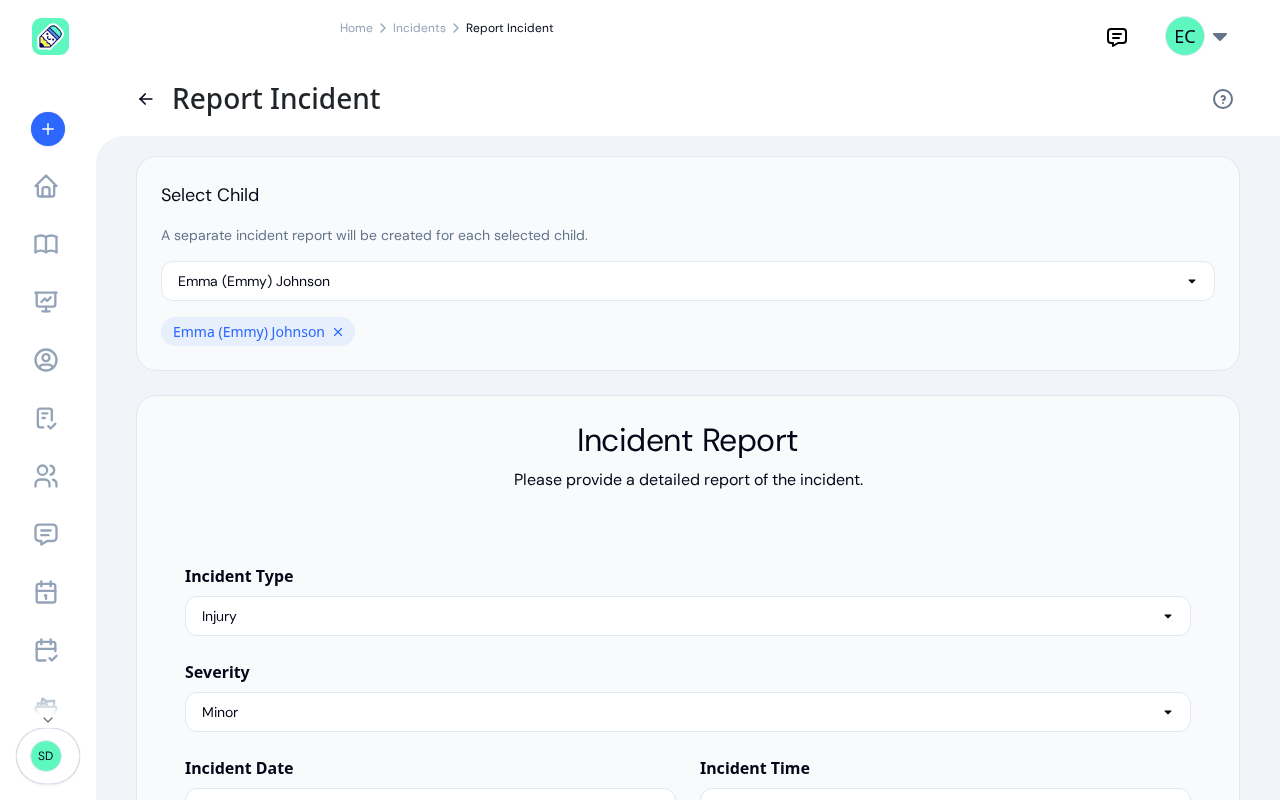
KidzLog's incident reports record what happened, where, the cause, the action taken, whether emergency services were called and when the parent was notified. An owner or admin approves and signs each report before the parent can see it, the parent signs digitally, and every step is timestamped. You can print or export a report when a licensing representative asks for one.
KidzLog's report is its own form, and it does not carry every Form 7239 field: the operation number and the details of notifying Child Care Regulation, for example. A Texas center should check it against the form, or complete Form 7239 alongside it, for the incidents the standards list.
If your center is outside Texas, none of the specifics above carry over. What counts as reportable, who must be told and how long you keep the record all vary by state and province, so check your own licensing standards before using this list.
Ready to Simplify and Organize your Daycare?
Get started with KidzLog today!
KidzLog Team
Related Articles

September Update: Incident Reports and Records
Reopen and correct an approved incident report, choose when parents get the email, send families a note on declined...
New: A Child's Address and Health Care Provider
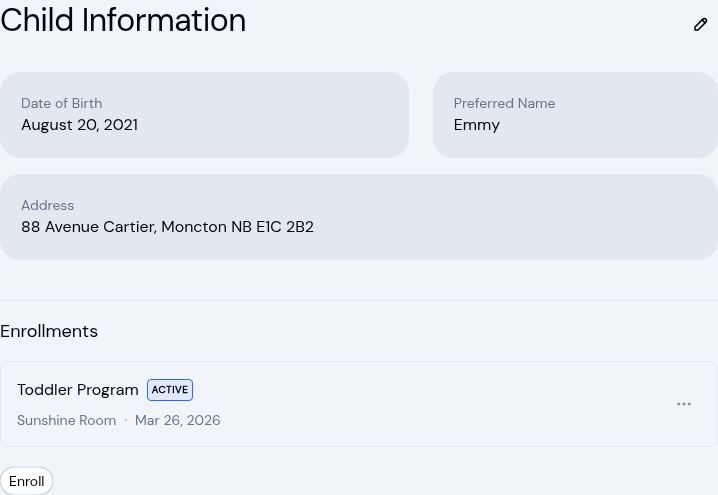
The child record now holds the child's own address and their health care provider. Both show on the profile, in Health...
Sorting your incident log by type and severity
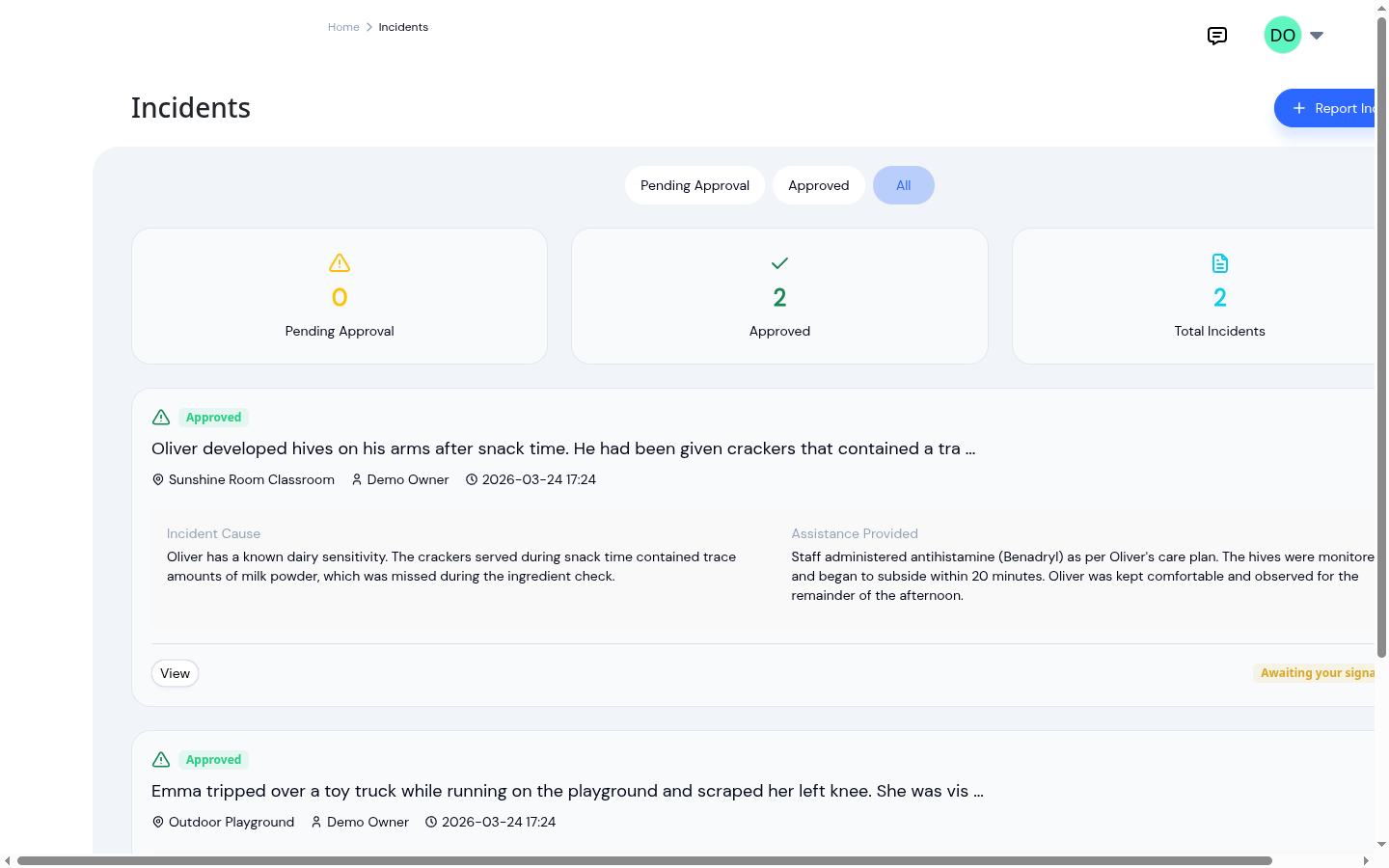
A scraped knee and a reportable reaction look identical in most logs. Sorting by type and severity makes a flat record...