After an incident: what to tell parents and what to put in writing
A child falls off the low climber, bumps a hip, cries, recovers, and is back at play within ten minutes. The teacher writes the report at the next break. The director approves it before the end of the day. At 5:15pm, the parent arrives at the door and the teacher walks over with the report in hand.
The next 90 seconds matter as much as anything else that happened that day.
This guide is for the people on both sides of that 90 seconds: the director planning the conversation policy, and the staff member having the conversation on the day. Most of it applies to small incidents, the scrapes and bumps that make up most of a center's incident log. The same principles apply to the harder ones, with more care around the edges.
Why the conversation and the document do different work
The document is the record. It is what the parent, the doctor, the next teacher, and a future licensing or insurance review will all read. The companion piece on writing a clear, factual incident report covers how to write it well.
The conversation is what the parent will remember. Even if the report is accurate and complete, the parent's view of what happened today is shaped by the short exchange they have at pickup. The order things are said in, the tone, what is offered first.
A careful document with a clumsy conversation feels like the center is hiding behind the form. A warm conversation without a written record leaves the parent reconstructing everything from memory by the weekend. Neither alone is enough.
Plan the conversation before pickup
For directors. The conversation should be planned in the hour after the report is written, not improvised at 5:00. A standard structure helps every staff member do this consistently:
- Who tells the parent (the teacher who was present, the director, or both, depending on severity)
- Where the conversation happens (at the door, in the office, on the phone if pickup is hours away)
- What is said first (what happened, what was done, how the child is now)
- What written record the parent will leave with (the report itself, plus a clear pointer to how they can come back to it)
Write this into your center's standard practice and put it in the staff handbook. It is a one-pager. It is not a script (the words still come from the person who was there) but the order is decided in advance.
For staff. Knowing your director has a decided structure means you can focus on the parent in front of you rather than improvising both what to say and how. If your center doesn't have this written down yet, ask. The thirty minutes it takes a director to write it saves every teacher the work of inventing it on the spot, alone, at the end of a long shift.
What to say, in order
The structure most centers settle on:
- Lead with what happened. Use the same language as the report. "Liam slipped from the third rung of the climber during outdoor play this morning."
- Then what was done immediately. "We sat with him until he was calm, checked for marks, and put ice on his hip for a few minutes. He stood up on his own and was back at play after about ten minutes."
- Then how the child is now. "He had a normal afternoon. He is eating his snack and the area is not bruising as of pickup."
- Then what to watch for tonight. "Please take a look at his hip at bath time. If you see bruising spreading or if he is favoring it tomorrow morning, that is worth a call to your doctor."
- Then hand them the written report. "This is the report; the director has approved it. You will be asked to sign it on your phone when you have a moment tonight."
- Then ask if they have questions. Not the other way around. The parent processes better once they have the facts.
This order is for the small-to-medium incidents. For the more serious ones, the parent is usually being called immediately rather than waiting until pickup, and the order shifts: call as soon as the immediate situation is handled, lead with how the child is right now, then the rest follows.
What to put in writing, what to say only out loud
The report is for what was observed and done. The conversation is for the things that depend on tone.
In writing: time, place, who was involved, what was observed, what was done, the child's condition at writing, parent notification status, what to watch for.
In conversation only: apologies and reassurances, the specifics of how the staff member would handle the same situation next week, anything tied to the writer's personal feeling about the moment. These belong in the spoken exchange, not in the document. Putting them in the document blurs the line between fact and feeling, and the next reader of the report cannot tell which is which.
When to follow up
The conversation at pickup is the first contact, not the only one. Plan for a follow-up.
A short message that evening or the next morning checks in on how the child slept, whether the bruise developed, whether the parent thought of questions later. It is brief: two sentences, not a paragraph. Centers that follow up consistently report fewer of the conversations that go sideways three days later.
For incidents that involve another child (a bite, a behaviour issue), follow up with both families. Keep names anonymous in the report and in the conversation with the other family, per your privacy practice.
For the harder incidents (emergency services called, a child sent to the hospital, anything covered by your center's regulatory reporting requirements) the follow-up plan is longer and usually led by the director. Have the next-day phone call scheduled before the family leaves on the day of the incident.
When the parent's reaction is hard
Most conversations are short. Occasionally a parent reacts strongly: anger, tears, demands. A few principles that help.
Listen first. A parent whose child is hurt is allowed to be upset. The first thirty seconds of the response should be acknowledgment, not explanation. "I can see this is upsetting. Tell me what you're worried about and I will answer."
Stick to the facts in the report. When a conversation escalates, the temptation is to add detail or context to convince the parent. The report has the facts; refer to them and do not invent new ones in the moment.
Offer the director. If you are the staff member, having a clear "I can ask the director to call you tonight to walk through this with you in more depth" is the right next step for a parent who needs more than the pickup window can give.
Document the conversation briefly. A short note appended to the report keeps the record honest and gives the next person who picks up the family context. Something like: "Parent expressed concern at pickup; director to follow up by phone tonight."
For directors building this kind of capability across the team, our guide on creating a parent communication plan for your daycare covers the structural side, including the escalation rules these specific conversations rely on.
How KidzLog supports this
KidzLog's incident reporting is built around the document-and-conversation split.
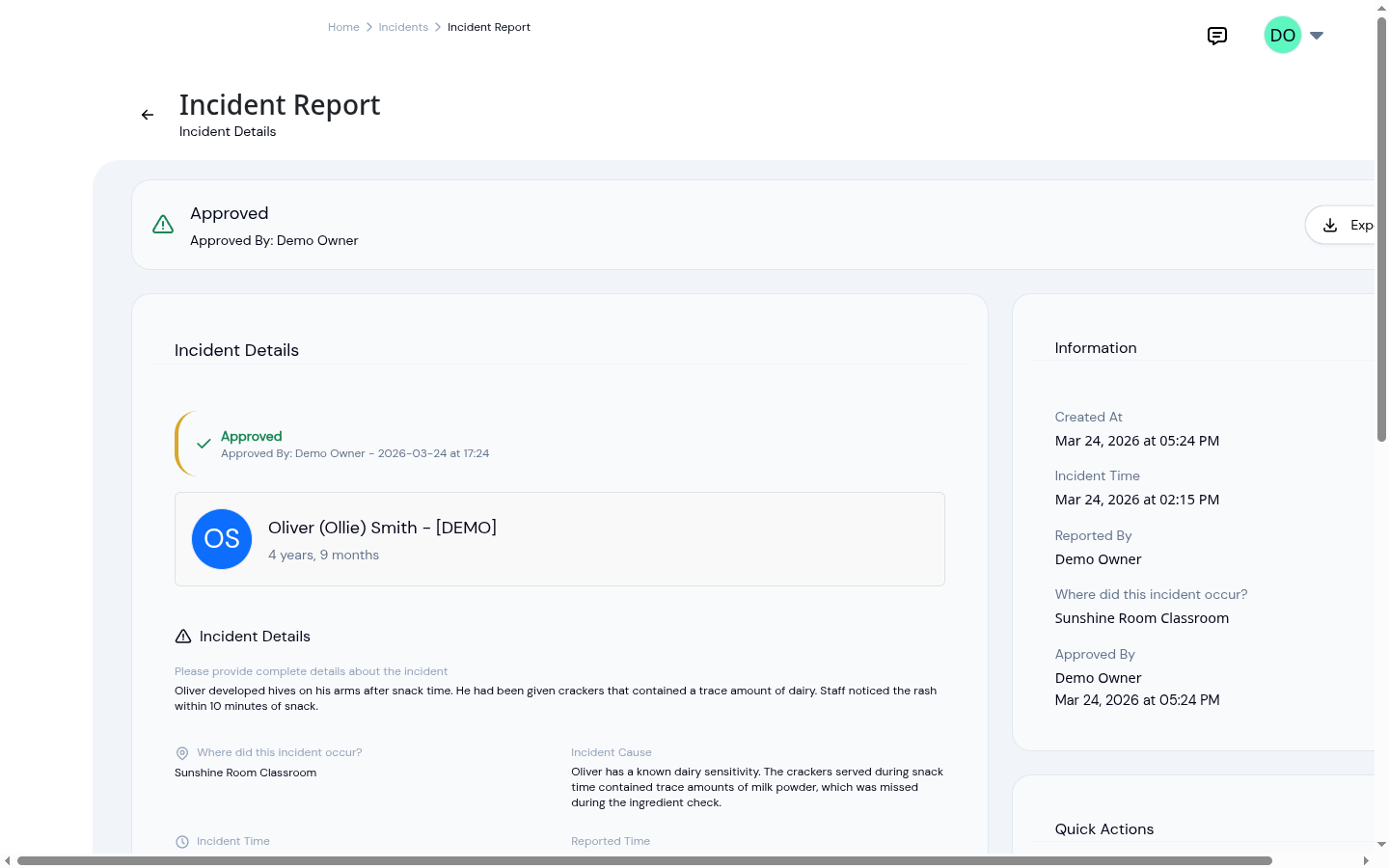
The report is drafted by the staff member who was present, then approved by the director before it reaches the parent. This is the small but useful gate that lets the wording be checked and the conversation be aligned before the parent reads anything in the app. For directors and for staff, it means the version the parent sees has been through one extra set of eyes.
Once approved, the report appears in the parent's portal with an "Awaiting your signature" banner. The parent reads the report, types their name to acknowledge it, and the acknowledgment and timestamp are stored on the same record. This is what the next reader of the file usually needs to know: that the parent received and read the report.
If the follow-up needs to extend beyond pickup, KidzLog's parent communications include a direct message thread per family. A teacher's "checking in on Liam tonight" or a director's call-summary message lives alongside the rest of that family's correspondence, rather than scattered across personal text threads or a center email account no one searches later.
The standard
A parent should leave the conversation knowing what happened, what was done, how their child is now, what to watch for, and that they will see a written report shortly. They should be able to come back to that report when they want to, and to reach the center the next day if anything changes.
For the small incidents that make up most of a center's reporting, that is enough. For the harder ones, the structure is the same and the care around it goes up. The conversation and the document each do part of the work, and doing both well is what families remember.
Ready to Simplify and Organize your Daycare?
Get started with KidzLog today!
KidzLog Team
Related Articles
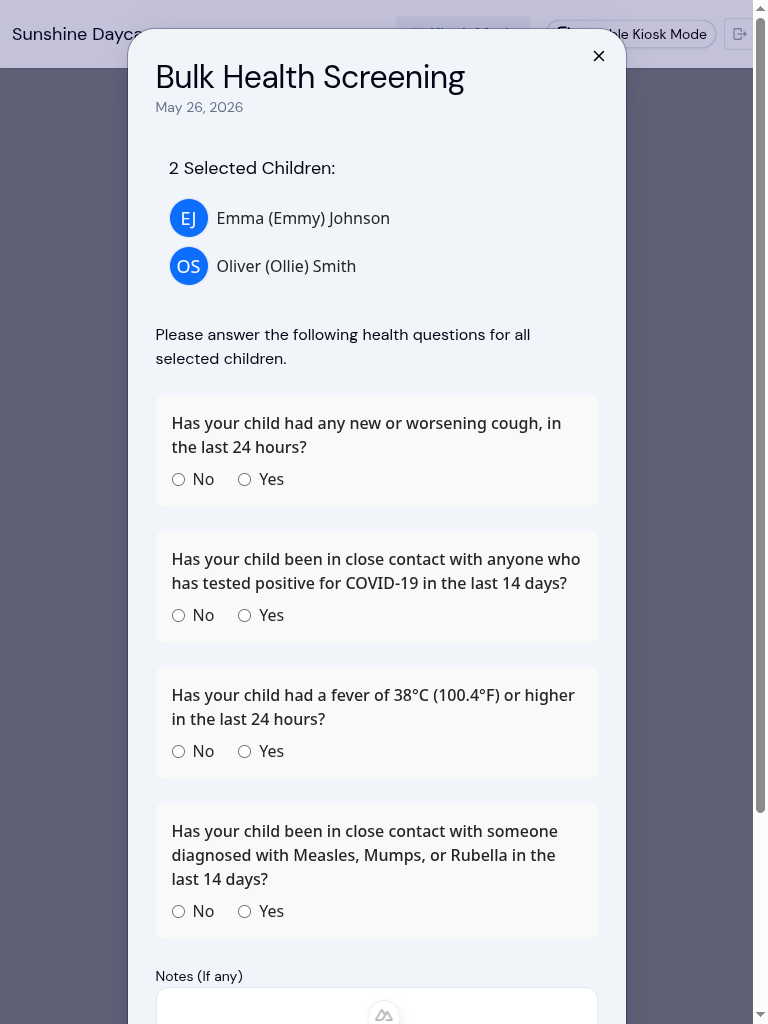
Why daycares ask health questions every morning
What the morning health questions at your daycare are screening for, what happens if you answer yes, and where your...
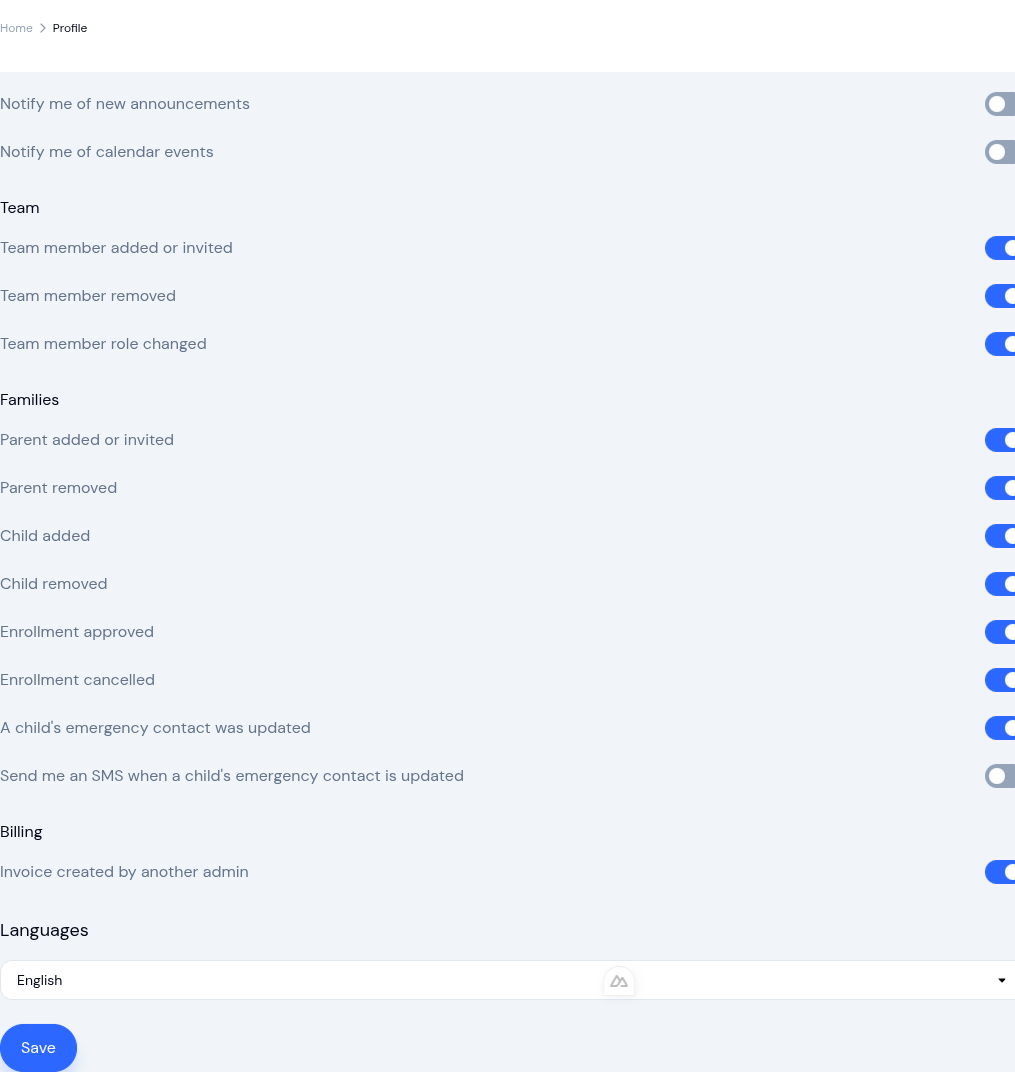
Expanded Notifications for Your Center
New email and text alerts for enrollment changes, classroom assignments, medical updates, and emergency contacts. Each...
September Update: Incident Reports and Records
Reopen and correct an approved incident report, choose when parents get the email, send families a note on declined...