Why your daycare asks health screening questions every morning
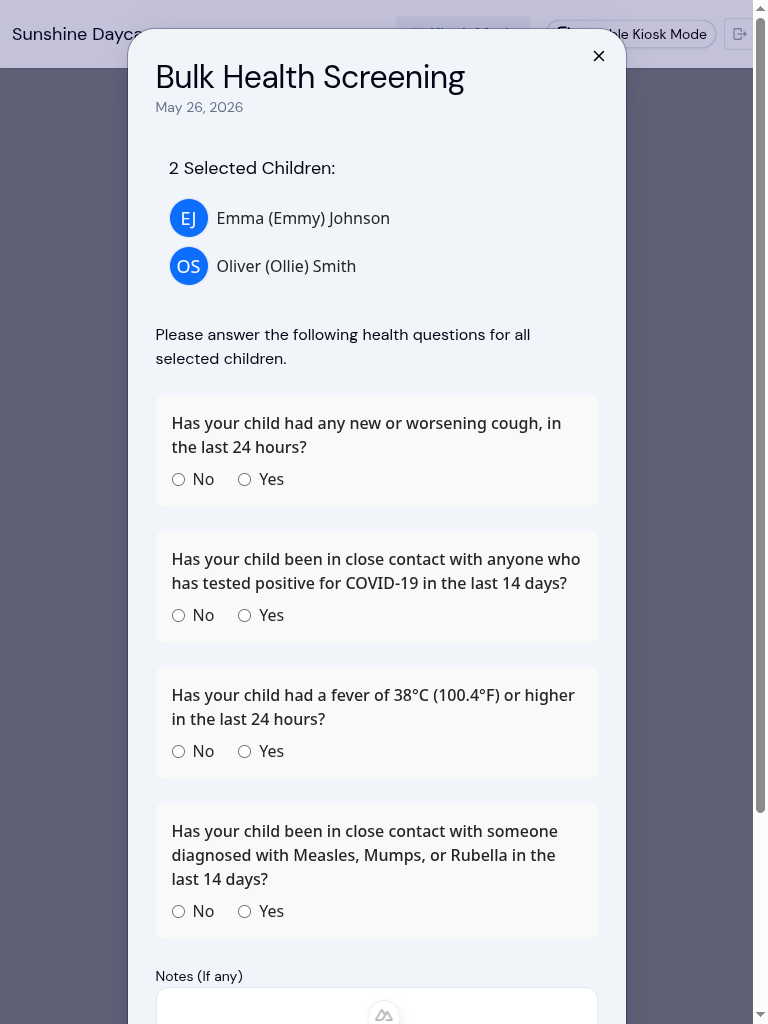
You hand your child their backpack, sign in at the door, and a staff member runs through the same six questions she ran through yesterday. Any fever overnight. Any vomiting. A new cough or rash. Medication this morning. Any known exposure to illness. How is your child today, in general.
By Wednesday, it can feel like a lot. Your child is obviously fine, the answers haven't changed since Monday, and there's a queue behind you.
The questions exist for a reason, and the reason is mostly not about your child as an individual on a given morning. This guide explains what each question is actually screening for, what happens when an answer raises a flag, where your answers go, and what you can do to make the routine faster on a busy morning.
The short answer: it's about the room
A childcare classroom is a small, contained space with a lot of shared surfaces and a lot of hands. One child arriving with the early signs of a stomach virus can mean three or four families dealing with the same thing by the weekend. Catching the signs at the door is the cheapest, kindest infection-control step the center has, for your child and for everyone else in the room.
Daily screening is also a clean record of who arrived with what symptoms on what day. When something does go through the room, public health may need to know when symptoms started and who was present. The morning questions are how that record gets built.
Both of these are about the room. They are not a judgement of your child or your parenting on any given morning.
What each question is actually asking
Reading the questions through the staff member's lens may help. They are asking about the small things that might not have made it into your morning.
Fever in the past 24 hours. This one is about timing more than the moment. A child can be fever-free at 8am after a 38.5°C reading the night before. The 24-hour window catches that, because the contagious window often outlasts the temperature.
Vomiting or diarrhea since yesterday. Same idea. One overnight bout your child seems recovered from can still be the front end of something the room needs to know about.
A new rash, cough, or unusual runniness. "New" is the keyword. Familiar allergies, the cough that has been around for three weeks, the perpetually runny toddler nose: those are knowns. What changed since yesterday is what staff are listening for.
Medication given today. This one is about safety, not about screening for illness. If your child took an antihistamine at 6am and has a reaction at 11am, the staff need to know what is already in their system. If you gave fever-reducer before drop-off, that is useful to know in case the fever returns mid-morning.
Known exposure. A sibling with hand-foot-and-mouth, a sleepover at a cousin's where someone had a stomach bug, a known case in another classroom at another center. These things often play out a few days later, and staff would rather know in advance.
How is your child this morning, in general. This is the parent-only question. Nobody else has been with your child this morning. "She has been a bit clingy and didn't want her usual breakfast" is real information, even when every other answer was no.
What happens if you say yes
This is the part that worries parents the most. Three things, roughly, in order from most common to least.
Most of the time, nothing changes. A small yes — last night's cough, a missed nap, the trailing end of yesterday's runny nose — gets noted and the day carries on. The staff member will likely just check in on your child a couple of times during the morning to make sure things stay on track.
Sometimes, a short conversation. A bigger yes, or two soft yeses together, leads to a 30-second conversation. Has anyone else at home had this? When did the symptoms start? Is there anything you'd like staff to watch for? You and the staff member decide together whether your child stays.
Occasionally, your child goes home. Active fever, recent vomiting, an unexplained new rash, or any of the symptoms on the center's written exclusion list. This is the conversation no parent wants to have at 8:15 on a workday, but the underlying reason is the same as the rest of the screening: keeping your child comfortable and keeping the room healthy. Your center should have a one-page exclusion policy you were given at enrollment that spells out which symptoms send a child home and what is needed before they return.
The pattern across all three is that the question is not really "yes or no" but "yes or no, and then what." Staff will tell you what is being decided.
Where your answers go
The morning answers are recorded against the day's attendance for your child. That record sticks around for a few reasons.
The most common one is the next staff member. If your child has the morning teacher today and a different teacher tomorrow, the screening record tells tomorrow's teacher what to keep an eye on. "Slept poorly, mild cough at drop-off" is useful context even on a day when nothing further happens.
The second is you. If your child develops a fever at 2pm and you take them to the doctor, the morning record is part of the picture you can share. "She was at daycare this morning, answers were all clear, then started feeling warm by lunch" is more useful than "she seemed fine this morning, I think."
The third is public health, in the rare case it matters. If something contagious goes through the room, the local health office may ask when symptoms started across the children who were there. Your center can answer that quickly only if they have been logging the morning answers all along.
Centers are required to keep these kinds of records for a defined retention period that varies by province or state. They are not shared with anyone outside the people who need them for your child's care or for a legitimate public-health request.
What you can do on a busy morning
A few small things make the routine faster.
Mention the small stuff before you are asked. "He slept badly and there is a tooth coming in" upfront is faster than working through the questions to get to the same place.
Tell staff about overnight events even if they seem minor. A single 38°C reading, a bad sleep, a sibling who threw up at midnight. None of these are necessarily reasons to keep your child home, but they are reasons for staff to be a little more attentive during the morning.
Ask about the center's exclusion policy if you do not have it. Knowing in advance which symptoms send a child home means no surprises at drop-off.
If your center offers a way to answer the questions from your phone before you arrive, use it on busier mornings. It shortens the conversation at the door to just the things that need a conversation.
How KidzLog supports this
If your center uses KidzLog for attendance and check-in, the morning screening is part of the same workflow. When the center has it turned on, you can answer the questions from your phone before drop-off, so the staff member just confirms the answers at the door. The questions themselves are written by the center to match their exclusion policy, so what you see on your phone is exactly what they ask in person.
Your answers stay on the day's attendance record and show up in the same activity feed you use to see daily updates, naps, meals, and notes from the room. If something contagious is going through your center, you will usually hear about it through the center's parent communications, often by SMS for time-sensitive notices, so you can watch for symptoms at home.
If your center is curious about the workflow side of this, our companion guide for directors walks through how the morning screening is set up.
One more thing
The questions can feel repetitive, and the staff member may say them on autopilot. The reason centers keep asking is the one morning the answer isn't "no, fine, all good": the morning you forgot about last night's fever, or didn't think the rash was worth mentioning. That is the morning the routine is for.
Ready to Simplify and Organize your Daycare?
Get started with KidzLog today!
KidzLog Team
Related Articles
After an incident: what to tell parents
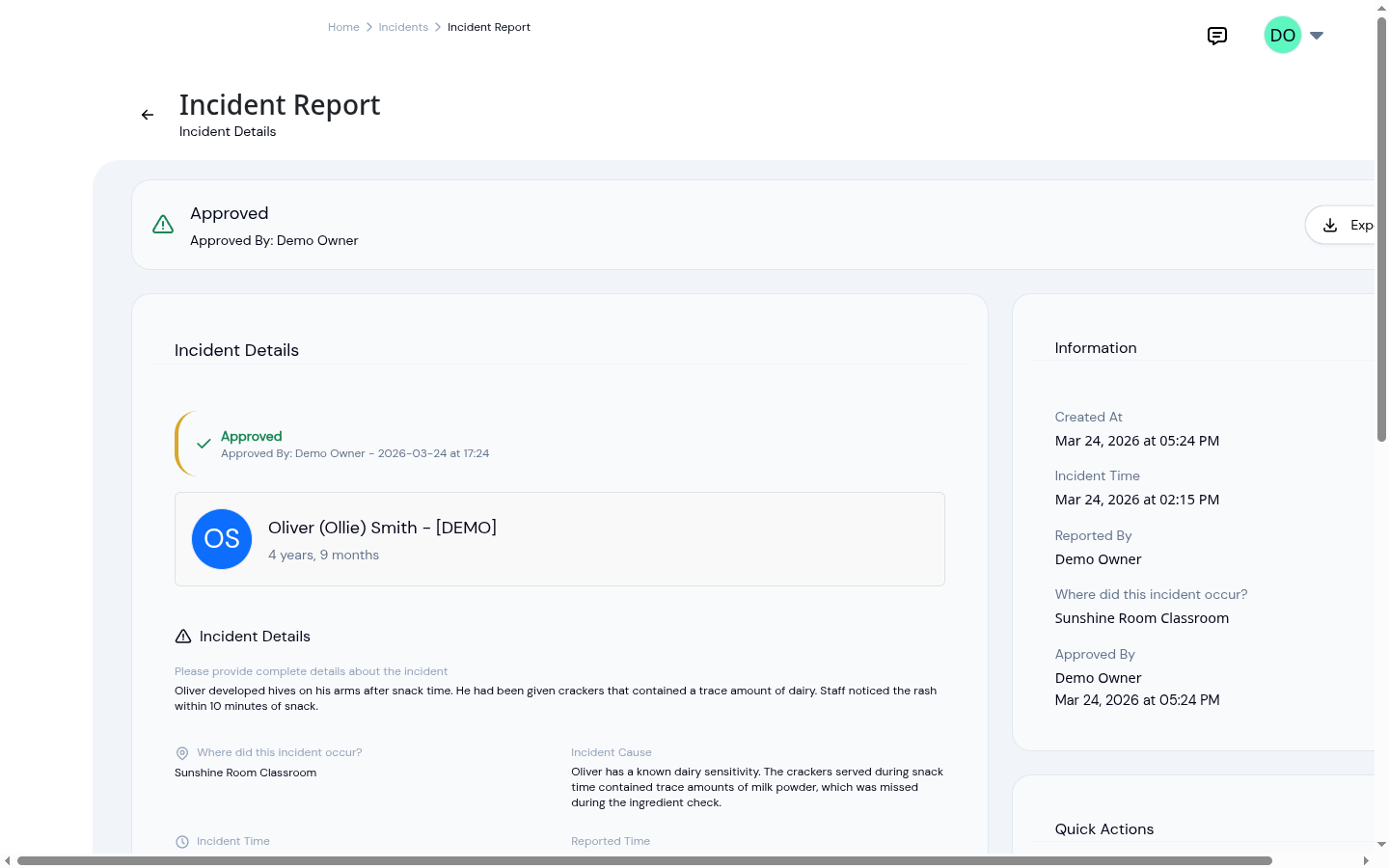
How daycare staff and directors handle the conversation with parents after an incident: what to say at pickup, what to...
Expanded Notifications for Your Center
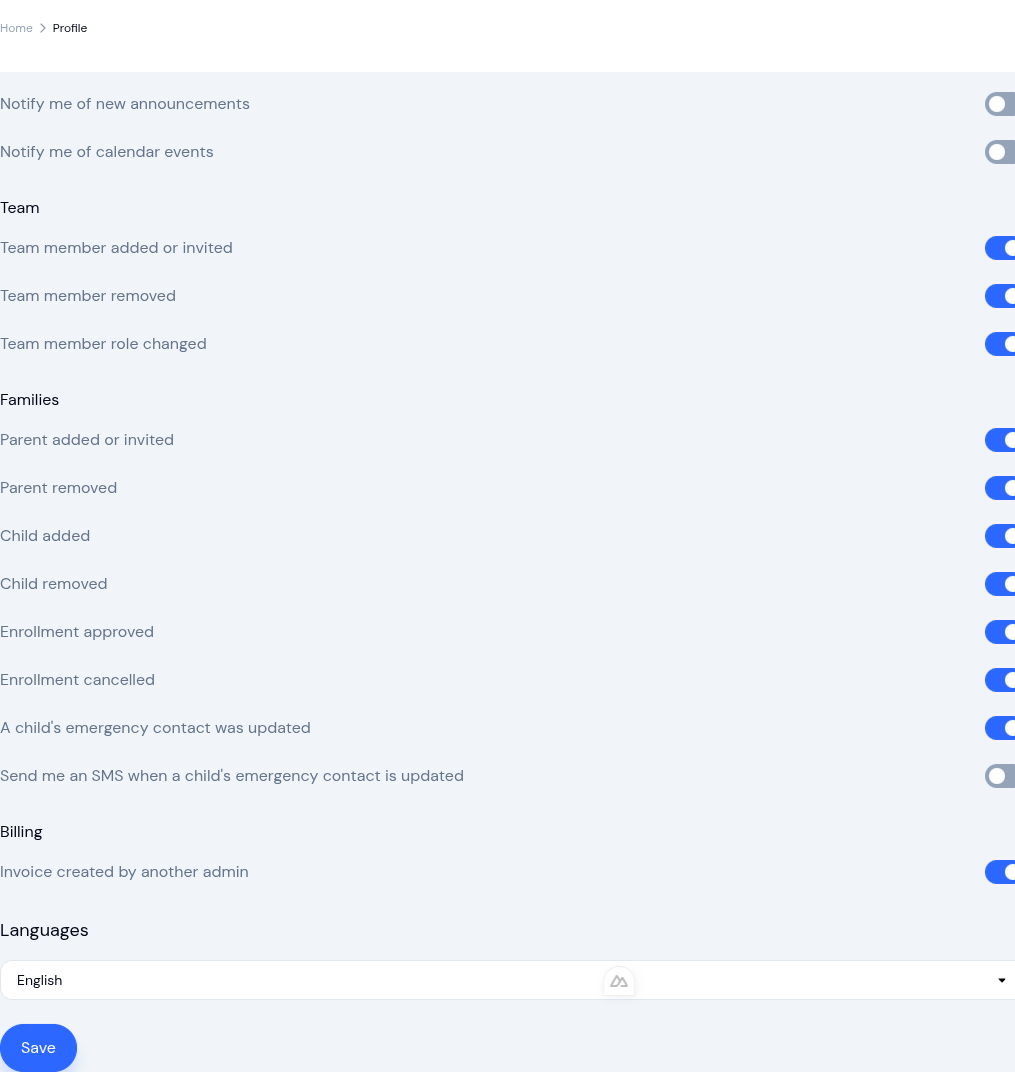
New email and text alerts for enrollment changes, classroom assignments, medical updates, and emergency contacts. Each...
September Update: Incident Reports and Records
Reopen and correct an approved incident report, choose when parents get the email, send families a note on declined...