Childcare Pricing Models Compared
Pricing isn't just about covering costs—it's about building a sustainable business that serves families while ensuring your center thrives financially. Today, childcare centers across North America face unprecedented challenges: rising operational costs, staffing shortages driving up wages, and parents increasingly price-conscious due to economic pressures. Yet centers that master strategic pricing are not only surviving but expanding their impact.
For childcare center directors looking to optimize profitability while maintaining accessibility, this comprehensive guide provides research-backed pricing strategies, implementation frameworks, and financial planning tools that work across diverse markets. For related financial guidance, see our posts on budgeting for your childcare center and exploring funding and grants. Whether you're operating in Toronto's competitive landscape or serving rural communities in Texas, these proven approaches will help you build sustainable revenue while delivering exceptional care.
The stakes have never been higher. Well-managed childcare centers report profit margins of 15-25% when implementing comprehensive pricing strategies that balance cost management with value creation. This guide will show you how to achieve sustainable profitability while maintaining exceptional care standards.
Understanding the Childcare Pricing Landscape
Current Market Dynamics
The childcare industry has experienced dramatic shifts since 2020. Average childcare costs have risen 8-12% annually across North America, with significant regional variations. In major Canadian cities like Vancouver and Toronto, full-time infant care now averages CAD $1,800-2,400 monthly, while US metropolitan areas see similar ranges of $1,500-2,200 USD.
However, pricing challenges extend beyond simple cost increases. Parents are more informed than ever, comparing options through online platforms and social networks. They're seeking transparency in pricing, clear value propositions, and flexible payment options. Centers that adapt to these evolved expectations are capturing market share from traditional competitors.
Geographic Considerations for Pricing
United States Market Factors:
- State-by-state regulation variations affecting operational costs
- Limited federal childcare subsidies requiring strategic pricing for accessibility
- Regional economic disparities creating diverse market conditions
- Competition from home-based providers with different cost structures
Canadian Market Factors:
- Provincial childcare funding programs influencing pricing flexibility
- $10/day childcare initiatives in some provinces affecting market rates
- Different tax implications for childcare businesses
- Currency considerations for centers near US border
The Cost of Poor Pricing Decisions
Centers with inadequate pricing strategies face predictable challenges:
- Margin Erosion: 23% of centers report declining profitability despite enrollment growth
- Staff Turnover: Underpriced centers cannot offer competitive wages, contributing to cumulative annual turnover rates of 40% or higher across all positions
- Service Quality Decline: Insufficient revenue leads to deferred maintenance and reduced programming
- Market Positioning Problems: Pricing too low can signal poor quality, while pricing too high without justification loses families
Comprehensive Pricing Strategy Framework
1. Cost-Plus Pricing Foundation
Before implementing sophisticated pricing strategies, establish a solid cost foundation with accurate break-even analysis.
Essential Cost Categories:
Fixed Costs (monthly)
- Rent/mortgage payments
- Insurance premiums
- Basic utilities
- Administrative software subscriptions
- Base administrative salaries
Variable Costs (per child)
- Staff wages (including benefits and substitutes)
- Food and supplies
- Educational materials and activities
- Cleaning and maintenance supplies
- Child-specific insurance costs
Implementation Timeline:
- Week 1-2: Gather 12 months of financial data
- Week 3: Categorize all expenses into fixed vs. variable
- Week 4: Calculate per-child costs including 10% buffer
- Week 5: Determine minimum pricing floor for sustainability
Break-Even Calculation Formula:
Break-Even Price = (Fixed Costs ÷ Enrollment Capacity) + Variable Cost per Child + Profit Margin
For example, a 60-child center with $25,000 monthly fixed costs and $800 variable costs per child, targeting 15% profit margin:
- Base cost: ($25,000 ÷ 60) + $800 = $1,217
- With profit margin: $1,217 × 1.15 = $1,400 monthly per child
2. Competitive Market Analysis
Research Methodology:
Direct Competitors (within 5-mile radius):
- Licensed centers serving same age groups
- Similar quality indicators (ratios, programming, facilities)
- Comparable service hours and flexibility
Indirect Competitors:
- Family daycare providers
- Nanny shares and cooperative arrangements
- Before/after school programs (for school-age care)
Data Collection Techniques:
- Website research and published rate sheets
- Phone inquiries as prospective parents
- Local childcare resource and referral agencies
- Parent network discussions (Facebook groups, forums)
Analysis Framework: Create a comprehensive comparison matrix including:
- Base monthly rates by age group
- Additional fees (registration, supplies, field trips)
- Included services vs. add-on charges
- Payment terms and late fee policies
- Sibling discounts and promotional offers
3. Value-Based Pricing Strategies
Move beyond cost-plus pricing by understanding and communicating your unique value proposition.
Premium Value Drivers:
Educational Programming:
- STEM curriculum integration
- Second language instruction
- Music, art, and movement programs
- School readiness preparation
Convenience Features:
- Extended operating hours
- Flexible scheduling options
- Comprehensive meal programs
- Transportation services
Communication and Engagement:
- Digital daily reports and photo sharing
- Regular parent conferences
- Family events and education workshops
- Responsive communication systems
Value Communication Framework:
- Quantify Benefits: "Our STEM programming saves families $200+ monthly compared to external classes"
- Highlight Convenience: "Save 2 hours daily with our comprehensive services"
- Demonstrate Outcomes: "95% of our graduates exceed kindergarten readiness benchmarks"
Tiered Pricing Structures and Service Differentiation
Basic Tier Structure Framework
Essential Care Tier (Base Pricing)
- Standard supervision and basic activities
- Simple meals and snacks
- Basic communication (weekly newsletters)
- Standard operating hours
Enhanced Care Tier (15-25% premium)
- Structured educational curriculum
- Nutritionist-planned organic meals
- Daily digital updates with photos
- Extended hours and flexible pickup
Premium Care Tier (35-50% premium)
- Specialized programming (music, language, STEM)
- Individual learning plans and assessments
- Real-time app-based communication
- Additional services (laundry, special events)
Implementation Considerations
Operational Complexity Management:
- Ensure tiered services don't create excessive administrative burden
- Use technology to automate differential service delivery
- Train staff on tier-specific service standards
- Maintain clear communication about tier benefits
Market Positioning Strategy: Position tiers as lifestyle choices rather than financial constraints:
- "Busy Professional Package" instead of "Premium Tier"
- "Growing Explorer Program" instead of "Basic Care"
- "Comprehensive Family Support" instead of "Enhanced Services"
Regional Pricing Strategies
United States Considerations
State-Level Variations:
- High-cost states (CA, NY, MA): Premium positioning viable with enhanced services
- Mid-cost states (TX, FL, NC): Competitive differentiation through specialized programming
- Lower-cost states (MS, WV, AR): Value-focused positioning with efficiency emphasis
Regulatory Impact on Pricing:
- States with higher ratio requirements may justify premium pricing
- Quality rating systems can support tiered pricing structures
- Subsidy program participation affects pricing flexibility
Market Penetration Strategies:
- Urban markets: Focus on convenience and educational outcomes
- Suburban markets: Emphasize community engagement and family services
- Rural markets: Position as essential community infrastructure
Canadian Market Adaptations
Provincial Program Integration:
- Quebec: Work within subsidized system while offering enhanced services
- British Columbia: Leverage $10/day program transition for competitive positioning
- Ontario: Navigate between subsidized and private market positioning
- Atlantic Canada: Focus on affordability while maintaining quality
Currency and Cross-Border Considerations:
- Centers near US border should monitor exchange rate impacts
- Consider pricing in local currency with clear conversion policies
- Understand tax implications for different pricing structures
Value-Based Pricing and Premium Service Development
Premium Service Categories
Educational Excellence:
- Credentialed teachers with early childhood education degrees
- Low teacher-to-child ratios exceeding minimum requirements
- Individualized learning plans and progress tracking
- School district partnerships and kindergarten preparation
Health and Nutrition:
- On-site chef or nutritionist-planned meals
- Organic and locally-sourced food options
- Allergy management and special dietary accommodations
- Health screening and wellness programs
Technology Integration:
- Real-time communication apps for parents
- Digital portfolios documenting child development
- Educational technology and interactive learning tools
- Streamlined billing and administrative systems
Family Support Services:
- Flexible scheduling and extended hours
- Parent education workshops and resources
- Family events and community building
- Emergency backup care options
Premium Pricing Implementation
Phase 1: Service Development (Months 1-3)
- Research and plan premium service offerings
- Calculate additional costs and investment requirements
- Develop staff training programs for enhanced services
- Create communication materials explaining premium value
Phase 2: Market Testing (Months 4-6)
- Introduce premium services to existing families first
- Gather feedback and refine service delivery
- Track utilization rates and satisfaction scores
- Adjust pricing based on market response
Phase 3: Market Expansion (Months 7-12)
- Market premium services to prospective families
- Develop premium-focused marketing materials
- Train enrollment staff on value-based selling
- Monitor competitive responses and market positioning
Pricing Psychology and Parent Decision Factors
Understanding Parent Decision-Making
Primary Decision Factors (in order of importance): Research consistently shows that parents prioritize:
- Safety and Security - Overwhelmingly the top concern for families
- Educational Quality - Strong emphasis on curriculum and developmental outcomes
- Convenience and Location - Proximity and operating hours significantly influence decisions
- Communication and Engagement - Regular updates and family involvement highly valued
- Price and Value - Cost considerations balanced against quality and service levels
Psychological Pricing Techniques:
Anchoring Strategies: Present highest tier first to establish value anchor point, making mid-tier options appear more reasonable.
Bundle Perception: Package services together rather than itemizing to increase perceived value:
- Instead of: "Care ($1,400) + Meals ($200) + Activities ($150)"
- Use: "Complete Care Program ($1,750) - includes all meals, educational activities, and daily updates"
Social Proof Integration: Include waitlist information and family testimonials in pricing discussions to reinforce demand and quality.
Communication Strategies for Price Changes
Advanced Notice Framework (90 days minimum):
- Initial notification with general explanation
- Detailed breakdown of changes and justifications
- One-on-one discussions for families with concerns
- Final reminder with appreciation for understanding
Justification Categories:
- Operational Cost Increases: Staff wages, insurance, utilities
- Quality Improvements: New equipment, facility upgrades, enhanced programming
- Regulatory Compliance: New requirements, safety improvements
- Market Adjustments: Maintaining competitive position
Message Framing Techniques:
- Focus on value preservation rather than cost increases
- Highlight continuous improvements and investments
- Acknowledge family partnerships in quality maintenance
- Provide context with market conditions and inflation impacts
Seasonal Pricing and Enrollment Optimization
Seasonal Demand Management
High-Demand Periods:
- Late summer: Parents preparing for school-year childcare
- January: New year, new job season enrollment
- Spring: Families relocating before summer
Strategic Pricing Adjustments:
- Premium Periods: 5-10% rate increase for high-demand months
- Incentive Periods: Enrollment bonuses or waived fees during slower months
- Flexible Timing: Allow families to start at lower rates with gradual increases
Enrollment Incentive Programs
New Family Incentives:
- First month 50% discount for enrollment during low-demand periods
- Waived registration fees with 12-month commitment
- Sibling discounts increasing with multiple children
- Referral bonuses for existing families bringing new enrollments
Retention Incentive Strategies:
- Annual rate locks for families committing to full-year enrollment
- Loyalty discounts increasing with length of enrollment
- Priority scheduling for vacation and sick days
- Enhanced services at no additional cost for long-term families
Implementation Guidelines:
- Set clear terms and eligibility requirements
- Track program effectiveness and ROI
- Avoid devaluing services through excessive discounting
- Maintain equity across family demographics
Financial Sustainability and Profitability Metrics
Key Performance Indicators (KPIs)
Financial Health Metrics:
Revenue per Child: Track monthly revenue per enrolled child, including all fees and services
- Target: 15-25% above break-even costs
- Benchmark against regional averages
- Monitor trends over time
Occupancy Rate: Percentage of licensed capacity filled
- Target: 90-95% for optimal profitability
- Account for seasonal variations
- Balance with quality maintenance
Profit Margin: Net income as percentage of gross revenue
- Industry benchmark: 15-20% for sustainable operations
- Higher margins indicate pricing power or efficiency
- Lower margins signal need for cost management or pricing adjustment
Collection Rate: Percentage of billed amounts collected
- Target: 98%+ for healthy cash flow
- Monitor aging receivables
- Implement clear collection policies
Financial Planning Integration
Annual Budget Development:
- Cost Projection: Inflate previous year's costs by 5-8% minimum
- Revenue Planning: Set enrollment and pricing targets
- Investment Allocation: Plan for quality improvements and maintenance
- Contingency Planning: Reserve 5-10% of revenue for unexpected expenses
Quarterly Review Process:
- Compare actual vs. budgeted performance
- Assess pricing effectiveness and market changes
- Adjust enrollment projections and marketing efforts
- Plan pricing changes for following year
Long-Term Sustainability Planning:
- Five-year financial projections with multiple scenarios
- Capital investment planning for facility and equipment
- Staff development and retention cost planning
- Market expansion or service diversification considerations
Technology Integration for Pricing Management
Digital Tools for Pricing Optimization
Management Software Integration: Modern childcare management systems like KidzLog provide essential pricing support:
- Automated Billing: Reduces administrative costs and errors
- Payment Processing: Streamlines collection and reduces delays
- Financial Reporting: Provides real-time profitability analysis
- Family Communication: Enhances value perception through better service
Pricing Analysis Tools:
- Spreadsheet templates for break-even analysis
- Market research platforms for competitive intelligence
- Financial dashboards for KPI tracking
- Forecasting tools for enrollment and revenue planning
Implementation Strategy for Technology-Supported Pricing
Phase 1: System Assessment (Month 1)
- Evaluate current administrative efficiency
- Identify manual processes creating costs
- Research technology solutions and costs
- Calculate ROI potential for management systems
Phase 2: Technology Implementation (Months 2-4)
- Select and implement childcare management software
- Train staff on new systems and processes
- Migrate financial data and reporting systems
- Establish new workflows for pricing and billing
Phase 3: Optimization and Analysis (Months 5-6)
- Analyze efficiency gains and cost reductions
- Use improved data for pricing refinements
- Enhance family communication and value perception
- Plan for advanced features and capabilities
Implementation Roadmap: 90-Day Pricing Strategy Transformation
Days 1-30: Foundation Assessment
Week 1: Financial Analysis
- Compile 12 months of complete financial data
- Categorize all costs as fixed vs. variable
- Calculate current per-child costs and margins
- Identify cost trends and seasonal patterns
Week 2: Market Research
- Survey 15-20 competing centers for current rates
- Analyze service offerings and value propositions
- Research regional economic conditions and forecasts
- Interview 5-10 current families about pricing perceptions
Week 3: Service Evaluation
- Audit current service levels and quality indicators
- Identify potential premium service opportunities
- Assess operational capacity for tiered offerings
- Evaluate technology needs for enhanced services
Week 4: Strategy Development
- Develop preliminary pricing structure options
- Create value proposition statements for each tier
- Plan implementation timeline and resource requirements
- Prepare communication strategy for families and staff
Days 31-60: Development and Testing
Week 5-6: Service Enhancement
- Implement priority service improvements
- Train staff on enhanced service delivery
- Develop materials explaining service value
- Create measurement tools for service quality
Week 7-8: Pricing Finalization
- Test pricing models against market conditions
- Refine tier structures and service definitions
- Develop pricing communication materials
- Plan rollout timeline and family meetings
Days 61-90: Implementation and Communication
Week 9-10: Family Communication
- Schedule individual meetings with current families
- Present new pricing structure and value improvements
- Address concerns and questions transparently
- Finalize enrollment decisions and commitments
Week 11-12: Market Launch
- Update marketing materials with new pricing
- Launch enhanced services and communication
- Monitor enrollment responses and market feedback
- Adjust implementation based on early results
Measuring Success and Continuous Improvement
Success Metrics and Benchmarks
Financial Performance Indicators:
- Revenue Growth: Target 8-12% annually above inflation
- Profit Margin Improvement: Achieve 15-20% net margins within 12 months
- Cost Per Child Optimization: Reduce through efficiency gains
- Collection Rate: Maintain 98%+ payment collection rate
Market Position Indicators:
- Enrollment Demand: Maintain 6-12 month waiting list
- Price Premium: Achieve 10-20% premium over basic competitors
- Family Retention: 85%+ annual retention rate
- Referral Rate: 40%+ of new families from referrals
Operational Quality Indicators:
- Staff Retention: Reduce turnover by 25% through competitive compensation
- Family Satisfaction: 90%+ satisfaction with value received
- Service Delivery: Consistent execution of tiered service promises
- Efficiency Gains: Reduced administrative time through technology
Continuous Improvement Process
Quarterly Business Reviews:
- Analyze pricing effectiveness against goals
- Review market conditions and competitive changes
- Assess service quality and family satisfaction
- Plan adjustments for following quarter
Annual Strategic Planning:
- Comprehensive market analysis and positioning review
- Long-term financial planning and investment decisions
- Service expansion and enhancement planning
- Staff development and compensation planning
Market Feedback Integration:
- Regular family surveys and feedback collection
- Staff input on service delivery and efficiency
- Community engagement and positioning assessment
- Continuous competitor monitoring and analysis
Pricing Trends and Future Preparation
Emerging Industry Trends
Technology-Driven Value Creation: Centers are leveraging technology to create new value propositions without proportional cost increases. Digital communication platforms, learning management systems, and automated administrative tools are becoming standard expectations rather than premium services.
Flexible Pricing Models: The traditional full-time/part-time binary is evolving toward more flexible arrangements. Centers are experimenting with hourly booking systems, drop-in rates, and seasonal pricing to capture new market segments while optimizing capacity utilization.
Outcome-Based Premium Services: Parents are increasingly willing to pay premium prices for measurable outcomes. Centers offering guaranteed kindergarten readiness, documented developmental milestones, and tracked learning progress are commanding higher rates.
Preparing for Future Market Evolution
Investment Priorities:
- Technology Infrastructure: Comprehensive management systems and parent communication platforms
- Staff Development: Professional development programs to justify premium positioning
- Facility Enhancements: Spaces designed for specialized programming and premium services
- Curriculum Development: Evidence-based programs with measurable outcomes
Market Positioning for Long-Term Success:
- Quality Leadership: Position as premium option through continuous improvement
- Innovation Adoption: Early adoption of beneficial technologies and practices
- Community Integration: Build strong local partnerships and reputation
- Financial Resilience: Maintain strong margins to weather economic changes
Strategic Planning for Market Changes:
- Scenario Planning: Prepare for various economic and regulatory conditions
- Flexibility Maintenance: Keep operational structure adaptable to market changes
- Relationship Investment: Build strong family and community relationships for stability
- Continuous Learning: Stay informed about industry trends and best practices
Key Takeaways: Your Pricing Strategy Implementation Priorities
Start with solid financial foundation: Complete accurate cost analysis and break-even calculations before implementing any pricing changes. Understanding your true costs is essential for sustainable profitability.
Research your market thoroughly: Comprehensive competitive analysis and parent needs assessment inform realistic pricing strategies. Don't price in isolation from market conditions.
Focus on value creation before price increases: Enhance services, communication, and family experience to justify premium positioning. Price increases without value improvements damage relationships.
Implement tiered pricing strategically: Develop service tiers that create genuine value differences while maintaining operational efficiency. Avoid complexity that increases costs more than revenue.
Plan for geographic market differences: US and Canadian markets have distinct characteristics requiring adapted approaches. Consider local economic conditions, regulations, and cultural factors.
Use technology to support pricing strategy: Modern management systems reduce costs while enhancing service value. Technology investment often pays for itself through efficiency gains.
Communicate pricing changes professionally: Provide adequate notice, clear explanations, and individual attention to family concerns. Transparency builds trust and retention.
Monitor and adjust continuously: Regular assessment of pricing effectiveness and market conditions enables timely adjustments. Successful pricing is an ongoing process, not a one-time decision.
Maintain profitability focus: Pricing decisions must support long-term financial sustainability. Serving families well requires a financially healthy business foundation, and avoiding common financial pitfalls is equally important.
Build for future market evolution: Position your center to adapt to changing parent expectations and industry trends. Flexible pricing strategies support long-term success.
Document and measure results: Track key performance indicators to assess pricing strategy effectiveness. Data-driven decisions improve outcomes over time.
Balance accessibility with sustainability: Strive to serve diverse families while maintaining business viability. Creative pricing structures can achieve both goals simultaneously.
Ready to implement strategic pricing for your childcare center? Start with KidzLog to streamline operations and enhance family value perception through professional management tools that support your pricing strategy.
Ready to Simplify and Organize your Daycare?
Get started with KidzLog today!
KidzLog Team
Related Articles
Avoiding Financial Pitfalls in Childcare
The money mistakes that put childcare centers under: cash flow gaps, underpricing, and no reserve. What to watch, and...
KidzLog vs Procare for Small Centers
An honest comparison of KidzLog and Procare for small and mid-size centers: pricing, what is included, and how...
Show Program Fees in Your Local Currency
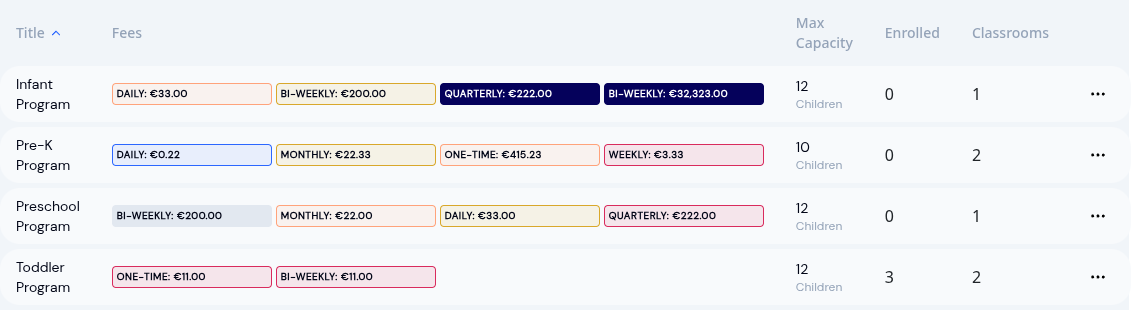
Pick any world currency for the fees and invoices your parents see. GBP, EUR, KES, AUD and more, available today.