Avoiding Financial Pitfalls in Childcare
Financial stability isn't just about keeping the lights on—it's about creating a thriving learning environment that supports children, families, and staff while building a sustainable business. Childcare centers face unprecedented challenges: rising operational costs, staffing shortages driving up wages, and families struggling with affordability. Recent industry data shows that many childcare centers operate on extremely thin margins, with some reporting net profit margins of less than 1%, making financial management more critical than ever. According to industry benchmarks, while well-managed centers can achieve 15-16% margins, the majority struggle with financial sustainability.
For childcare center directors and owners looking to build financial resilience, this comprehensive guide provides proven strategies, practical tools, and recovery plans to navigate common financial pitfalls. For foundational budgeting guidance, see our complete childcare center budgeting guide. Whether you're running a small family daycare or managing a multi-site operation, these evidence-based approaches will help you create lasting financial stability while maintaining quality care.
The stakes are high: financial mismanagement is the leading cause of childcare center closures, affecting not just business owners but entire communities that depend on reliable care. By implementing the strategies outlined in this guide, you'll protect your investment, support your mission, and ensure your center can weather economic uncertainty while continuing to serve families.
Understanding the Financial Landscape for Childcare Centers
Current Economic Pressures
The childcare industry operates in a challenging economic environment across both the United States and Canada. Cumulative inflation has increased operational costs significantly since 2020, while families face their own financial constraints that limit tuition increases. Centers across North America are navigating:
- Rising labor costs: Staff wages have increased significantly across different markets, with median real hourly wages rising 5.5% nationally from 2019-2023, though some high-demand urban markets have seen increases of 15-20% to address critical workforce shortages
- Increased insurance premiums: Liability and property insurance costs have risen 10-15% annually
- Supply chain disruptions: Educational materials increased 9.4% year-over-year in May 2025, with cumulative increases of 20-25% since pre-pandemic levels
- Energy costs: Utilities have increased by 18-22% in most regions
- Regulatory compliance: New health and safety requirements often require significant financial investment
- Canadian fee caps: CWELCC agreements limiting parent fees to $10/day by 2026 affecting revenue models
- US subsidy changes: ARPA funding expired September 2024, creating funding gaps
Financial Health Benchmarks
Successful childcare centers maintain specific financial ratios that indicate stability:
- Operating margin: Target 10-16% for sustainable growth (though many centers operate at 1-5%)
- Staff cost ratio: 60-70% of total revenue (including benefits)
- Occupancy rate: 85-90% for optimal financial performance
- Cash reserves: 3-6 months of operating expenses (in USD or CAD as applicable)
- Accounts receivable: Less than 30 days outstanding
- Capital expenditure: 5-8% of annual revenue for maintenance and improvements
The Seven Most Dangerous Financial Pitfalls in Childcare Management
Pitfall #1: Inadequate Cash Flow Management
The Problem: Many centers focus on profitability but ignore cash flow timing, leading to situations where they're profitable on paper but can't pay bills.
Warning Signs:
- Struggling to pay staff on time despite positive monthly reports
- Delaying supplier payments regularly
- Using credit cards for operational expenses
- Unable to handle unexpected expenses over $1,000
Prevention Strategies:
- Implement weekly cash flow forecasting for the next 13 weeks
- Establish payment policies that align income with expense timing
- Create a cash flow buffer equal to 45-60 days of expenses
- Use automated billing systems to reduce payment delays
Recovery Actions:
- Conduct daily cash position reviews
- Negotiate payment terms with major suppliers
- Implement late fees for overdue tuition payments
- Consider invoice factoring for immediate cash flow relief
Pitfall #2: Underestimating True Operating Costs
The Problem: Centers often overlook hidden costs or fail to account for inflation, leading to pricing that doesn't cover actual expenses.
Commonly Overlooked Expenses:
- Professional development and training (budget 2-3% of payroll)
- Technology upgrades and software subscriptions
- Maintenance and repair reserves (3-5% of revenue)
- Marketing and enrollment costs (2-4% of revenue)
- Regulatory compliance and licensing fees
- Worker's compensation insurance adjustments
Comprehensive Cost Analysis Framework:
- Fixed Costs: Rent, insurance, utilities, software subscriptions
- Variable Costs: Supplies, food, temporary staff, utilities overages
- Semi-Variable Costs: Staffing for different enrollment levels
- Hidden Costs: Professional development, repairs, compliance
- Opportunity Costs: Lost revenue from vacant spots, staff turnover
Pitfall #3: Inadequate Revenue Diversification
The Problem: Over-reliance on standard tuition makes centers vulnerable to enrollment fluctuations and economic downturns.
Revenue Stream Opportunities (see also our guide on pricing strategies that keep your childcare center profitable):
- Before/After School Programs: 15-25% revenue increase potential
- Summer Camps: Seasonal revenue boost of 20-30%
- Parent Night Out Events: $2,000-$5,000 monthly additional revenue
- Educational Workshops: Parent education and community outreach
- Facility Rental: Weekend and evening space rental
- Retail Sales: Educational materials and healthy snacks
Implementation Timeline:
- Month 1-2: Market research and program development
- Month 3: Staff training and marketing launch
- Month 4-6: Program refinement and expansion
- Ongoing: Performance monitoring and optimization
Pitfall #4: Poor Accounts Receivable Management
The Problem: Lenient collection policies and inconsistent follow-up lead to cash flow problems and bad debt losses.
Best Practice Collection System:
- Day 1: Automatic payment processing for enrolled families
- Day 5: Automated reminder for failed payments
- Day 10: Personal follow-up call from center director
- Day 15: Written notice and late fee assessment
- Day 30: Meeting with family to discuss payment plan
- Day 45: Final notice before service suspension
Technology Solutions:
- Automated billing and payment processing systems
- Text message payment reminders
- Online payment portals with multiple payment methods
- Real-time reporting on overdue accounts
Pitfall #5: Insufficient Insurance Coverage
The Problem: Underinsuring to save money can result in catastrophic financial losses from unexpected events.
Essential Coverage Types (with 2025 average costs):
- General Liability: $2-5 million coverage recommended (average $33/month USD, $42/month CAD)
- Professional Liability: Protects against educational negligence claims
- Property Insurance: Full replacement cost coverage
- Workers' Compensation: Required in most jurisdictions (costs average $1.25 per $100 payroll in US, varies by province in Canada)
- Cyber Liability: Protects against data breaches (increasingly important)
- Business Interruption: Covers lost income during closures
- Business Owner's Policy (BOP): Combined coverage averaging $49-82/month USD
Annual Insurance Review Process:
- Inventory all assets and calculate replacement costs
- Review claims history and adjust coverage accordingly
- Compare quotes from multiple providers
- Ensure coverage limits match current property values
- Update beneficiaries and contact information
Pitfall #6: Neglecting Financial Planning and Budgeting
The Problem: Operating without detailed budgets and financial projections leads to reactive rather than proactive management.
Comprehensive Budget Components:
- Operating Budget: Monthly income and expense projections
- Capital Budget: Equipment and facility improvement plans
- Cash Flow Budget: Weekly cash position forecasting
- Scenario Planning: Best case, worst case, and most likely scenarios
Budget Development Process:
- Historical Analysis: Review 3 years of financial data
- Market Research: Analyze local competition and pricing
- Enrollment Projections: Conservative, realistic, and optimistic scenarios
- Cost Projections: Include inflation and known cost increases
- Contingency Planning: Build in 5-10% buffer for unexpected expenses
Pitfall #7: Ignoring Key Performance Indicators (KPIs)
The Problem: Without regular monitoring of financial KPIs, problems develop unnoticed until they become critical.
Essential Financial KPIs:
- Revenue per Child: Monthly revenue divided by enrolled children
- Cost per Child: Total expenses divided by enrolled children
- Staff Turnover Cost: Replacement and training costs per departure
- Collection Rate: Percentage of billed tuition actually collected
- Occupancy Rate: Enrolled children divided by licensed capacity
- Break-even Point: Minimum enrollment needed to cover costs
Step-by-Step Financial Health Assessment
Phase 1: Current State Analysis (Week 1-2)
Financial Document Review:
- Gather 12 months of profit and loss statements
- Collect balance sheets and cash flow statements
- Review enrollment records and trends
- Analyze accounts receivable aging reports
- Examine expense categories for trends and anomalies
Ratio Analysis:
- Calculate current ratio (current assets/current liabilities)
- Determine debt-to-equity ratio
- Analyze expense ratios by category
- Evaluate revenue trends and seasonality
Phase 2: Operational Assessment (Week 3-4)
Process Evaluation:
- Review billing and collection procedures
- Assess budgeting and forecasting processes
- Evaluate financial reporting frequency and accuracy
- Examine authorization and approval controls
- Review bank reconciliation procedures
Technology Assessment:
- Evaluate current financial management software
- Assess integration between systems
- Review reporting capabilities and accessibility
- Identify automation opportunities
Phase 3: Risk Assessment (Week 5-6)
Risk Identification:
- Analyze insurance coverage adequacy
- Evaluate key person dependencies
- Assess market and competitive risks
- Review regulatory compliance status
- Examine facility and equipment condition
Scenario Planning:
- Model 10% enrollment decrease impact
- Project 15% cost increase scenarios
- Evaluate emergency funding needs
- Plan for regulatory changes
Cash Flow Management Strategies
Daily Cash Management
Morning Cash Review (15 minutes):
- Check overnight bank deposits and transactions
- Review day's expected income and expenses
- Verify sufficient funds for scheduled payments
- Update weekly cash flow forecast
Weekly Cash Forecasting:
- Project 13 weeks of cash flow
- Include enrollment changes and seasonal variations
- Account for large expenses and capital purchases
- Identify potential cash shortfalls early
Payment Optimization Strategies
Income Acceleration:
- Offer discounts for annual tuition payments
- Implement automatic payment systems
- Send invoices 5-7 days before due dates
- Provide multiple payment options (ACH, credit card, online)
Expense Management:
- Negotiate payment terms with major suppliers
- Take advantage of early payment discounts
- Schedule large expenses during high-income periods
- Maintain vendor relationships for flexible terms
Emergency Cash Sources
Immediate Options (0-7 days):
- Business credit lines
- Invoice factoring
- Equipment loans
- Personal guarantees (use cautiously)
Short-term Options (1-4 weeks):
- Small business loans
- Equipment financing
- Revenue-based financing
- Investor funding
Long-term Options (1-6 months):
- Bank term loans
- SBA loans
- Private investment
- Grant funding (explore our guide to funding and grants for childcare businesses)
Technology Solutions for Financial Management
Integrated Management Systems
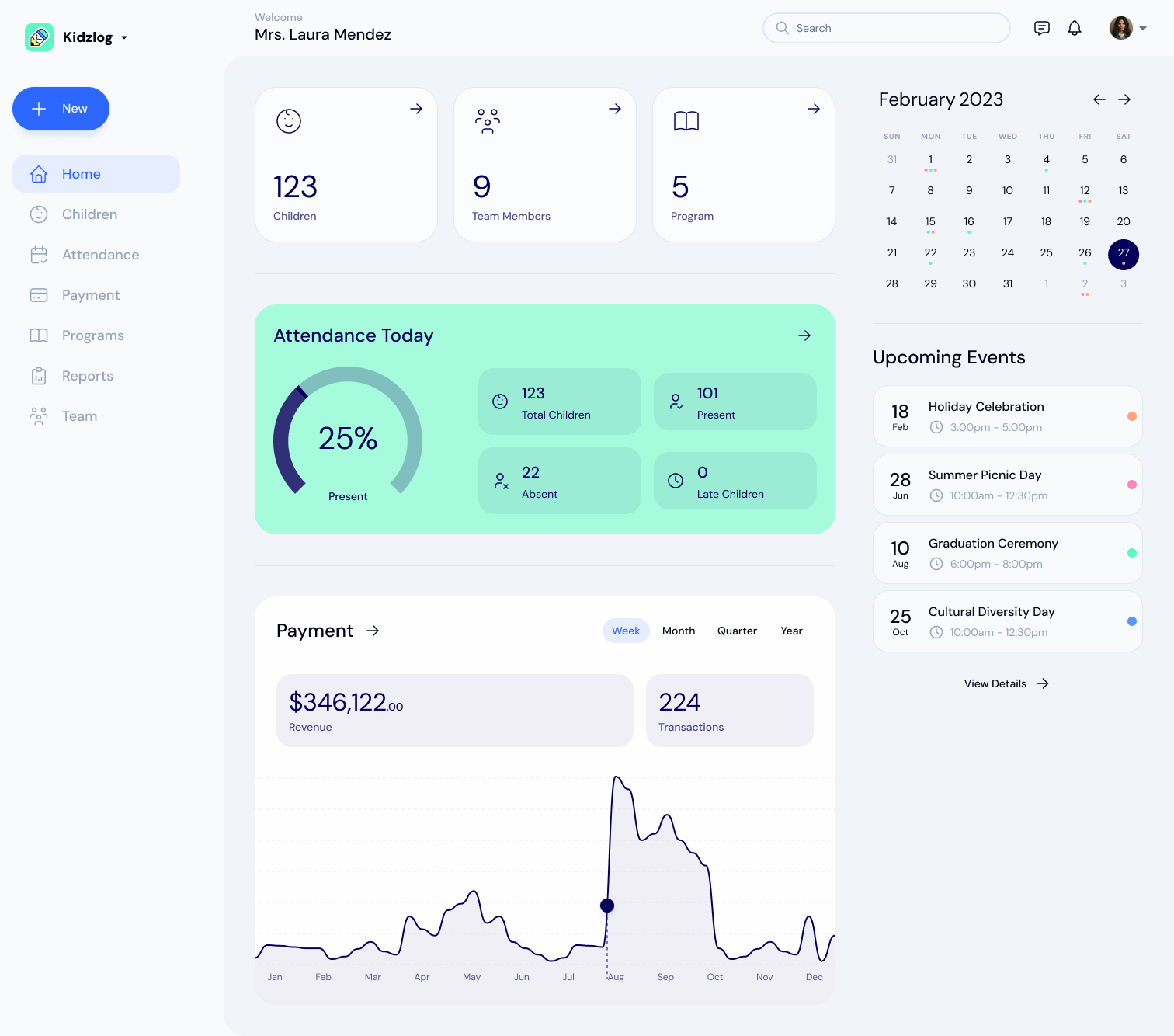
KidzLog Financial Features:
- Automated billing and payment processing
- Real-time accounts receivable reporting
- Integration with accounting software
- Parent payment portals and communication
- Financial dashboard with key metrics
- Customizable payment plans and schedules
Implementation Benefits:
- Reduces billing errors by 90%
- Decreases collection time by 15-20 days
- Improves cash flow predictability
- Saves 10-15 hours per week on administrative tasks
- Provides real-time financial visibility
Accounting Software Integration
Recommended Features:
- QuickBooks or similar integration
- Automated transaction categorization
- Real-time financial reporting
- Multi-location support
- Bank reconciliation automation
Cloud-Based Advantages:
- Access from anywhere
- Automatic backups and security
- Scalability for growth
- Lower IT maintenance costs
- Real-time collaboration capabilities
Recovery Strategies for Centers in Financial Difficulty
Immediate Stabilization (30-60 days)
Cash Flow Crisis Management:
- Daily cash monitoring: Track every dollar in and out
- Expense triage: Prioritize essential payments (payroll, rent, utilities)
- Revenue acceleration: Implement aggressive collection procedures
- Emergency funding: Secure short-term financing if available
- Stakeholder communication: Inform key parties about situation and plans
Cost Reduction Strategies:
- Negotiate temporary payment deferrals with vendors
- Reduce non-essential expenses immediately
- Consider temporary staff hour reductions
- Postpone capital expenditures
- Renegotiate service contracts
Medium-Term Recovery (60-180 days)
Operational Restructuring:
- Pricing analysis: Evaluate tuition rates against market and costs
- Service optimization: Focus on most profitable programs
- Efficiency improvements: Streamline operations and reduce waste
- Marketing investment: Increase enrollment through targeted efforts
- Financial controls: Implement stronger budgeting and monitoring
Revenue Enhancement:
- Launch enrollment campaigns with incentives
- Introduce new revenue streams
- Optimize capacity utilization
- Improve retention rates
- Develop partnership opportunities
Long-Term Sustainability (6-18 months)
Strategic Planning:
- Market analysis: Understand competitive position and opportunities
- Business model evaluation: Assess sustainability and scalability
- Investment planning: Determine capital needs for growth
- Risk management: Implement systems to prevent future crises
- Performance monitoring: Establish KPIs and regular review processes
Growth Planning:
- Develop 3-year financial projections
- Create capital improvement plans
- Build cash reserves for stability
- Invest in staff development and retention
- Explore expansion opportunities
Building Financial Resilience for Economic Uncertainty
Creating Financial Buffers
Cash Reserve Strategy:
- Target: 3-6 months of operating expenses
- Build gradually: Set aside 2-5% of monthly revenue
- Separate account: Keep reserves in high-yield savings
- Access plan: Define emergency use criteria
- Replenishment: Prioritize rebuilding after use
Revenue Stability Measures:
- Diversify income sources
- Build strong family relationships for retention
- Develop waiting lists for popular programs
- Create flexible pricing options
- Establish corporate partnerships
Scenario Planning and Stress Testing
Quarterly Scenario Analysis:
- Best Case: 95% occupancy, 5% price increase
- Expected Case: 85% occupancy, 2% price increase
- Worst Case: 70% occupancy, no price increase
- Crisis Case: 50% occupancy, 10% cost increase
Response Planning:
- Define trigger points for each scenario
- Develop specific action plans
- Identify decision-making authority
- Create communication templates
- Test plans annually
Professional Support Network
Essential Professional Relationships (US & Canada):
- Accountant: Monthly financial review and tax planning
- Attorney: Contract review and regulatory compliance
- Insurance Agent: Annual coverage review and claims support (requirements vary by province/state)
- Banker: Relationship management and financing options
- Business Advisor: Strategic planning and growth guidance
Industry Resources:
United States:
- National Association for the Education of Young Children (NAEYC)
- Child Care Aware of America
- Small Business Administration (SBA) resources
- State childcare regulatory agencies
- Local childcare associations and networks
Canada:
- Canadian Child Care Federation (CCCF)
- Provincial/territorial childcare associations
- Canada Business Network resources
- Provincial regulatory bodies (e.g., Ontario Ministry of Education)
- Indigenous Early Learning and Child Care programs
Future-Proofing Your Financial Strategy
Emerging Financial Trends in Childcare
Technology Integration:
- AI-powered financial forecasting
- Blockchain payment processing
- Automated compliance monitoring
- Real-time analytics and reporting
- Mobile-first financial management
Market Evolution:
- Employer-sponsored childcare partnerships
- Government funding and subsidy programs
- Alternative payment models (income-based, sliding scale)
- Corporate backup care services
- Hybrid learning and care models
Preparing for What Comes Next
Strategic Investments:
- Technology infrastructure: Future-ready systems and processes
- Staff development: Financial literacy and management skills
- Data analytics: Business intelligence and predictive modeling
- Market positioning: Differentiation and competitive advantages
- Sustainability: Environmental and social responsibility
Continuous Improvement Process:
- Monthly financial performance reviews
- Quarterly strategy assessments
- Annual comprehensive audits
- Ongoing professional development
- Regular industry benchmarking
Implementation Timeline and Action Plan
Month 1: Foundation Building
- Complete financial health assessment
- Implement daily cash flow monitoring
- Review and update insurance coverage
- Establish emergency cash reserve goals
- Begin weekly financial reporting
Month 2-3: System Implementation
- Upgrade financial management technology
- Implement automated billing and collections
- Develop comprehensive budgeting process
- Create scenario planning models
- Establish professional support relationships
Month 4-6: Optimization and Growth
- Launch revenue diversification initiatives
- Refine financial processes and controls
- Build cash reserves to target levels
- Develop long-term strategic plans
- Implement performance monitoring systems
Ongoing: Maintenance and Improvement
- Monthly financial reviews and adjustments
- Quarterly scenario planning updates
- Annual comprehensive assessments
- Continuous professional development
- Regular industry benchmarking
Key Implementation Points
- Start with cash flow: Implement daily monitoring and weekly forecasting immediately
- Focus on technology: Automated billing and payment systems provide immediate ROI
- Build reserves gradually: Consistent small contributions create substantial buffers over time
- Monitor KPIs religiously: Weekly review of key metrics prevents small problems from becoming crises
- Diversify thoughtfully: Add revenue streams that complement core services and utilize existing resources
- Plan for scenarios: Regular stress testing identifies vulnerabilities before they become critical
- Invest in relationships: Professional advisors and industry networks provide crucial support during challenges
- Embrace transparency: Regular financial communication with staff and stakeholders builds trust and support
- Prioritize prevention: Proactive financial management costs less than crisis recovery
- Stay current: Regular industry benchmarking ensures competitive positioning and identifies opportunities
- Document everything: Comprehensive financial records support decision-making and regulatory compliance
- Train your team: Financial literacy among staff improves decision-making at all levels
Transform your childcare center's financial management with KidzLog's comprehensive billing and payment solutions. Our automated systems reduce collection time, improve cash flow, and provide real-time financial insights. Start your free trial today and experience the difference professional financial management tools can make for your center's stability and growth.
Ready to Simplify and Organize your Daycare?
Get started with KidzLog today!
KidzLog Team
Related Articles
Childcare Pricing Models Compared
Flat rate, tiered, and per-child pricing for childcare centers, with cost analysis, margins, and which model suits your...
KidzLog vs Procare for Small Centers
An honest comparison of KidzLog and Procare for small and mid-size centers: pricing, what is included, and how...
Show Program Fees in Your Local Currency
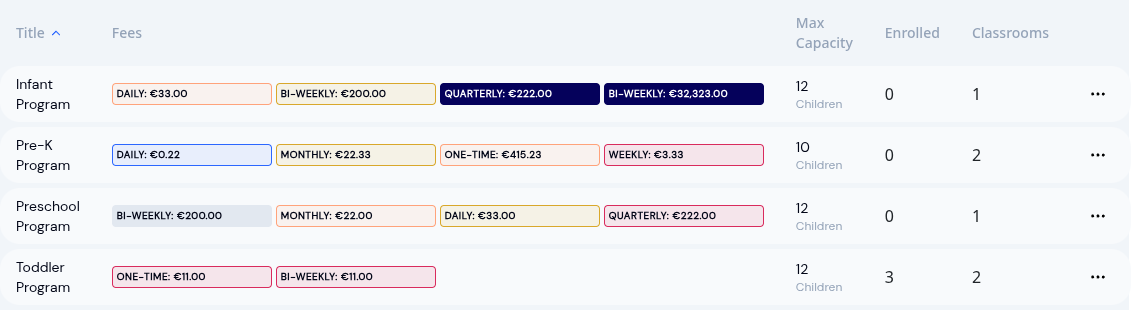
Pick any world currency for the fees and invoices your parents see. GBP, EUR, KES, AUD and more, available today.