Funding and Grants for Childcare Centers
Securing adequate funding isn't just about keeping your childcare center operational—it's about creating sustainable, high-quality early childhood education that transforms communities. Childcare funding has reached a critical juncture. With historic federal investments in the US through the American Rescue Plan Act and Canada's $30 billion National Early Learning and Child Care Plan, opportunities for childcare providers have never been more abundant—or more complex to navigate.
For childcare centers looking to expand capacity, improve quality, reduce parent fees, or enhance staff compensation, this comprehensive guide provides the roadmap to accessing funding opportunities across North America. You may also find our guides on budgeting for your childcare center and pricing strategies helpful for overall financial planning. Whether you're operating a family daycare, community-based center, or multi-site organization, understanding the funding landscape is essential for long-term success.
The stakes are high: Research shows that every dollar invested in early childhood education returns $7-13 to society, yet many quality programs struggle with financial sustainability. This guide bridges that gap with actionable strategies, detailed application processes, and insider insights from successful funding recipients.
Understanding the Funding Landscape
Federal Funding Programs (United States)
Child Care and Development Block Grant (CCDBG)
The cornerstone of US childcare funding, CCDBG provides approximately $8.75 billion annually (part of the total $12.3 billion Child Care and Development Fund) to states for childcare assistance and quality improvements.
Eligible Recipients:
- Licensed childcare centers
- Family childcare homes
- Nonprofit and for-profit providers
- Faith-based programs
Funding Uses:
- Direct parent subsidies
- Quality improvement initiatives
- Provider rate increases
- Health and safety training
- Professional development
Application Process: Funding flows through state agencies. Contact your state's childcare licensing office or department of human services to understand specific programs and requirements.
Head Start and Early Head Start
Federal programs serving low-income families with comprehensive early childhood services.
Annual Funding: $12.27 billion nationwide for FY2025 Eligibility: Must serve at least 90% of children from families at or below federal poverty line Services Required: Education, health, nutrition, family engagement, and wraparound support
Application Timeline:
- Competition announcements: Spring
- Applications due: Summer
- Award announcements: Fall
- Program year begins: Following August
Title I Preschool Funding
Supports preschool programs in high-poverty school districts.
Funding Amount: Varies by district and state, typically $1,200-$3,000 per child based on poverty levels and local factors Eligibility: Must partner with qualifying public school districts Requirements: Meet state early learning standards and assessment protocols
Provincial/Territorial Funding (Canada)
Canada-Wide Early Learning and Child Care (CWELCC)
Canada's historic $30 billion investment aims to reduce childcare fees to $10/day by 2026.
Provincial Implementation:
- Ontario: Fee reductions progressing toward $10/day goal by March 2026, with current caps at $22/day as of January 2025
- British Columbia: $10/day achieved for licensed centers
- Quebec: Already operating universal childcare system
- Alberta: Phased implementation with 50% reduction by end 2025
Funding Streams:
- Operating funding: Monthly payments to reduce parent fees
- Capital funding: Facility construction and renovation
- Workforce funding: Staff wage enhancements and professional development
- Indigenous programming: Culturally appropriate early learning
Provincial Quality Enhancement Grants
British Columbia - Child Care Operating Funding (CCOF):
- Base funding: $350-$550 per month per space
- Quality enhancement: Up to $1,000 per month per space
- Indigenous programming: Additional $500 per month per space
Ontario - Child Care Expansion and Capital Funding:
- New space creation: Up to $50,000 per infant space, $25,000 per toddler/preschool space
- Retrofit funding: Up to 80% of eligible costs
- Rural/Northern communities: Enhanced funding rates
Alberta - Child Care Accreditation Funding:
- Level 2 accreditation: $0.50 per hour per space
- Level 3 accreditation: $1.00 per hour per space
- Level 4 accreditation: $1.50 per hour per space
State and Local Funding Opportunities
State-Specific Programs
California:
- Alternative Payment Program (APP): Subsidized childcare for working families
- State Preschool Program: Free preschool for eligible families
- Transitional Kindergarten expansion: Partnership opportunities
New York:
- Statewide Universal Pre-K: $2.4 billion annual investment
- Empire State Child Credit: Tax relief for families
- Child Care Desert Grants: Targeted funding for underserved areas
Texas:
- Texas Workforce Commission Childcare: Quality improvement grants
- Pre-K Expansion Grants: Public-private partnerships
- Rural childcare development initiatives
Florida:
- Voluntary Prekindergarten (VPK): Universal pre-K funding
- Early Learning Coalition grants: Local capacity building
- School Readiness Program: Subsidized care for working families
Municipal and County Programs
Many local governments offer additional funding streams:
Property Tax Exemptions:
- Nonprofit childcare centers often qualify for property tax relief
- Some municipalities offer reduced rates for essential services
Community Development Block Grants (CDBG):
- Federal funds administered locally
- Support childcare in low-income neighborhoods
- Typical awards: $25,000-$150,000
Local Foundation Partnerships:
- United Way chapters: Capacity building and program support
- Community foundations: Capital campaigns and endowment building
- Corporate partnerships: Equipment, technology, and sponsorship
Step-by-Step Grant Application Process
Phase 1: Preparation and Planning (4-6 weeks)
1. Organizational Assessment
Financial Readiness Checklist:
- Current year budget and financial statements
- 3-year financial projections
- Cash flow analysis
- Audit reports (if required)
- Board-approved financial policies
- Insurance certificates and coverage summary
Program Quality Documentation:
- Current licensing reports and compliance history
- Accreditation status (NAEYC, NECPA, provincial equivalents)
- Staff qualification summaries
- Parent satisfaction surveys
- Child outcome assessments
- Community needs assessment data
Governance Structure:
- Board of directors list and qualifications
- Organizational chart
- Policy manual and procedures (review our guide on navigating childcare regulations for compliance best practices)
- Strategic plan (current)
- Annual reports (3 years)
2. Funding Strategy Development
Need Identification:
- Capacity expansion: How many additional children can you serve?
- Quality improvement: What specific enhancements will funding support?
- Financial sustainability: How will funding impact long-term viability?
- Community impact: What measurable outcomes will result?
Funding Portfolio Approach:
- 30% government grants: Stable, recurring funding
- 25% fee revenue: Parent payments and subsidies
- 20% foundation grants: Program-specific initiatives
- 15% fundraising: Community events and campaigns
- 10% corporate partnerships: Equipment and sponsorship
Phase 2: Application Development (6-8 weeks)
Grant Proposal Template Components
Executive Summary (1 page):
- Organization overview and mission
- Funding request amount and purpose
- Community need and target population
- Expected outcomes and impact
- Total project cost and other funding sources
Statement of Need (2-3 pages):
- Demographics of service area
- Childcare availability and accessibility gaps
- Target population characteristics
- Evidence of community support
- Research supporting proposed approach
Project Description (3-4 pages):
- Program goals and objectives (SMART format)
- Detailed implementation plan and timeline
- Staffing plan and qualifications
- Partnerships and collaboration
- Innovation and best practices integration
Evaluation Plan (2 pages):
- Outcome measurements and indicators
- Data collection methods and tools
- Reporting schedule and stakeholder communication
- Continuous improvement processes
Budget and Budget Narrative (2-3 pages):
- Line-item budget with calculations
- Cost-share and matching funds
- Budget justification for each category
- Indirect cost calculations (if applicable)
- Long-term sustainability plan
Organizational Capacity (1-2 pages):
- Track record of successful program implementation
- Financial management capabilities
- Staff expertise and experience
- Governance structure and oversight
- Previous grant performance
Phase 3: Submission and Follow-Up (2-4 weeks)
Application Submission Best Practices
Technical Requirements:
- Submit electronically when possible for faster processing
- Follow formatting guidelines exactly (fonts, margins, page limits)
- Include all required attachments in specified order
- Use clear, descriptive file names
- Submit before deadline (aim for 48 hours early)
Quality Assurance Process:
- Internal review: Program staff and leadership
- External review: Board members or advisors
- Professional review: Grant writer or consultant
- Final proofread: Grammar, spelling, calculations
- Compliance check: All requirements met
Post-Submission Activities:
- Confirm receipt with funder
- Prepare for site visits or interviews
- Continue relationship building with program officers
- Document lessons learned for future applications
- Begin implementation planning if confident in approval
Specialized Funding Categories
Technology and Innovation Grants
Federal Technology Integration
- Department of Education: Educational technology grants
- NSF STEM Education: Early childhood STEM initiatives
- Rural Education Achievement: Technology for rural providers
Funding Range: $50,000-$500,000 Focus Areas:
- Digital learning platforms and curriculum
- Family engagement technology
- Assessment and documentation systems
- Professional development delivery
- Administrative efficiency tools
Provincial Innovation Funding (Canada)
- Innovation Sandbox: Pilot programs for new approaches
- Digital Early Learning: Technology integration grants
- Research Partnerships: University collaboration funding
Capital and Infrastructure Funding
New Construction and Major Renovation
US Department of Agriculture (USDA):
- Community Facilities Direct Loan & Grant Program
- Rural Development Grants
- Funding: Loans up to 100% of project cost, grants up to 75%
- Eligible areas: Rural communities under 20,000 population
Community Development Financial Institutions (CDFIs):
- New Markets Tax Credit Program
- Funding: Up to $5 million for qualified projects
- Requirements: Serve low-income communities
Equipment and Furnishing Grants
Corporate Foundation Opportunities:
- Target: Early childhood education grants
- Walmart Foundation: Community and education initiatives
- Home Depot Foundation: Facility improvement grants
- Local corporate foundations: Often support community childcare
Typical Award Ranges:
- Playground equipment: $10,000-$50,000
- Classroom furnishings: $5,000-$25,000
- Kitchen and safety equipment: $15,000-$40,000
- Technology and learning materials: $8,000-$30,000
Workforce Development and Training
Professional Development Grants
US Department of Health and Human Services:
- Child Care Workforce Innovation Grants
- Annual funding: $25 million nationally
- Focus: Retention, compensation, career pathways
State-Specific Workforce Programs:
- T.E.A.C.H. Early Childhood Scholarships: Available in 24 states
- WAGE$ Programs: Salary supplements for qualified staff
- CDA Training Grants: Child Development Associate credentialing
Canadian Workforce Enhancement
Early Childhood Educator Wage Enhancement:
- British Columbia: $4/hour wage supplement for ECEs
- Prince Edward Island: $3/hour enhancement for qualified staff
- Saskatchewan: Professional development bursaries up to $2,000
Professional Development Funding:
- Continuing education reimbursement: 80-100% of tuition costs
- Conference and training support: $500-$2,000 per staff member
- Substitute coverage: Funding for staff release time
Diversity, Equity, and Inclusion Initiatives
Serving Diverse Populations
Refugee and Immigrant Services:
- Office of Refugee Resettlement: Early childhood integration
- Local resettlement agencies: Partnership opportunities
- Cultural competency training: Staff development funding
Dual Language Learning Support:
- Title III funding: English language development
- State multilingual education grants: Bilingual program support
- Cultural preservation initiatives: Indigenous and heritage language programs
Special Needs Integration:
- Individuals with Disabilities Education Act (IDEA): Early intervention funding
- Inclusion quality improvement: Training and equipment grants
- Accessibility modifications: Capital improvement funding
Common Application Pitfalls and Solutions
Documentation and Compliance Issues
Problem: Incomplete Financial Records
Common Issues:
- Missing audit reports or financial statements
- Inconsistent budget calculations
- Lack of internal financial controls
- Poor cash flow documentation
Solutions:
- Engage professional bookkeeper/accountant 6 months before applying
- Implement monthly financial reporting to board of directors
- Establish segregation of duties for financial management
- Create 3-year financial projections with realistic assumptions
- Document all revenue sources and timing
Problem: Weak Needs Assessment
Common Issues:
- Anecdotal rather than data-driven evidence
- Lack of community input
- No comparison to similar communities
- Missing target population characteristics
Solutions:
- Conduct comprehensive community survey of families and employers
- Analyze census and demographic data for service area
- Partner with local agencies for referral and wait list data
- Document unmet demand through waiting lists and inquiries
- Include stakeholder letters of support and commitment
Project Design Weaknesses
Problem: Unrealistic Timeline
Common Issues:
- Underestimating licensing and approval processes
- Not accounting for construction delays
- Insufficient time for staff recruitment and training
- Rushed implementation without quality assurance
Solutions:
- Add 25% buffer time to all major milestones
- Begin licensing processes before funding confirmation
- Develop contingency plans for common delays
- Phase implementation to allow for adjustments
- Include pilot period for new programs or approaches
Problem: Insufficient Community Engagement
Common Issues:
- Lack of parent and community input
- No evidence of stakeholder buy-in
- Missing partnership commitments
- Weak ongoing engagement plan
Solutions:
- Establish community advisory committee with diverse representation
- Host public forums during planning phase
- Secure written partnership agreements before application
- Create ongoing communication plan with multiple channels
- Document community support through letters, petitions, and surveys
Budget and Sustainability Challenges
Problem: Unclear Long-term Sustainability
Common Issues:
- Over-reliance on grant funding
- No diversified revenue strategy
- Unrealistic revenue projections
- Missing cost escalation factors
Solutions:
- Develop 5-year financial model with multiple scenarios
- Identify at least 3 revenue sources for each program component
- Include annual cost increases of 3-5% in projections
- Plan fee structure that balances accessibility with sustainability
- Create earned revenue opportunities beyond childcare fees
Technology Integration and Documentation
Digital Management Systems
Using KidzLog for Grant Compliance
KidzLog's comprehensive childcare management platform supports grant requirements in multiple ways:
Attendance Tracking and Reporting:
- Automated daily attendance records required for government subsidies
- Real-time enrollment reporting for capacity management
- Parent engagement documentation through digital communication
- Staff-to-child ratio monitoring for licensing compliance
Financial Management Integration:
- Streamlined billing for multiple funding sources
- Automated subsidy calculation and reporting
- Parent fee management with sliding scale capabilities
- Revenue tracking by funding source for grant reporting
Assessment and Outcome Documentation:
- Digital portfolio creation for child development tracking
- Standardized assessment tool integration
- Progress reporting for school readiness outcomes
- Family engagement measurement through platform analytics
Staff Management and Professional Development:
- Credential tracking and renewal reminders
- Training hour documentation for grant requirements
- Performance evaluation storage and reporting
- Communication logs for family engagement metrics
Implementation Strategy for Technology Grants
Phase 1: Infrastructure Assessment (Month 1-2)
- Current technology audit and gap analysis
- Internet connectivity and device requirements
- Staff digital literacy assessment
- Privacy and security compliance review
Phase 2: System Selection and Procurement (Month 3-4)
- Platform evaluation and vendor selection
- Equipment purchase and installation
- Data migration planning and execution
- Initial staff training and support
Phase 3: Full Implementation (Month 5-6)
- Comprehensive staff training program
- Parent orientation and engagement
- Quality assurance and troubleshooting
- Outcome measurement and reporting setup
Data Collection and Evaluation
Required Metrics for Most Grants
Child and Family Outcomes:
- School readiness indicators (kindergarten entry assessments)
- Social-emotional development milestones
- Family engagement levels and satisfaction
- Health and nutrition improvements
- Language and literacy development
Program Quality Measures:
- Environment rating scale scores (ECERS-R, ITERS-R)
- Staff qualification levels and retention rates
- Parent satisfaction and feedback
- Licensing compliance and safety records
- Accreditation status and quality improvements
Community Impact Indicators:
- Families served by demographics
- Employment support for parents
- Economic impact on local community
- Collaboration with other agencies
- Sustainability and growth metrics
Technology Tools for Data Management
Assessment Platforms:
- Teaching Strategies GOLD: Widely accepted for school readiness
- HighScope COR Advantage: Comprehensive developmental assessment
- Ages & Stages Questionnaires (ASQ): Developmental screening
- Provincial assessment tools: Region-specific requirements
Survey and Feedback Systems:
- SurveyMonkey or Google Forms: Family satisfaction surveys
- Focus group facilitation tools: Qualitative feedback collection
- Social media monitoring: Community engagement measurement
- Staff retention tracking: HR analytics and reporting
Success Stories and Case Studies
Rural Center Transformation: Sunshine Valley Early Learning (Montana)
Challenge: Serving 45 children in rural Montana with aging facility and limited resources.
Funding Strategy:
- USDA Community Facilities Grant: $180,000
- State quality improvement grant: $45,000
- Local foundation support: $25,000
- Community fundraising: $15,000
Implementation:
- Facility renovation doubled capacity to 90 children
- Technology integration with KidzLog for family engagement
- Staff professional development and wage increases
- Extended hours to serve working families
Outcomes (2-year post-implementation):
- 100% increase in enrollment with waiting list
- 95% parent satisfaction scores
- 40% reduction in staff turnover
- $2.3 million economic impact on local community
- Achieved NAEYC accreditation
Lessons Learned:
- Community engagement was crucial for local fundraising success
- Technology training required ongoing support and mentoring
- Phased implementation allowed for quality assurance
- Partnerships with local employers increased sustainability
Urban Expansion: Little Scholars Learning Center (Toronto, ON)
Challenge: Increasing demand for affordable childcare in diverse urban neighborhood.
Funding Strategy:
- CWELCC operating funding: $340,000 annually
- Provincial capital grant: $225,000
- Municipal development incentives: $50,000
- Corporate partnership (local bank): $30,000
Implementation:
- New 60-space facility with multilingual programming
- Staff wage enhancement through provincial funding
- Parent fee reduction to $10/day by 2026
- Culturally responsive curriculum development
Outcomes (18-month post-opening):
- 98% capacity utilization
- Serving families speaking 12 different languages
- Staff wages increased by average of $5/hour
- 89% of children meeting kindergarten readiness benchmarks
- Established pipeline for ECE training and employment
Lessons Learned:
- Cultural competency training was essential for staff
- Community partnerships enhanced program quality
- Multilingual communication systems improved family engagement
- Provincial funding predictability enabled long-term planning
Nonprofit Network Growth: ABC Learning Centers (Multiple States)
Challenge: Expanding high-quality programming across multiple states while maintaining affordability.
Funding Strategy:
- Head Start/Early Head Start: $2.8 million (3 sites)
- CCDBG quality improvement: $450,000
- Foundation grants: $320,000
- Corporate sponsorships: $125,000
Implementation:
- Standardized quality assurance across all sites
- Shared services model for administration and professional development
- Technology platform integration for efficiency
- Community partnership development
Outcomes (3-year period):
- Expanded from 3 to 7 sites serving 850 children
- Achieved 95% compliance with federal performance standards
- Staff retention increased to 89% across network
- $4.2 million in parent co-pay assistance provided
- Leveraged initial funding to secure additional $1.8 million
Lessons Learned:
- Shared services model reduced per-site administrative costs
- Standardized systems enabled quality consistency
- Strong data management facilitated additional funding
- Board governance required ongoing development and support
Resource Lists and Professional Development
Grant Research and Notification Services
Federal Grant Databases (United States)
- Grants.gov: Primary federal grant portal with advanced search
- Foundation Directory Online: Comprehensive foundation grant database
- GrantSpace: Free grant research tools and resources
- Chronicle of Philanthropy: Industry news and funding announcements
Canadian Funding Resources
- GrantConnect: Federal government grants and contributions
- Imagine Canada: Nonprofit sector funding resources
- Provincial government websites: Direct access to program-specific funding
- United Way chapters: Local funding opportunities and partnerships
Professional Development Organizations
United States:
- National Association for the Education of Young Children (NAEYC)
- Grant writing workshops and webinars
- Policy advocacy and funding alerts
- Professional development standards
- Child Care Aware of America
- State-specific funding information
- Technical assistance programs
- Quality improvement resources
- Zero to Three
- Infant and toddler program funding
- Research and policy updates
- Professional development opportunities
Canada:
- Child Care Now
- Policy advocacy and funding updates
- Provincial network connections
- Research and data resources
- Association of Early Childhood Educators
- Professional development funding
- Credential recognition programs
- Career pathway support
- Early Childhood Development Association
- Quality improvement initiatives
- Funding opportunity alerts
- Best practice sharing
Professional Grant Writing Support
When to Hire Professional Help
Consider professional grant writers when:
- Grant opportunity exceeds $100,000
- Application requires specialized expertise
- Internal capacity is limited
- Success rate needs improvement
- Multiple applications are due simultaneously
Typical Fee Structures:
- Hourly rate: $75-$150 for experienced writers
- Project fee: $5,000-$25,000 depending on complexity
- Success fee: 8-15% of awarded amount (controversial in field)
- Retainer model: Monthly fee for ongoing support
Evaluating Grant Writing Services
Essential Qualifications:
- Demonstrated success with childcare/education grants
- Knowledge of federal and state funding programs
- Understanding of nonprofit financial management
- Experience with outcome measurement and evaluation
- References from similar organizations
Red Flags to Avoid:
- Guarantee of funding success
- Requests for payment before work begins
- Lack of childcare industry experience
- No references or portfolio available
- Exclusive focus on success-based fees
Assessment and Quality Improvement Tools
Environment Rating Scales
- Early Childhood Environment Rating Scale (ECERS-3)
- Infant/Toddler Environment Rating Scale (ITERS-3)
- Family Child Care Environment Rating Scale (FCCERS-3)
- Business Administration Scale (BAS)
Curriculum and Assessment Resources
- Creative Curriculum for Preschool
- HighScope Preschool Curriculum
- Tools of the Mind
- Montessori Early Childhood Programs
Family Engagement Measurement
- Family Engagement Partnership Scale
- Parent Involvement and Satisfaction Survey
- Cultural Responsiveness Assessment
- Communication Effectiveness Metrics
Trends and Future Funding Directions
Emerging Funding Priorities
Mental Health and Social-Emotional Support
Growing Investment Areas:
- Trauma-informed care training: $50-100 million federal investment planned
- Mental health consultation: Embedded specialists in childcare settings
- Family wellness programs: Holistic support for children and families
- Staff wellness initiatives: Addressing secondary trauma and burnout
Expected Funding Opportunities:
- SAMHSA grants: Substance abuse and mental health programming
- CDC injury prevention: Safety and wellness initiatives
- Private foundation focus: Increased attention to social-emotional learning
Climate and Environmental Education
Sustainability Initiatives:
- Energy efficiency upgrades: Solar panels and green building improvements
- Natural learning environments: Outdoor classrooms and garden programs
- Environmental education curriculum: Nature-based learning integration
- Sustainable transportation: Walking school bus and bike programs
Funding Sources:
- EPA environmental education: Grants for green programming
- State energy efficiency programs: Facility upgrade incentives
- Corporate environmental foundations: Sustainability project support
Technology and Digital Equity
Digital Divide Solutions:
- Device lending programs: Tablets and laptops for families
- Internet connectivity support: Partnerships with service providers
- Digital literacy training: Staff and family skill development
- Cybersecurity and privacy: Safe technology implementation
Artificial Intelligence Integration:
- Personalized learning platforms: Adaptive curriculum delivery
- Administrative automation: Efficiency improvements
- Assessment and documentation: Streamlined data collection
- Language translation: Multilingual family communication
Policy Changes Affecting Funding
Universal Childcare Movement
United States:
- Build Back Better provisions: Potential federal universal pre-K
- State-level initiatives: Growing number of states implementing universal access
- Employer partnerships: Corporate childcare benefit expansion
- Community investment: Local tax initiatives for childcare funding
Canada:
- $10/day childcare: Full implementation by 2026
- Workforce development: Significant investment in ECE training and wages
- Indigenous programming: Culturally appropriate early learning expansion
- Rural and remote access: Targeted funding for underserved communities
Regulatory Changes
Quality Standards Evolution:
- Higher staff qualification requirements: Increased funding for professional development
- Enhanced safety protocols: Technology integration for compliance
- Assessment and accountability: Outcome-based funding models
- Family engagement mandates: Structured parent involvement requirements
Funding Mechanism Shifts:
- Performance-based contracts: Quality and outcome metrics tied to payment
- Blended funding models: Multiple sources integrated for sustainability
- Social impact bonds: Private investment in public outcomes
- Community benefit agreements: Private development supporting childcare
Preparing for Future Opportunities
Organizational Development
Capacity Building Priorities:
- Data management systems: Robust tracking and reporting capabilities
- Financial management: Sophisticated budgeting and projecting
- Quality improvement: Continuous enhancement and evaluation
- Community engagement: Strong stakeholder relationships
- Strategic planning: Long-term vision and goal setting
Board Development:
- Fundraising expertise: Members with grant writing and development skills
- Financial oversight: Strong fiduciary responsibility and controls
- Community connections: Diverse representation and partnerships
- Strategic thinking: Long-term sustainability and growth planning
Technology and Innovation Readiness
Digital Infrastructure:
- Reliable internet connectivity: High-speed access for all programming
- Device management: Tablets, computers, and interactive technology
- Software integration: Comprehensive management platforms like KidzLog
- Security protocols: Data protection and privacy compliance
Innovation Culture:
- Pilot program development: Testing new approaches and methods
- Research partnerships: Collaboration with universities and agencies
- Best practice sharing: Network participation and knowledge exchange
- Continuous improvement: Regular evaluation and enhancement
Implementation Timeline and Action Steps
90-Day Quick Start Plan
Month 1: Foundation Building
Week 1-2: Organizational Assessment
- Complete financial records review and organization
- Document current licensing and compliance status
- Assess technology infrastructure and needs
- Survey staff qualifications and professional development needs
Week 3-4: Stakeholder Engagement
- Conduct community needs assessment survey
- Schedule meetings with local funders and agencies
- Establish or strengthen board development committee
- Begin building email list of funding opportunities
Month 2: Strategic Planning
Week 5-6: Vision and Goal Setting
- Facilitate strategic planning session with staff and board
- Identify top 3 funding priorities for next 2 years
- Develop preliminary 3-year financial projections
- Research successful similar organizations for benchmarking
Week 7-8: Capacity Building
- Register for grant writing training or hire consultant
- Implement monthly financial reporting systems
- Begin database development for tracking applications
- Establish partnerships with potential collaborators
Month 3: Application Preparation
Week 9-10: Grant Research
- Identify 5-10 potential funding opportunities
- Create funding calendar with application deadlines
- Begin development of standard proposal components
- Schedule site visits with successful grant recipients
Week 11-12: Proposal Development
- Complete first grant application (smaller opportunity)
- Develop evaluation plan and data collection systems
- Create budget templates for different types of funding
- Establish quality assurance process for applications
Year 1 Milestones
Quarter 1 (Months 1-3): Foundation and first applications
- Complete 2-3 smaller grant applications
- Establish funding tracking and management systems
- Build community partnerships and stakeholder support
- Implement technology platform for improved documentation
Quarter 2 (Months 4-6): Capacity building and medium-scale applications
- Submit 1-2 medium-scale funding proposals ($25,000-$100,000)
- Complete staff professional development planning
- Establish board fundraising committee and protocols
- Begin implementation of any approved small grants
Quarter 3 (Months 7-9): Major opportunity pursuit
- Submit 1 major funding application ($100,000+)
- Evaluate and adjust funding strategy based on early results
- Strengthen community partnerships and referral systems
- Complete mid-year assessment of organizational development
Quarter 4 (Months 10-12): Evaluation and planning
- Assess year 1 funding success and lessons learned
- Develop year 2 funding strategy and calendar
- Strengthen successful programs and modify unsuccessful approaches
- Begin planning for sustainability of funded programs
Long-term Sustainability Planning
3-Year Financial Model Development
Revenue Diversification Targets:
- 35% government funding: Federal, state/provincial, local grants
- 30% parent fees: Sliding scale with subsidies
- 20% foundation grants: Private and corporate foundations
- 10% fundraising: Events, campaigns, individual donors
- 5% earned revenue: Training, consulting, facility rental
Growth Trajectory Planning:
- Year 1: Establish funding systems, secure 2-3 grants totaling $75,000-$150,000
- Year 2: Double funding capacity, target $150,000-$300,000 in new awards
- Year 3: Achieve sustainable funding mix with $300,000+ annual external support
Risk Management and Contingency Planning
Funding Risk Mitigation:
- Diversified portfolio: No more than 40% dependence on single funding source
- Multi-year commitments: Priority on grants with 2-3 year terms
- Reserve fund building: 6-month operating expense reserve target
- Earned revenue development: Reduce dependence on grants over time
Quality Assurance Maintenance:
- Continuous improvement culture: Regular evaluation and enhancement
- Compliance monitoring: Proactive licensing and regulatory management
- Staff development investment: Professional growth and retention
- Community engagement: Strong stakeholder support and advocacy
Key Takeaways for Implementation Success
Start Small and Build Systematically
- Begin with smaller grants ($5,000-$25,000) to build capacity and track record
- Focus on organizational readiness before pursuing major opportunities
- Invest in systems and training that will support long-term success
- Document everything to demonstrate impact and need for future applications
Develop Strong Community Partnerships
- Engage families, employers, and community leaders in planning and support
- Establish formal partnerships with complementary organizations
- Build relationships with funders beyond just application submission
- Create advisory committees with diverse expertise and connections
Maintain Quality and Mission Focus
- Never compromise program quality for funding requirements
- Ensure all funding aligns with organizational mission and values
- Invest in evaluation and improvement to demonstrate effectiveness
- Balance growth ambitions with capacity to maintain excellence
Leverage Technology for Efficiency and Impact
- Implement comprehensive management systems like KidzLog for documentation
- Use data strategically to tell compelling stories and demonstrate need
- Streamline administrative processes to focus resources on programming
- Integrate family engagement technology to enhance communication and outcomes
Plan for Long-term Sustainability
- Develop multiple revenue streams to reduce dependence on any single source
- Build organizational capacity in financial management, governance, and evaluation
- Create succession planning for key leadership positions
- Establish endowment or reserve funds for long-term financial stability
Stay Current with Industry Trends
- Subscribe to funding newsletters and professional development opportunities
- Participate in professional associations and networking events
- Monitor policy changes that affect funding availability and requirements
- Engage in advocacy efforts to support favorable childcare policies
Measure and Communicate Impact
- Develop clear metrics for child, family, and community outcomes
- Create compelling stories that illustrate program effectiveness
- Share successes widely to build reputation and support
- Use evaluation results to improve programming and secure future funding
Ready to streamline your childcare center operations and enhance your grant application success? Try KidzLog today and see how comprehensive documentation and management can strengthen your funding proposals and program quality!
Ready to Simplify and Organize your Daycare?
Get started with KidzLog today!
KidzLog Team
Related Articles
Switching daycare software: import your roster
Moving to a new childcare platform usually means a sales call and a wait. KidzLog lets you import your whole roster...
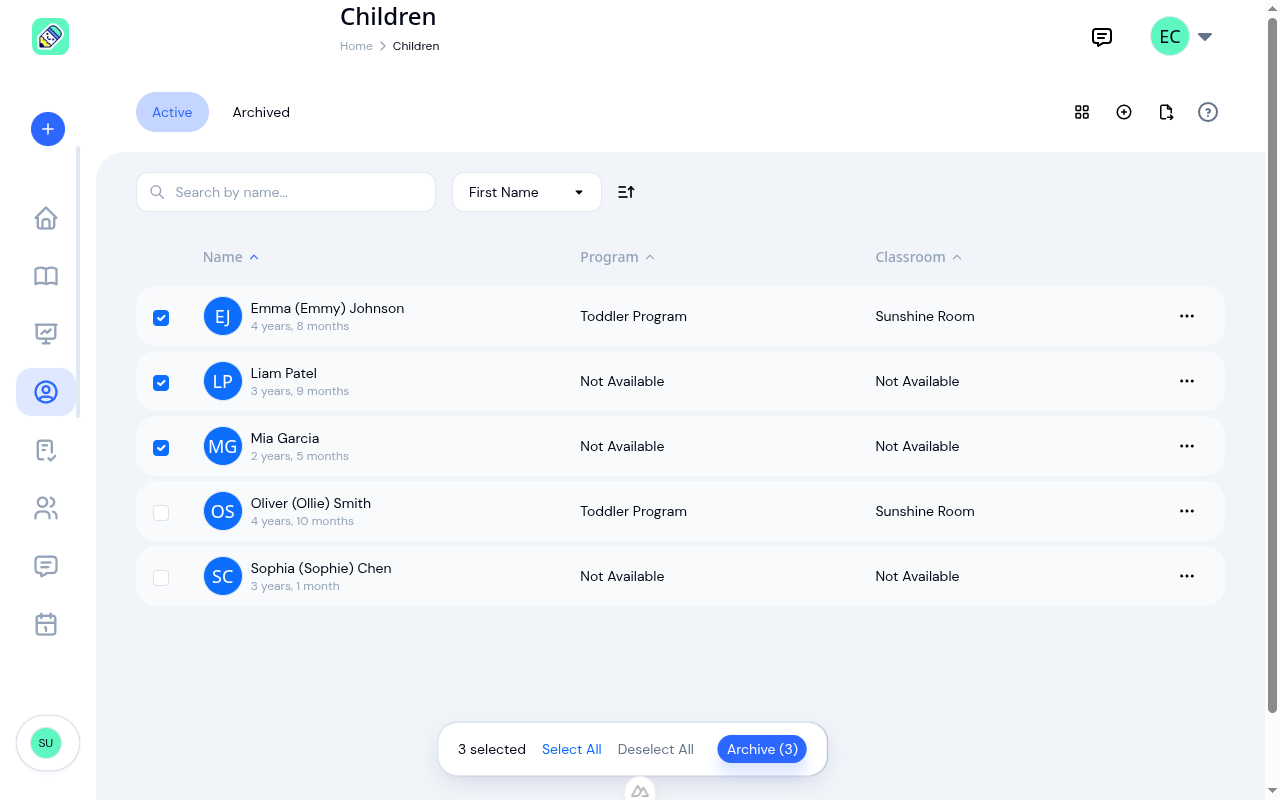
Archive a Whole Class at Once
Graduating cohorts, summer transitions, returning groups: bulk archive and unarchive let you update dozens of children...
Avoiding Financial Pitfalls in Childcare
The money mistakes that put childcare centers under: cash flow gaps, underpricing, and no reserve. What to watch, and...