How Childcare Attendance Tracking Works
Attendance tracking is the most fundamental administrative task at any childcare center. Every day, you need to know exactly which children are in your care, when they arrived, and when they left. It sounds simple, but the way you handle it affects licensing compliance, staff-to-child ratios, billing accuracy, and parent trust.
This guide covers how childcare attendance tracking works, what licensing bodies expect, the trade-offs between paper and digital systems, and how to decide when your center needs to make a change.
Why Attendance Tracking Matters Beyond Headcounts
Most centers start tracking attendance because they have to. Licensing requires it. But accurate attendance data touches almost every other part of your operation:
- Licensing compliance. Regulators audit attendance records to verify staff-to-child ratios were maintained throughout the day. Gaps, inconsistencies, or missing records can trigger violations. For a deeper look at audit preparation, see our guide on how childcare centers stay audit-ready.
- Safety and accountability. In an emergency evacuation, you need an instant headcount. If your attendance records lag behind reality (a child checked in on paper but the sheet is at the front desk), you have a dangerous gap.
- Billing accuracy. Centers that bill based on attendance need reliable timestamps. Manual entry errors lead to billing disputes with parents and lost revenue.
- Staffing decisions. Real-time attendance data tells you when you're approaching ratio limits, so you can adjust staffing before you're out of compliance.
How Centers Track Attendance Today
Paper Sign-In Sheets
The simplest approach. Parents sign a sheet at drop-off and pick-up, recording the time and their signature. Most centers start here, and many stay here for years.
What works: Low cost, no technology required, parents understand it immediately.
What breaks down: Handwriting is illegible, times get rounded or forgotten, sheets get lost, and pulling records for an audit means searching through months of paper. Staff can't check ratios in real time without manually counting the room.
Spreadsheets
A step up from paper. Staff enter attendance into a shared spreadsheet at the end of each day or shift.
What works: Searchable, easier to generate reports than paper.
What breaks down: Data entry happens after the fact, introducing errors and delays. Concurrent editing causes conflicts. No real-time visibility during the day.
Digital Attendance Software
Purpose-built platforms where staff record check-ins and check-outs on a tablet or phone. Records are timestamped automatically and stored centrally. For a detailed explanation of what these tools do, see our guide on daycare attendance software explained.
What works: Real-time headcounts, automatic timestamps, instant reporting, audit-ready records, parent notifications on check-in/out.
What breaks down: Requires devices, internet access, and staff adoption. Has a cost. Some platforms are over-engineered for what small centers need.
What Licensing Bodies Expect
Requirements vary by state and province, but the common elements are:
- Daily records with check-in and check-out times for every child
- Staff-to-child ratio documentation — proof that ratios were maintained throughout the day, not just at drop-off and pick-up
- Retention periods — most jurisdictions require 2-5 years of attendance records
- Accessibility — records must be available for inspection on request, not stored in a basement filing cabinet
The key point: regulators don't care whether your system is paper or digital. They care that the records are accurate, complete, and accessible. A well-maintained paper system passes an audit. A poorly maintained digital system fails one.
That said, digital systems make compliance significantly easier at scale. When an inspector asks for three months of records, pulling them from a database takes seconds. Pulling them from paper takes hours.
When Paper Stops Working
Not every center needs software. A home daycare with six children doesn't need a digital check-in system. But there are clear signals that paper is creating risk:
- You can't answer "who's here right now?" in under 10 seconds. If your sign-in sheet is at the front desk and you're in the back room, you don't have real-time visibility.
- Audit preparation takes more than an hour. If a licensing visit means scrambling through filing cabinets, your records system is a liability.
- You've had billing disputes caused by attendance errors. Manual timestamps get rounded, forgotten, or misread. If parents are questioning invoices because of attendance discrepancies, your data isn't reliable enough.
- Staff are maintaining ratios by memory, not data. If ratio management depends on someone doing mental math instead of checking a screen, you're one busy morning away from a violation.
- You run multiple classrooms. The complexity of tracking attendance across rooms, with children moving between them during the day, overwhelms paper quickly.
If two or more of these apply, paper is costing you more in time and risk than software would cost in money.
What to Look for in an Attendance System
If you decide to move to digital, focus on these capabilities:
- Check-in and check-out with timestamps. This is table stakes. Every system does it. What matters is how quickly staff can record it — one tap vs. five screens.
- Real-time dashboard. You should be able to see who's in each room right now, not who was there when someone last updated a spreadsheet. For tips on reducing friction during busy drop-offs, see our guide on speeding up attendance check-ins.
- Reporting and export. Can you pull attendance reports by date range, classroom, or child? Can you export them for auditors? If reporting requires manual work, the system isn't saving you enough time.
- Parent visibility. Parents want to know their child was checked in safely. Systems that notify parents automatically on check-in reduce the "did they arrive?" anxiety calls.
- Kiosk or self-service mode. For centers with high drop-off volume, a tablet at the door where parents check in their own children reduces the bottleneck on staff.
See our childcare attendance software for how KidzLog handles these.
The Bottom Line
Attendance tracking is the foundation everything else rests on: compliance, safety, billing, staffing. The method matters less than the consistency. A paper system that's maintained rigorously beats a digital system that staff ignore.
But as your center grows past 15-20 children, paper systems start creating real operational risk. The question isn't whether digital attendance tracking is better. It's whether the gap between what paper gives you and what you actually need has become too wide to manage.
Ready to Simplify and Organize your Daycare?
Get started with KidzLog today!
KidzLog Team
Related Articles
Benefits of Digital Attendance Tracking
Why childcare centers switch from paper sign-in sheets to digital attendance tracking, and what changes operationally...
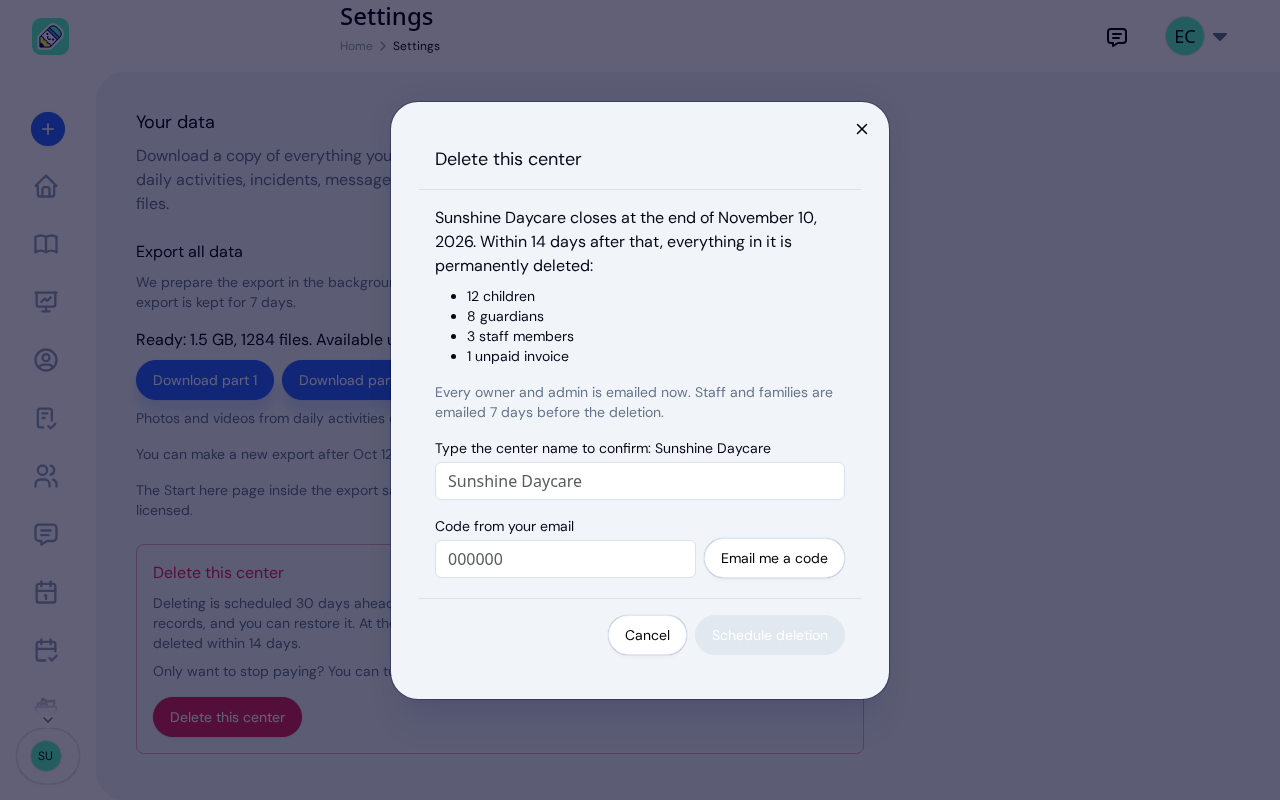
New: Delete Your Center From Settings
Owners can schedule their center's deletion from Settings, keep a full copy of their records, and restore the center...
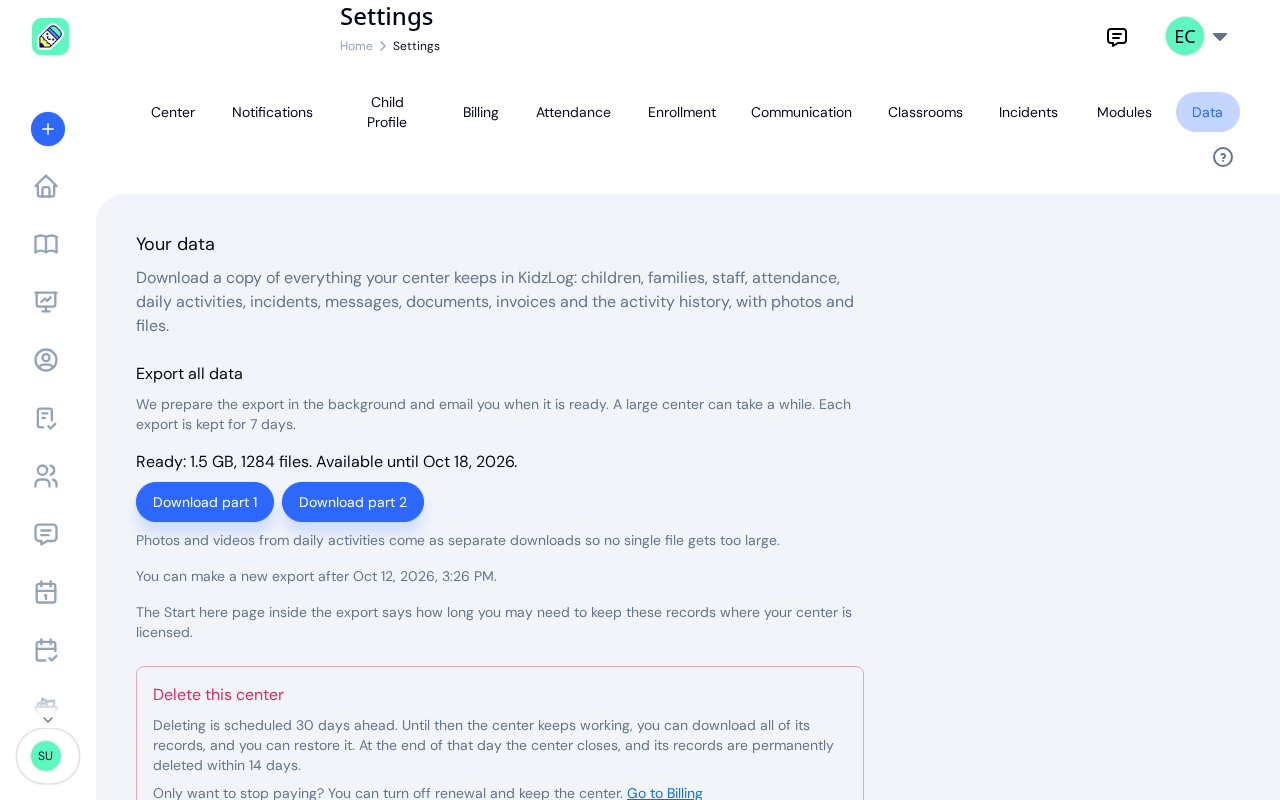
New: Export All of Your Center's Data
Owners can now download everything their center keeps in KidzLog: records as spreadsheets, documents, signatures,...