Childcare Nutrition and Meal Planning
What children eat during their hours in care directly affects their energy, mood, focus, and long-term health. For childcare providers, nutrition is not just a logistical task — it is a core part of the developmental environment you create. This guide covers the practical side of feeding children well, from building balanced menus to managing allergies safely.
Healthy Meal Planning Basics
Good meal planning starts with structure. A consistent weekly planning cycle reduces waste, simplifies grocery shopping, and ensures nutritional variety.
Building Balanced Menus
Every meal and snack should aim to include foods from multiple food groups. A practical framework for each meal:
- One protein source — chicken, fish, beans, lentils, eggs, tofu, or cheese
- One whole grain — whole wheat bread, brown rice, oatmeal, or whole grain pasta
- At least one fruit or vegetable — ideally both, with variety in color and preparation
- One dairy or calcium-rich food — milk, yogurt, or fortified alternatives
This is not about perfection at every meal. It is about ensuring that across the full day, children are exposed to a broad range of nutrients.
Weekly Planning Cycles
A rotating menu — typically on a three- or four-week cycle — prevents repetition while keeping planning manageable. Here is how to set one up:
- Draft three to four weeks of menus. Each week should feature different main dishes while keeping preparation complexity realistic for your kitchen setup.
- Check for balance across each week. Avoid serving the same protein source on consecutive days. Alternate between cooked and raw vegetables. Include a mix of familiar foods and new options.
- Build in flexibility. Designate one day per week as a "seasonal" or "local" day where the menu adapts to what is freshest and most affordable.
- Post menus visibly. Parents should be able to see what their child will be eating. This builds trust and helps parents plan complementary meals at home.
Portion Sizes by Age
Young children need smaller portions than adults expect. Toddlers do well with roughly one-quarter to one-third of an adult portion — a tablespoon of each food per year of age is a reasonable starting point. Preschoolers can handle one-third to one-half of an adult portion and benefit from serving themselves. For all ages, offer seconds rather than loading plates initially, and allow children to decide how much they eat. Forcing children to clean their plates overrides natural hunger cues.
Meeting Nutritional Guidelines
Most jurisdictions have specific nutritional standards that licensed childcare centers must follow. Beyond compliance, these guidelines provide a useful framework for quality nutrition.
Government Standards
In the United States, the USDA's Child and Adult Care Food Program (CACFP) outlines meal patterns specifying required food components and serving sizes by age group. In Canada, provincial licensing regulations set similar requirements referencing Canada's Food Guide. Key requirements typically include serving meals and snacks at regular intervals (no more than three hours apart), including specific food components at each meal, offering water throughout the day, and restricting choking hazards for younger children. Even if your center does not participate in a food program, these standards make a reliable baseline.
Age-Appropriate Nutrition
Nutritional needs shift as children grow. Infants follow individualized feeding plans with breast milk or formula as the primary nutrition source. Toddlers are transitioning to table foods — iron-rich foods are particularly important at this stage, and offering a variety of textures supports oral motor development. Preschoolers benefit from complex carbohydrates, protein, and healthy fats for sustained energy; repeated low-pressure exposure to new foods works better than forcing consumption during their picky phases. School-age children need increased calories for growth spurts, with the focus on nutrient-dense rather than calorie-dense options.
Managing Food Allergies and Dietary Restrictions
Food allergies in childcare are not rare exceptions — they are a daily operational reality. The eight most common allergens (milk, eggs, peanuts, tree nuts, wheat, soy, fish, and shellfish) account for the majority of allergic reactions in children, but any food can potentially trigger a response.
Allergy Action Plans
Every child with a known allergy should have a written allergy action plan on file before their first day. This plan, developed with the child's parent and physician, should include:
- The specific allergen(s)
- Signs and symptoms of a reaction (mild and severe)
- Step-by-step response instructions, including medication dosing
- Emergency contact information
- A current photograph of the child
Post allergy information (with parent consent) in the kitchen, the child's classroom, and any other area where food is prepared or served. Every staff member who interacts with the child — not just the lead teacher — should know the plan.
Preventing Cross-Contamination
Cross-contamination is the most common cause of accidental allergen exposure in childcare settings. Practical prevention measures:
- Designate allergen-free preparation surfaces or thoroughly sanitize shared surfaces between uses
- Read every label, every time. Manufacturers change ingredients without notice. A product that was safe last month may not be safe today.
- Separate serving utensils. Never use the same spoon to serve a dish containing an allergen and an allergen-free alternative.
- Establish handwashing protocols. All children and staff should wash hands before and after meals. Soap and water are effective at removing allergen residue; hand sanitizer is not.
- Address shared-table risks. Seat children with severe allergies where cross-contact from a neighbor's plate is minimized. Use placemats or trays as physical barriers.
Dietary Restrictions Beyond Allergies
Many families follow dietary patterns based on religion, culture, ethics, or health needs — vegetarian, vegan, halal, kosher, gluten-free, and others. Handle these with the same respect and operational rigor as medical allergies:
- Gather detailed dietary information during enrollment
- Build menu alternatives into your weekly plan rather than creating them ad hoc
- Never single out a child for eating differently — normalize variety at the table
- When in doubt about whether a food meets a family's requirements, ask the parent directly
Incorporating Nutritious Snacks
Snacks are not filler between meals. For young children with small stomachs and high energy needs, snacks are a critical source of daily nutrition. Treat snack planning with the same intentionality as meal planning.
Healthy Snack Options
Effective snacks combine at least two food groups and provide sustained energy rather than a sugar spike:
- Apple slices with cheese cubes
- Whole grain crackers with hummus
- Yogurt with berries
- Vegetable sticks with bean dip
- Banana slices with a thin spread of sunflower seed butter
- Hard-boiled egg halves with cherry tomatoes
- Whole grain mini muffins made with grated vegetables
Avoid packaged snacks marketed to children — they are typically high in sodium, sugar, and artificial ingredients, regardless of the health claims on the packaging.
Involving Children in Food Preparation
Children who participate in preparing food are more likely to eat it. Toddlers can wash vegetables and tear lettuce. Preschoolers can spread, pour, measure, and cut soft foods with child-safe tools. School-age children can follow simple recipes and read labels. These activities build fine motor skills, math concepts, and a positive relationship with food.
Practical Tips for Day-to-Day Nutrition Management
Communicating with Parents About Meals
Transparent communication about food builds trust and prevents misunderstandings. Effective practices include:
- Sharing daily meal reports that note what was served and how much the child ate — KidzLog's activity logging makes it easy to record and share meal details with parents in real time
- Posting weekly menus in advance (on a bulletin board, through a parent portal, or both)
- Asking parents about new foods introduced at home so you can reinforce exposure at the center
- Discussing picky eating without judgment — reassure parents that food phases are normal and that repeated low-pressure exposure is the most effective long-term strategy
Cost-Effective Nutrition
Serving healthy food on a childcare budget is challenging but achievable. Buy seasonal produce — it is fresher, tastier, and cheaper than out-of-season imports. Use legumes and eggs as primary protein sources several days per week. Cook from scratch when possible, since pre-made meals and packaged snacks cost significantly more per serving. Minimize waste by serving appropriate portions and repurposing leftovers (yesterday's roasted vegetables become today's soup). Some local farms and food co-ops offer discounted rates for childcare centers.
Building a Culture of Healthy Eating
Nutrition in childcare goes beyond what appears on the plate. It includes the atmosphere at mealtimes, the language adults use around food, and the consistency of the routines that surround eating. Sit with children during meals. Eat the same foods they eat. Talk about flavors and textures rather than labeling foods "good" or "bad." When children grow up in an environment where healthy eating is simply the norm — not a battle or a lesson — they carry those habits forward.
Ready to Simplify and Organize your Daycare?
Get started with KidzLog today!
KidzLog Team
Related Articles
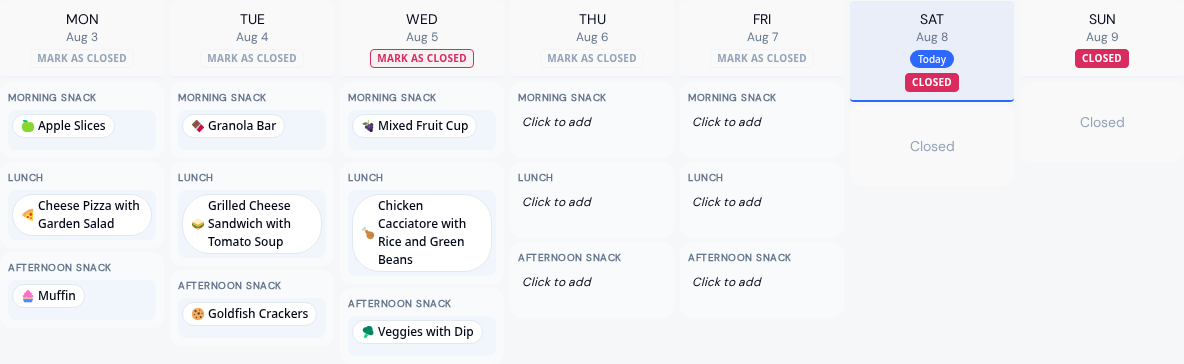
Menus by Room and Clearer Allergy Alerts
Run an infant menu alongside a center-wide one, plan a whole month before saving it, email families when it is ready,...
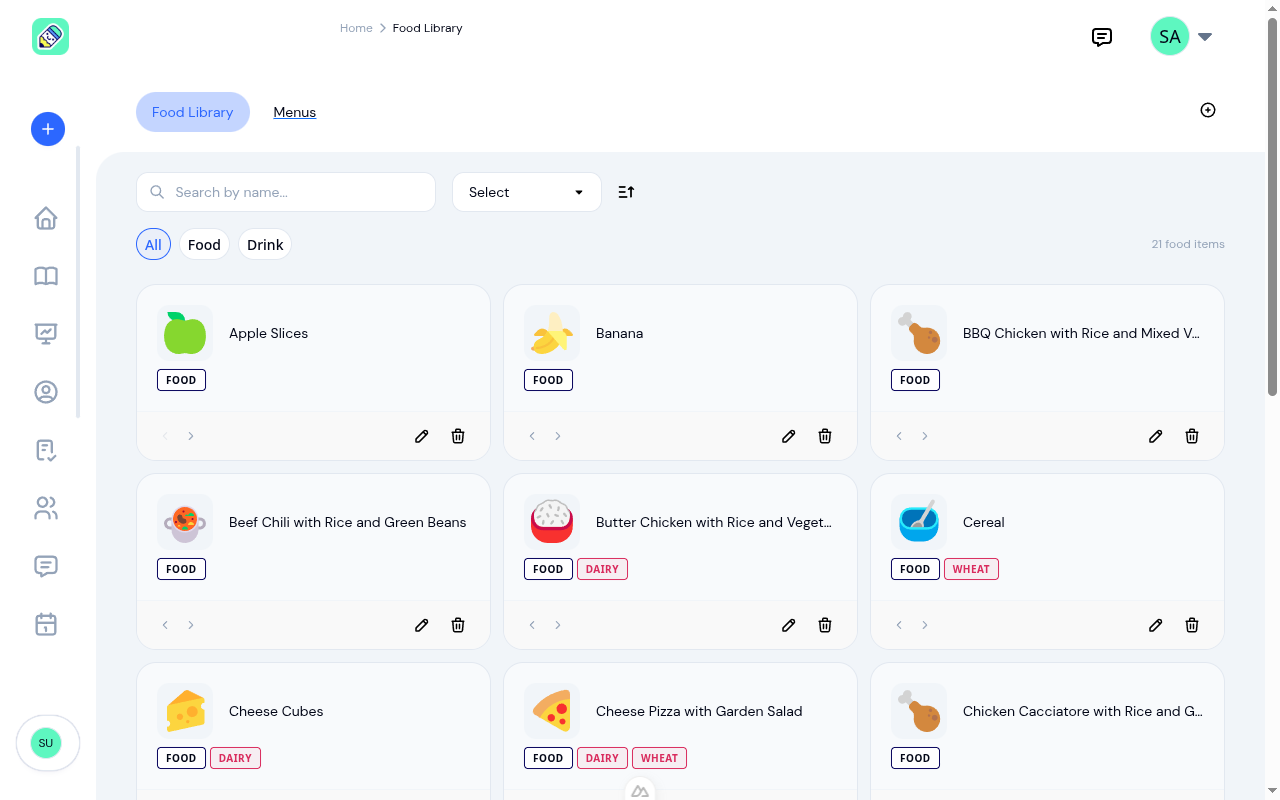
Menu Planning, Meal Logging, Allergy Alerts
Build monthly menus, log meals in one tap from the planned menu, and get allergy warnings before food is served....
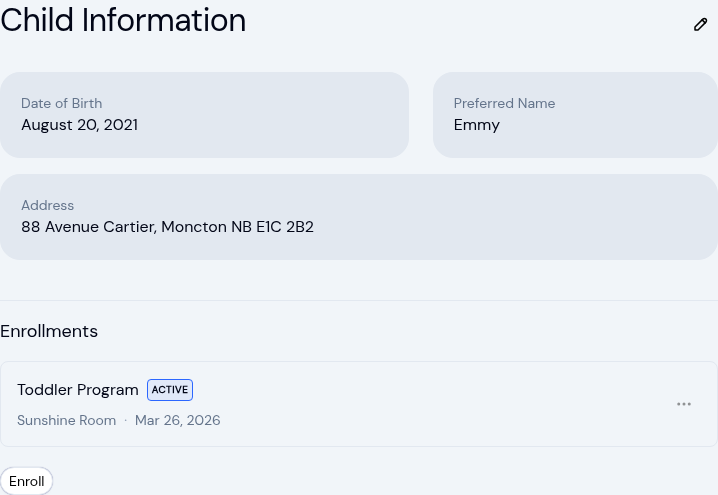
New: A Child's Address and Health Care Provider
The child record now holds the child's own address and their health care provider. Both show on the profile, in Health...