Effective Behavior Management Strategies for Childcare Providers
Managing behavior in a childcare setting is one of the most demanding parts of the job, and one of the most important. The strategies you use shape how children understand boundaries, express emotions, and interact with the world around them. This guide walks through practical, evidence-based approaches that work across age groups and classroom sizes.
Start with Positive Reinforcement
Positive reinforcement is the foundation of effective behavior management. When children receive acknowledgment for the behaviors you want to see, those behaviors happen more often. This is not about bribing children into compliance. It is about creating an environment where good choices are noticed and valued.
Specific Praise Over Generic Praise
"Good job" is easy to say but carries little meaning for a child. Compare it to "I noticed you shared the blocks with Maya without being asked — that was really kind." The second version tells the child exactly what they did well and why it mattered. This kind of specific, descriptive praise helps children internalize the behavior rather than just seeking adult approval.
Reward Systems That Work
Sticker charts and token systems can be effective when used thoughtfully. A few guidelines to keep them productive:
- Keep goals achievable. A toddler cannot work toward a reward that takes two weeks to earn. Short-term milestones work best for younger children.
- Reward effort, not perfection. A child who struggles with sharing but makes a genuine attempt deserves recognition.
- Phase rewards out gradually. The ultimate goal is intrinsic motivation. Once a behavior becomes habitual, shift from tangible rewards to verbal acknowledgment.
- Make it visible. A chart posted at the child's eye level gives them ownership over their progress.
Group Recognition
Group-level recognition builds classroom community. Keep a class jar where marbles or pom-poms are added when the group demonstrates cooperation or kindness. When the jar is full, the group earns a shared reward — extra outdoor time, a special story, or a dance party. This encourages children to support each other rather than compete.
Handling Challenging Behaviors
Every childcare provider encounters biting, hitting, tantrums, defiance, and other challenging behaviors. The key is responding in ways that address the root cause rather than just suppressing the symptom.
Identify the Function of the Behavior
Most challenging behaviors serve one of four functions: gaining attention, escaping a task, accessing a desired item, or meeting a sensory need. A child who throws blocks during cleanup is likely trying to escape the task. A child who screams during circle time may be overwhelmed by sensory input. When you identify the function, you can address the actual need.
Ask yourself: What happened right before the behavior? What happened right after? What did the child gain or avoid? These questions reveal patterns faster than any single observation.
De-escalation Techniques
When a child is in the middle of a behavioral episode, logic and reasoning are largely ineffective. The emotional brain has taken over. Instead:
- Lower your voice and body. Get to the child's eye level. Speak slowly and quietly. A calm adult presence is the most powerful de-escalation tool available.
- Validate the emotion, not the behavior. "You are really frustrated that Liam took the truck. It is okay to feel frustrated. It is not okay to hit." This teaches emotional vocabulary while maintaining a clear boundary.
- Offer two acceptable choices. "Would you like to use the blue truck or the red car?" Choices restore a sense of control, which is often what the child has lost.
- Use proximity, not volume. Moving closer to a child who is off-task is far more effective than calling across the room.
Consistency Across Staff
Inconsistency is one of the fastest ways to undermine behavior management. If one teacher allows running indoors and another does not, children learn to test boundaries rather than respect them. Ensure that:
- All staff use the same language for rules and expectations
- Consequences are applied uniformly regardless of which adult is present
- Transitions and routines follow the same sequence every day
- New staff and substitutes receive a clear briefing on classroom expectations
Creating a Behavior Management Plan
A written behavior management plan transforms reactive responses into a proactive system. It gives staff a shared framework, provides documentation for parent conversations, and creates accountability.
Core Components
A strong behavior management plan includes:
- Classroom expectations — stated positively (e.g., "We use gentle hands" rather than "No hitting"). Three to five expectations are enough. More than that becomes impossible for young children to remember.
- Teaching strategies — how you will explicitly teach the expectations. Role-playing, puppet demonstrations, and reading relevant picture books are all effective methods.
- Reinforcement strategies — how you will acknowledge and encourage expected behavior.
- Response procedures — step-by-step protocols for when expectations are not met, including who is responsible for what and at what point parents are contacted.
- Documentation methods — how staff will track behavioral incidents, including the date, time, antecedent, behavior, and consequence (the ABC model). A digital incident reporting tool can streamline this documentation and keep records organized for parent meetings and compliance reviews.
Involving Parents
Parent communication around behavior should be ongoing, not reserved for problems. Share positive observations regularly so that when you do need to discuss a concern, the relationship already has a foundation of trust.
When a behavioral pattern emerges, schedule a private conversation. Share your observations factually — describe what you see, not what you interpret. "Owen has been biting other children during free play, usually when another child takes a toy he is using" is far more productive than "Owen has an aggression problem."
Work together to create a consistent approach between home and the childcare setting. Children thrive when the adults in their lives are aligned.
Understanding Child Development and Behavior
Much of what looks like misbehavior is actually age-appropriate development. Setting expectations that match a child's developmental stage prevents frustration on both sides.
Infants (0-12 Months)
Infants do not misbehave. Crying, grabbing, and mouthing objects are their primary ways of communicating and exploring. Responding promptly to an infant's needs builds secure attachment, which is the single strongest foundation for positive behavior later on.
Toddlers (1-3 Years)
Toddlers are developing autonomy. "No" is not defiance — it is a developmental milestone. They have limited impulse control, minimal ability to share, and big emotions they cannot yet name. Expect tantrums, possessiveness over toys, and difficulty with transitions. Effective strategies include offering limited choices, maintaining predictable routines, and using short, clear sentences.
Preschoolers (3-5 Years)
Preschoolers are learning to navigate social relationships. They can begin to understand rules, take turns, and express emotions verbally — but they still need frequent reminders and scaffolding. Role-playing social scenarios, reading stories about feelings, and using visual schedules all support this age group.
School-Age Children (5+)
Older children can participate in creating classroom rules and problem-solving conflicts. They respond well to natural consequences and group discussions. Their challenging behaviors often stem from social dynamics, boredom, or a need for greater independence.
Practical Tools for the Classroom
Calm-Down Corners
A calm-down corner is not a punishment. It is a dedicated space where children can go to regulate their emotions. Stock it with sensory tools — stress balls, soft pillows, picture books about feelings, and visual breathing guides. Teach children how to use it proactively, during calm moments, so they can access it independently when they need it.
Visual Schedules
Many behavioral challenges arise from uncertainty. Children who do not know what comes next often resist transitions. A visual schedule — using photographs or simple illustrations — posted at the child's eye level gives them predictability and a sense of control. Review the schedule at the start of the day and reference it throughout: "After snack, we will go outside. See? It is right here on our schedule."
Modeling Behavior
Children absorb more from what adults do than from what adults say. If you want children to use words when they are frustrated, let them see you do it: "I am feeling frustrated because the paint spilled. I am going to take a deep breath and then clean it up." This kind of narrated self-regulation is one of the most powerful teaching tools available.
Transition Warnings
Abrupt transitions are a common trigger for behavioral issues. Give children advance notice: "In five minutes, we will start cleaning up." Follow with a two-minute warning and a one-minute warning. Pair verbal warnings with a consistent signal — a song, a chime, or a visual timer — so children can anticipate the change.
Putting It All Together
Effective behavior management is not a single technique. It is a system built on understanding child development, creating a predictable environment, reinforcing the behaviors you want to see, and responding to challenges with empathy and consistency. The goal is not a silent, compliant classroom. It is a classroom where children feel safe enough to learn, take risks, and grow.
Ready to Simplify and Organize your Daycare?
Get started with KidzLog today!
KidzLog Team
Related Articles
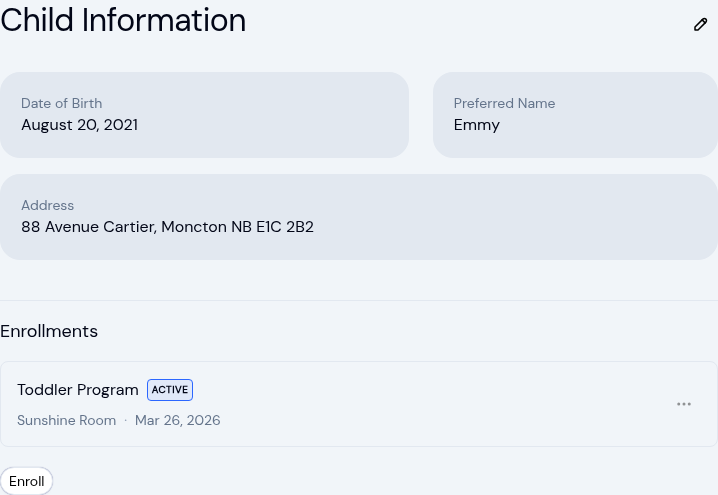
New: A Child's Address and Health Care Provider
The child record now holds the child's own address and their health care provider. Both show on the profile, in Health...
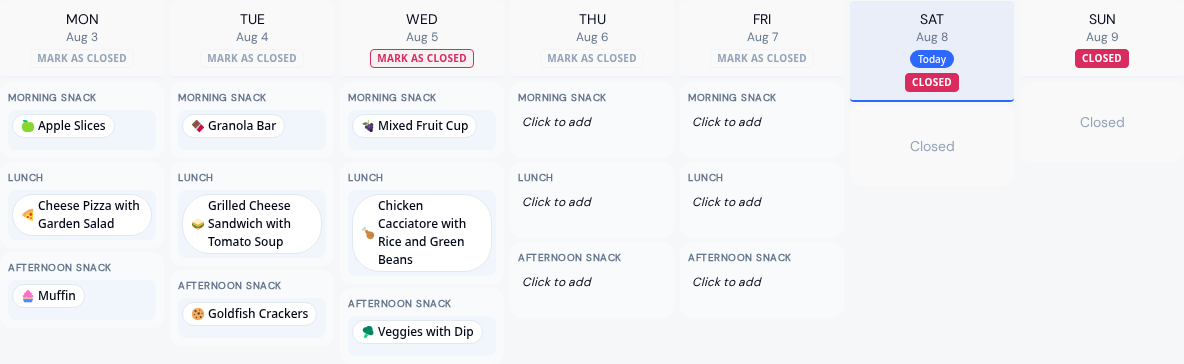
Menus by Room and Clearer Allergy Alerts
Run an infant menu alongside a center-wide one, plan a whole month before saving it, email families when it is ready,...
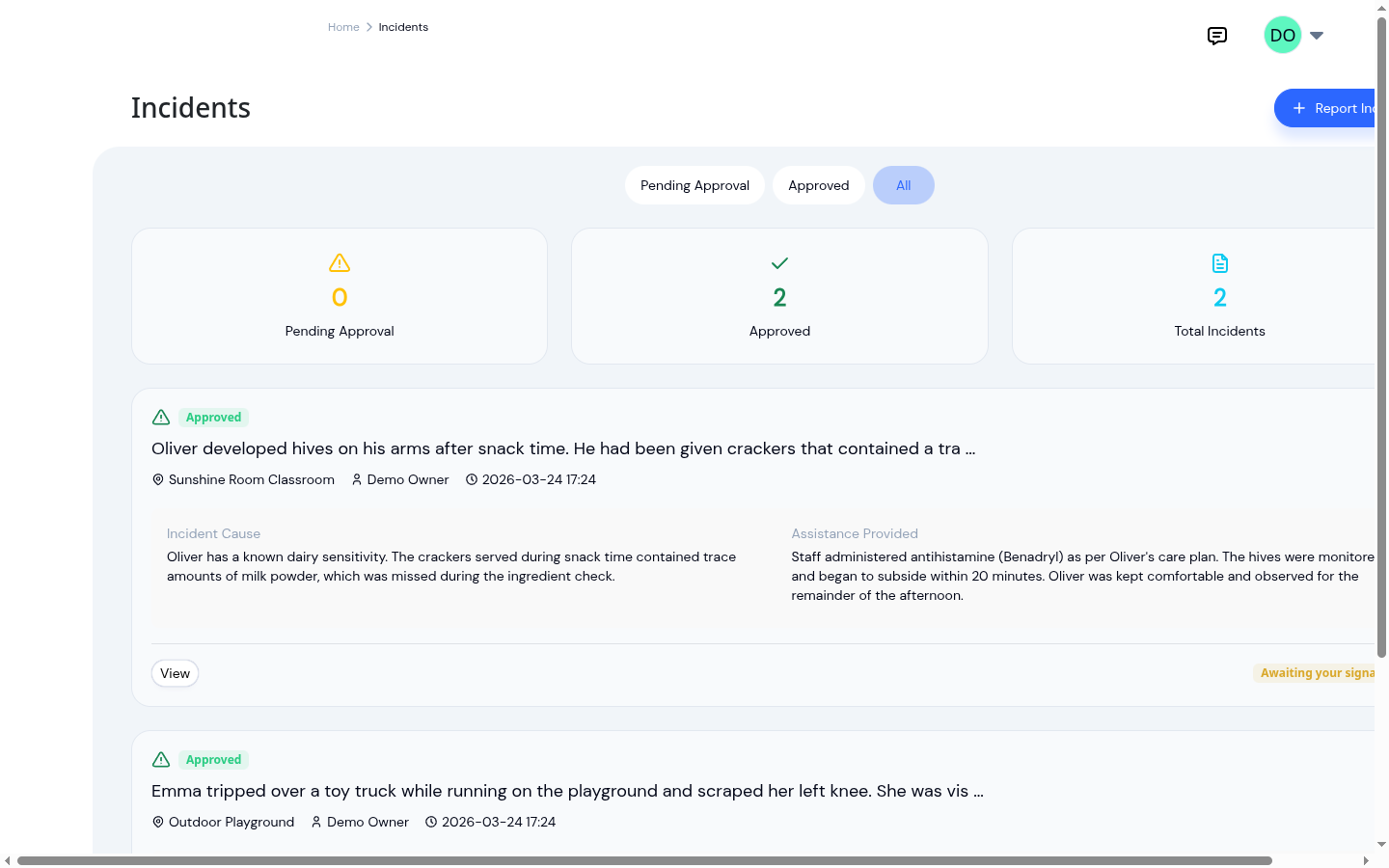
Sorting your incident log by type and severity
A scraped knee and a reportable reaction look identical in most logs. Sorting by type and severity makes a flat record...