How to Retain Your Best Childcare Staff
The cost of replacing a childcare educator extends far beyond the $3,000-5,000 recruitment expense. When a valued teacher leaves, children lose a trusted caregiver, parents question stability, remaining staff absorb extra work, and your center's culture suffers. In today's competitive labor market, where childcare workers have unprecedented options, creating a positive work environment isn't just nice to have—it's essential for survival. Paired with strong recruitment strategies, a great culture becomes your most powerful retention tool.
Research consistently shows that workplace environment trumps salary as the primary factor in childcare staff retention. Teachers who feel valued, supported, and connected to their workplace are 87% more likely to stay for three or more years, regardless of pay differentials. This comprehensive guide provides actionable strategies for transforming your childcare center into a place where excellent educators choose to build their careers.
Understanding Why Childcare Professionals Leave
Before building a positive environment, we must understand what drives educators away:
The Top Reasons for Turnover
- Feeling undervalued - Lack of recognition for their professional expertise
- Insufficient support - Inadequate resources, training, or administrative backing
- Burnout and stress - Overwhelming responsibilities without adequate relief
- Poor leadership - Inconsistent management or lack of clear communication
- Limited growth opportunities - No clear path for advancement or skill development
- Work-life imbalance - Inflexible schedules that conflict with personal needs
- Toxic relationships - Unresolved conflicts with colleagues or supervisors
- Inadequate compensation - While not primary, pay still matters when combined with other factors — see our guide on what benefits matter most to childcare workers
The Hidden Costs of High Turnover
- Financial impact: $50,000-75,000 annually for a center with 10 staff positions
- Quality degradation: Lower assessment scores and parent satisfaction ratings
- Team morale: Remaining staff experience increased stress and decreased engagement
- Child outcomes: Disrupted attachment relationships affect developmental progress
- Reputation damage: High turnover becomes known in the community
Building the Foundation: Leadership That Inspires
Transformational Leadership Practices
Lead by Example Your behavior sets the cultural tone. Demonstrate the values you want to see:
- Arrive early and stay positive during challenging moments
- Actively participate in classroom activities when needed
- Show respect for all staff members regardless of position
- Admit mistakes and model continuous learning
- Celebrate efforts as much as outcomes
Consistent and Transparent Communication Create predictable communication channels:
- Daily huddles: 5-minute morning check-ins with each classroom
- Weekly updates: Email or bulletin board with center news
- Monthly meetings: All-staff gatherings for deeper discussions
- Open-door policy: Genuine availability for concerns
- Decision transparency: Explain the "why" behind changes
Empowering Middle Management
Team Lead Development If you have lead teachers or assistant directors:
- Provide leadership training and mentorship
- Delegate meaningful responsibilities with authority
- Include them in strategic planning sessions
- Support their decisions publicly
- Create succession planning opportunities
Distributed Leadership Model Share leadership responsibilities across the team:
- Curriculum committees: Teachers lead program development
- Social committees: Staff organize team events
- Mentorship programs: Experienced teachers guide newcomers
- Professional development coordinators: Peers organize training
- Parent engagement teams: Teachers lead family initiatives
Creating a Culture of Recognition and Appreciation
Systematic Recognition Programs
Daily Appreciation Practices Make recognition part of your routine:
- Morning affirmations: Start staff meetings with success stories
- Walkthrough praise: Catch teachers doing things right
- Parent testimonial sharing: Forward positive feedback immediately
- Peer shout-outs: Encourage staff to recognize each other
- End-of-day gratitude: Thank specific people for specific actions
Formal Recognition Systems Structure appreciation into your operations:
Monthly Recognition
- Teacher of the Month with preferred parking
- Innovation Award for creative solutions
- Team Player Award for collaboration
- Rising Star for newer employees
- Above and Beyond for extra efforts
Annual Celebrations
- Years of service milestones with meaningful gifts
- Professional achievement recognition (degrees, certifications)
- Perfect attendance acknowledgments
- Parent's Choice awards based on feedback
- Peer-nominated excellence awards
Personalized Appreciation
Understanding Individual Preferences Not everyone values the same type of recognition:
- Public praise: Some thrive on group acknowledgment
- Private feedback: Others prefer one-on-one appreciation
- Written notes: Handwritten cards mean everything to some
- Extra time off: Work-life balance as a reward
- Professional opportunities: Conference attendance or training
- Increased autonomy: More decision-making power
Implementation Strategy
- Survey staff about preferred recognition methods
- Create individual "appreciation profiles"
- Vary recognition approaches accordingly
- Track recognition to ensure equity
- Adjust based on effectiveness
Fostering Genuine Team Connection
Building Relationships That Last
Structured Team Building Move beyond forced fun to meaningful connection:
Monthly Team Activities
- Rotating lunches: Different staff pairs lunch together
- Skill shares: Teachers teach hobbies to colleagues
- Book clubs: Professional or personal interest books
- Wellness challenges: Group fitness or mindfulness goals
- Creative collaborations: Joint art or music projects
Quarterly Deeper Connections
- Retreat days: Off-site planning and bonding
- Service projects: Community volunteering together
- Cultural celebrations: Honor diverse backgrounds
- Professional conferences: Attend as a team
- Success celebrations: Mark center achievements
Creating Psychological Safety
Environment Where Staff Can Be Themselves
- Encourage appropriate humor and playfulness
- Accept mistakes as learning opportunities
- Support personal sharing without requiring it
- Respect diverse perspectives and approaches
- Address conflicts quickly and fairly
Conflict Resolution Framework
- Early intervention: Address tensions before they escalate
- Neutral mediation: Fair process for resolving disputes
- Clear protocols: Known procedures for raising concerns
- Follow-through: Ensure resolutions are implemented
- Learning focus: Use conflicts to improve systems
Supporting Professional Growth and Development
Comprehensive Professional Development Program
Individual Development Planning Create personalized growth paths for each educator:
Annual Planning Process
- Self-assessment: Teachers evaluate their skills and interests
- Goal setting: Collaborate on 3-5 annual objectives
- Resource allocation: Identify training and support needs
- Timeline creation: Map out development milestones
- Progress monitoring: Quarterly check-ins on goals
Diverse Learning Opportunities
- Internal training: Monthly skill-building workshops
- External conferences: Annual attendance with expenses paid
- Online courses: Subscriptions to professional platforms
- Peer observation: Structured classroom visits for learning
- Mentorship programs: Formal pairing with experienced educators
- College partnerships: Tuition assistance or on-site classes
Career Advancement Pathways
Clear Progression Opportunities Map out potential career paths within your center:
Teaching Track
- Assistant Teacher → Teacher → Lead Teacher → Master Teacher
- Each level with distinct responsibilities and compensation
- Skills-based advancement criteria
- Support for achieving requirements
Leadership Track
- Teacher → Team Leader → Assistant Director → Director
- Management training at each transition
- Gradual increase in administrative duties
- Mentorship from current leaders
Specialist Track
- Curriculum Specialist
- Family Engagement Coordinator
- Special Needs Inclusion Expert
- Technology Integration Leader
- Each with unique development and compensation
Preventing Burnout Through Sustainable Practices
Workload Management Strategies
Realistic Expectations Set achievable standards that don't overwhelm:
- Planning time: Minimum 2 hours weekly for prep
- Documentation: Streamlined systems to reduce paperwork
- Meeting limits: Cap required meetings at reasonable levels
- Break coverage: Ensure actual breaks happen daily
- Substitute pool: Adequate coverage for absences
Technology Integration Use tools like KidzLog to reduce administrative burden:
- Digital attendance tracking saves 30 minutes daily
- Automated parent communications reduce evening work
- Simplified documentation for assessments
- Shared planning resources among teachers
- Streamlined billing and enrollment management
Work-Life Balance Initiatives
Flexible Scheduling Options Where possible, accommodate personal needs:
- Compressed work weeks: Four 10-hour days
- Job sharing: Two teachers splitting one position
- Flexible hours: Varying start/end times
- Remote work: Administrative tasks from home
- Summer schedules: Reduced hours when enrollment drops
Personal Time Support
- Mental health days: Beyond sick leave for wellness
- Family emergency leave: Flexible support during crises
- Appointment accommodation: Time for personal needs
- School event attendance: Support for teachers' own children
- Sabbatical options: Extended leave for tenured staff
Physical Environment That Supports Staff
Creating Comfortable Staff Spaces
Essential Staff Areas Invest in spaces that show you value employees:
Break Room Excellence
- Comfortable seating away from children's areas
- Full kitchen facilities (microwave, refrigerator, coffee)
- Quiet zone for decompression
- Natural light and plants
- Personal storage lockers
Professional Workspace
- Dedicated planning area with supplies
- Computer access for documentation
- Private space for parent conferences
- Adequate storage for personal items
- Ergonomic furniture for adult bodies
Classroom Environment Support
Resources That Make Teaching Easier
- Age-appropriate, quality materials in sufficient quantities
- Regular refresh of supplies and equipment
- Teacher input on purchasing decisions
- Adequate storage and organization systems
- Maintenance response to fix issues quickly
Safety and Comfort
- Proper ventilation and temperature control
- Adequate lighting for all activities
- Adult-height surfaces for teaching tasks
- Ergonomic considerations for floor-level activities
- Clean, well-maintained facilities
Communication Systems That Build Trust
Multi-Channel Communication Approach
Formal Communication Structures
- Staff meetings: Monthly with clear agendas and time limits
- Team huddles: Weekly 15-minute check-ins
- One-on-ones: Bi-weekly individual conversations
- Digital updates: Regular emails or app messages
- Bulletin boards: Visual communication for quick reference
Informal Communication Culture
- Daily classroom visits by leadership
- Lunch conversations without agendas
- Open-door policy that's genuinely open
- Walking meetings for sensitive discussions
- Celebration of communication successes
Feedback Systems That Promote Growth
Continuous Feedback Model Replace annual reviews with ongoing dialogue:
Weekly Micro-Feedback
- One specific positive observation
- One growth opportunity if applicable
- Question about support needs
- Recognition of progress
- Planning for upcoming week
Monthly Development Conversations
- Review of goals progress
- Skill development discussions
- Resource needs assessment
- Career planning updates
- Two-way feedback exchange
Quarterly Formal Reviews
- Comprehensive performance discussion
- Goal adjustment as needed
- Compensation reviews
- Development planning
- Celebration of achievements
Building Community Connections
External Validation and Support
Parent Engagement in Staff Appreciation
- Parent testimonial collection and sharing
- Teacher appreciation week celebrations
- Holiday gift organizing by room parents
- Volunteer support for special projects
- Public recognition at center events
Community Recognition
- Local media features on excellent teachers
- Partnership with community organizations
- Professional networking opportunities
- Speaking engagements at local events
- Awards and recognition programs
Professional Community Building
Networking Opportunities
- Local early childhood educator meetups
- State association membership and events
- Online professional communities
- Mentorship beyond your center
- Conference attendance and presenting
Measuring and Maintaining Positive Culture
Assessment Tools and Metrics
Regular Pulse Checks
- Monthly anonymous surveys (5 questions max)
- Quarterly comprehensive culture assessments
- Exit interviews with departing staff
- Stay interviews with continuing staff
- 360-degree feedback for leadership
Key Performance Indicators Track metrics that matter:
- Retention rate: Target 80%+ annually — for evidence-based approaches to hitting this target, see reducing turnover in childcare
- Engagement scores: 4.0+ on 5-point scale
- Internal promotions: 50%+ of openings
- Referral rate: 30%+ new hires from staff
- Absenteeism: Below 5% unplanned absences
Continuous Improvement Process
Culture Committee Structure
- Representative from each classroom/role
- Monthly meetings to address concerns
- Authority to implement small changes
- Budget for culture initiatives
- Direct line to leadership
Action Planning Cycle
- Data collection: Gather feedback monthly
- Analysis: Identify patterns and priorities
- Planning: Develop targeted interventions
- Implementation: Roll out with clear communication
- Evaluation: Measure impact and adjust
Overcoming Common Challenges
Limited Budget Solutions
No-Cost Culture Builders
- Handwritten thank you notes
- Flexible scheduling trades
- Peer recognition programs
- Shared decision making
- Public praise and acknowledgment
- Extra breaks when possible
- First choice of classroom/schedule
- Professional development during work hours
Time Constraint Management
Efficient Culture Building
- Integrate appreciation into existing meetings
- Use technology for quick communications
- Batch recognition activities
- Delegate culture building to teams
- Build habits rather than events
- Focus on high-impact activities
Resistance to Change
Change Management Strategies
- Start with early adopters
- Pilot programs before full rollout
- Communicate the "why" repeatedly
- Celebrate small wins publicly
- Address concerns directly
- Adjust based on feedback
- Be patient with progress
Creating Your Action Plan
30-Day Quick Start
Week 1: Assessment
- Survey current staff satisfaction
- Identify top three pain points
- Review turnover patterns
- Benchmark against best practices
Week 2: Planning
- Form culture committee
- Develop initial interventions
- Create communication plan
- Set measurable goals
Week 3: Launch
- Implement easiest wins first
- Communicate changes clearly
- Begin recognition programs
- Start feedback collection
Week 4: Adjust
- Review early feedback
- Celebrate successes
- Adjust approaches
- Plan next phase
90-Day Transformation
Month 1: Foundation
- Establish communication systems
- Launch recognition programs
- Begin team building activities
- Address urgent pain points
Month 2: Development
- Implement professional growth plans
- Enhance physical environments
- Strengthen feedback systems
- Build community connections
Month 3: Sustainability
- Measure progress against goals
- Institutionalize successful practices
- Plan long-term improvements
- Celebrate transformation progress
The Return on Investment
Quantifiable Benefits
Financial Returns
- Recruitment cost savings: $30,000-50,000 annually
- Reduced overtime costs: 20-30% decrease
- Lower absenteeism costs: 15-25% reduction
- Increased enrollment: 10-15% from reputation
- Higher parent retention: 20% improvement
Quality Improvements
- Assessment score increases: 15-20% improvement
- Parent satisfaction: 25-30% increase
- Child outcome improvements: Measurable developmental gains
- Staff productivity: 20-25% increase
- Innovation and creativity: Marked improvement
Long-Term Sustainability
Creating a positive work environment isn't a one-time project—it's an ongoing commitment that requires:
- Consistent leadership attention
- Regular investment of time and resources
- Continuous feedback and adjustment
- Celebration of progress
- Patience with setbacks
- Commitment to staff wellbeing
Key Takeaways for Immediate Implementation
- Start with listening: Understand your staff's specific needs
- Fix basics first: Address fundamental irritants before adding perks
- Be consistent: Regular small actions beat occasional grand gestures
- Measure progress: Track what matters and adjust accordingly
- Involve everyone: Distributed ownership creates buy-in
- Celebrate progress: Acknowledge improvements along the way
- Stay committed: Culture change takes time but pays dividends
- Lead authentically: Your behavior sets the cultural tone
- Invest wisely: Focus resources on high-impact improvements
- Never stop improving: Continuous enhancement keeps culture fresh
Remember, retaining excellent childcare educators isn't about creating a perfect workplace—it's about consistently demonstrating that you value their contributions, support their growth, and care about their wellbeing. Start where you are, use what you have, and do what you can. Small, genuine improvements compound over time to create environments where great teachers choose to stay and thrive.
Ready to reduce administrative burden and create more time for supporting your amazing team? Try KidzLog today and discover how the right tools can help you focus on what matters most—building a workplace culture where educators love to teach!
Ready to Simplify and Organize your Daycare?
Get started with KidzLog today!
KidzLog Team
Related Articles
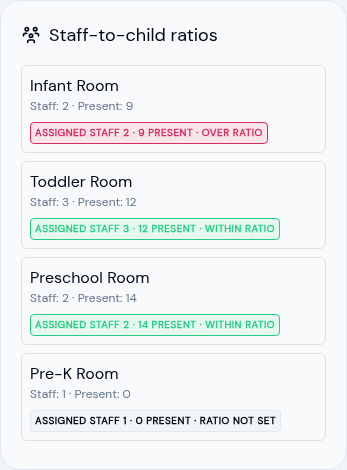
Staff-to-Child Ratios: A Practical Guide
What staff-to-child ratios require, why licensors check them, and a simple daily routine for staying within ratio...
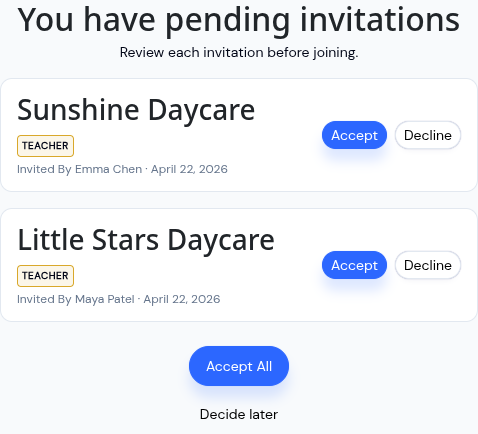
Invitations Now Ask Before They Auto-Join You
Pending center invitations now appear on a review screen after you log in. Accept, decline, or defer, so nobody is...
Reducing Turnover in Childcare
What centers with low turnover do differently: retention strategies, the real cost of replacing an educator, and where...