Emergency Preparedness for Childcare Centers
Emergency preparedness isn't just about having a basic plan on the wall—it's about creating comprehensive, tested systems that protect children, staff, and families while ensuring business continuity during crisis situations. Today, childcare centers face increasingly complex emergency scenarios, from traditional hazards like fires and severe weather to modern challenges including cybersecurity threats, pandemic responses, and active threat situations.
For childcare directors and owners across North America, robust emergency preparedness has become both a regulatory requirement and a competitive advantage. Centers with comprehensive emergency management systems demonstrate professional competence, build family trust, and protect their long-term viability. This guide provides the frameworks, protocols, and implementation strategies needed to transform basic emergency planning into world-class crisis management systems.
Whether you're operating a small family daycare or managing a multi-site childcare organization, this comprehensive approach addresses the unique challenges of protecting our most vulnerable population while maintaining operational excellence during emergencies. Emergency preparedness is one component of a broader safety strategy — our guide on essential health and safety protocols covers the full picture.
Understanding Modern Emergency Management in Childcare
The Current Emergency Landscape
Today's childcare centers must prepare for a broader range of emergencies than ever before. Traditional hazards remain critical—fires, severe weather, and medical emergencies—but modern threats require expanded planning approaches. Cybersecurity incidents can disrupt communication systems, public health emergencies may require extended closures, and community violence situations demand sophisticated lockdown procedures.
The COVID-19 pandemic fundamentally changed emergency preparedness expectations. Families now expect detailed protocols for health emergencies, flexible operating procedures, and robust communication systems. Regulatory agencies have updated requirements, and insurance providers increasingly evaluate emergency preparedness when determining coverage and rates.
Regulatory Framework: US and Canadian Requirements
United States: The Child Care and Development Block Grant (CCDBG) requires licensed childcare centers to develop emergency preparedness plans addressing natural disasters, human-caused events, and program disruptions. State licensing requirements vary but typically mandate evacuation procedures, emergency contact systems, and staff training documentation.
Canada: Provincial licensing authorities require emergency preparedness plans under childcare regulations. The Canadian Guidelines for Emergency Preparedness in Child Care Settings provide frameworks that complement provincial requirements. Both countries emphasize multi-hazard approaches and community coordination.
Multi-Hazard Risk Assessment
Effective emergency preparedness begins with comprehensive risk assessment. Consider these hazard categories:
Natural Hazards: Weather-related events (tornadoes, hurricanes, blizzards, floods), geological events (earthquakes, landslides), and environmental emergencies (air quality issues, water contamination)
Human-Caused Hazards: Security threats, transportation accidents, utility failures, hazardous material releases, and cybersecurity incidents
Health Emergencies: Infectious disease outbreaks, food-borne illnesses, injury situations, and medical emergencies — for detailed protocols on outbreak prevention and response, see our guide on managing illness in childcare
Operational Emergencies: Power outages, communication failures, staffing shortages, facility damage, and supply chain disruptions
Comprehensive Emergency Planning Framework
Emergency Response Team Structure
Every childcare center needs a clear emergency response hierarchy with defined roles and backup assignments. The size of your team depends on enrollment and staffing, but essential positions include:
Emergency Coordinator: Overall incident command, decision-making authority, external communication coordination. This role typically belongs to the center director with a designated backup.
Safety Officer: Evacuation procedures, facility security, hazard assessment, coordination with emergency services. Often filled by the assistant director or lead teacher.
Communication Coordinator: Family notification, media relations, staff communication, coordination with corporate offices or boards. May be the office manager or designated staff member.
Child Care Coordinators: Direct supervision of children, implementation of protective actions, accounting for all children and staff. These are your classroom teachers and assistants.
Medical Coordinator: First aid administration, coordination with emergency medical services, medical emergency response. Should be your most qualified first aid responder.
Essential Planning Documents
Master Emergency Operations Plan: Your comprehensive 20-30 page document covering all hazard types, response procedures, recovery protocols, and resource information. This document should be reviewed annually and updated as needed.
Quick Reference Guides: Laminated cards or posters for each classroom and common area listing essential procedures, contact numbers, and decision trees. These should be accessible to all staff and regularly practiced.
Emergency Contact Database: Comprehensive contact information for each child including multiple family contacts, medical information, authorized pickup persons, and special needs considerations. This database should be regularly updated and accessible during emergencies.
Resource Inventories: Detailed lists of emergency supplies, equipment locations, utility shutoffs, and external resources. Include supplier contact information and replacement procedures.
Training Records: Documentation of staff emergency training, drill participation, certification maintenance, and competency assessments. This serves both regulatory compliance and continuous improvement purposes.
Communication Systems and Protocols
Modern emergency communication requires multiple channels and redundant systems. Primary communication methods should include:
Digital Platforms: Many centers use apps like KidzLog for routine communication, but emergency situations may require multiple channels. Ensure your primary communication system has backup power and can handle high-volume messaging.
Traditional Methods: Phone trees, text messaging systems, email lists, and social media accounts provide alternative communication channels when primary systems fail.
External Coordination: Direct communication lines with local emergency services, school districts (for shared facilities), licensing agencies, and corporate headquarters or board members.
Family Notification Protocols: Clearly defined procedures for when and how families receive emergency notifications. Consider different scenarios—some require immediate notification while others may need assessment first.
Multi-Hazard Response Protocols
Fire Emergency Procedures
Fire emergencies require immediate response and well-practiced evacuation procedures. Your fire safety protocol should include:
Detection and Alarm Systems: Regular testing and maintenance of smoke detectors, fire alarms, and suppression systems. Document all testing and coordinate with local fire departments for annual inspections.
Evacuation Procedures: Primary and alternate evacuation routes from each room, designated assembly areas, and procedures for assisting children with special needs. Practice these routes monthly with different scenarios.
Accountability Systems: Methods for ensuring all children and staff are accounted for during evacuation. This might include classroom rosters, buddy systems, or roll call procedures.
Communication Protocols: When to call 911, how to notify families, and coordination with emergency responders. Establish procedures for media management if needed.
Severe Weather Response
Weather emergencies vary by geographic location but require similar planning approaches:
Monitoring Systems: Weather alert services, local emergency management notifications, and decision-making criteria for protective actions. Establish relationships with local emergency management agencies.
Shelter Procedures: Designated shelter areas within your facility, protective positioning, and shelter supplies. Consider different weather threats—tornado procedures differ from blizzard responses.
Communication Management: Keeping families informed during weather events, coordinating with emergency management, and managing extended shelter situations.
Recovery Planning: Procedures for facility damage assessment, temporary relocation if needed, and resuming operations after weather events.
Medical Emergency Response
Medical emergencies require immediate, skilled response:
Medical Emergency Assessment: Training staff to quickly assess medical situations, determine appropriate response levels, and coordinate with emergency medical services.
First Aid and CPR: Maintaining current certification for multiple staff members, ensuring adequate first aid supplies, and establishing clear protocols for medical emergency response.
Special Medical Needs: Procedures for children with chronic medical conditions, medication administration during emergencies, and coordination with healthcare providers.
Documentation and Follow-up: Proper documentation of medical incidents, family notification procedures, and coordination with healthcare providers and licensing agencies.
Security and Lockdown Procedures
Modern childcare centers must prepare for security threats:
Threat Assessment: Procedures for evaluating potential security threats, coordination with law enforcement, and decision-making criteria for lockdown procedures.
Lockdown Procedures: Securing facilities, protecting children and staff, coordinating with law enforcement, and maintaining communication during security incidents.
Access Control: Managing facility access during normal operations and emergency situations, visitor management systems, and staff identification procedures.
Recovery and Support: Post-incident support for children, families, and staff, coordination with mental health professionals, and business continuity planning.
Emergency Supply Management and Resource Coordination
Emergency Supply Systems
Comprehensive emergency preparedness requires well-managed supply systems:
Basic Emergency Kits: Each classroom should maintain emergency supplies including first aid materials, flashlights, battery-powered radios, emergency food and water, blankets, and comfort items for children.
Facility-Level Supplies: Central emergency supplies including backup power systems, communication equipment, additional food and water supplies, shelter materials, and maintenance tools.
Medical Supplies: Advanced first aid supplies, emergency medications (when authorized), special medical equipment for children with specific needs, and coordination systems with healthcare providers.
Supply Rotation and Management: Regular inspection and replacement schedules, supplier relationships for emergency resupply, and inventory management systems that track supply levels and expiration dates.
External Resource Coordination
Effective emergency management requires coordination with external resources:
Emergency Services Partnerships: Relationships with local fire, police, and emergency medical services, including pre-incident planning meetings and facility familiarization visits.
Community Resources: Coordination with local emergency management, American Red Cross or Canadian Red Cross chapters, community organizations, and neighboring businesses.
Professional Networks: Relationships with other childcare centers for mutual aid, professional associations for guidance and support, and industry consultants for specialized expertise.
Vendor Relationships: Emergency contacts for utilities, maintenance services, food suppliers, transportation services, and temporary staffing agencies.
Staff Training and Professional Development Programs
Comprehensive Training Framework
Emergency preparedness requires ongoing staff training and development:
Initial Training Programs: New employee emergency training covering all hazard types, specific role assignments, communication procedures, and hands-on practice with emergency procedures.
Ongoing Professional Development: Regular training updates, advanced emergency management concepts, leadership development for supervisory staff, and specialized training for specific roles.
Certification Maintenance: CPR and first aid certification, emergency management training, specialized certifications for roles like safety officer or communication coordinator. Training hour requirements vary by jurisdiction - California requires 16 hours initial training with 8-hour biennial renewal, while other states may require different minimums. Check local regulations for specific requirements.
Cross-Training Programs: Ensuring multiple staff members can fill critical emergency roles, developing backup capabilities, and creating flexible response teams.
Drill and Exercise Programs
Regular practice is essential for effective emergency response:
Regular Drill Requirements: Fire evacuation drills (typically quarterly), severe weather drills (quarterly to monthly), lockdown drills (annually to biannually, varies by jurisdiction), and medical emergency simulations. Vary timing, conditions, and scenarios to test different aspects of your plans.
Tabletop Exercises: Discussion-based exercises that test decision-making, communication, and coordination without full activation. These can explore complex scenarios and test plan modifications.
Full-Scale Exercises: Comprehensive exercises that test all aspects of emergency response, often conducted with local emergency services. These provide the most realistic training opportunities.
Exercise Evaluation and Improvement: Documentation of exercise performance, identification of improvement areas, plan modifications based on exercise results, and follow-up training to address identified gaps.
Leadership Development in Crisis Management
Emergency situations require strong leadership skills:
Crisis Communication Training: Effective communication during high-stress situations, family communication strategies, media relations, and coordination with external agencies.
Decision-Making Under Pressure: Training supervisory staff in crisis decision-making, delegation during emergencies, resource allocation, and maintaining calm leadership presence.
Team Coordination: Managing emergency response teams, coordinating with external responders, maintaining situational awareness, and adapting plans based on changing conditions.
Post-Incident Leadership: Leading recovery efforts, supporting staff and families, conducting after-action reviews, and implementing improvements.
Technology Integration for Emergency Management
Digital Communication Systems
Modern technology enhances emergency preparedness capabilities:
Comprehensive Communication Platforms: Systems like KidzLog provide integrated communication capabilities for routine operations and can be leveraged during emergencies. These platforms often include mass messaging, document sharing, and real-time updates.
Emergency Notification Systems: Dedicated emergency communication systems that can send automated notifications via multiple channels, provide two-way communication capabilities, and maintain communication logs for documentation.
Mobile Applications: Smartphone apps that provide weather alerts, emergency procedure access, contact information, and real-time communication capabilities for staff and families.
Backup Communication Systems: Alternative communication methods for situations when primary systems fail, including satellite communication devices, amateur radio systems, and coordination with local emergency services.
Documentation and Record Management
Technology improves emergency documentation and record keeping:
Digital Record Systems: Electronic storage of emergency plans, training records, drill documentation, and incident reports. These systems should have backup and recovery capabilities.
Real-Time Documentation: Mobile devices and applications that allow real-time documentation during emergencies, photo and video documentation for damage assessment, and automated reporting capabilities.
Information Security: Protecting sensitive information during emergencies, ensuring privacy compliance, maintaining system security during crisis situations, and planning for cybersecurity incidents.
Data Backup and Recovery: Regular backups of critical information, cloud storage solutions, offline backup systems, and rapid data recovery procedures.
Monitoring and Alert Systems
Technology enhances situational awareness:
Weather Monitoring Systems: Automated weather alerts, real-time monitoring capabilities, integration with local emergency management systems, and customized alert parameters.
Security Systems: Access control systems, surveillance capabilities, intrusion detection, and integration with law enforcement notification systems.
Facility Monitoring: Systems that monitor utilities, HVAC systems, fire safety equipment, and can provide early warning of facility problems.
Communication Monitoring: Systems that monitor communication networks, provide backup communication capabilities, and maintain communication logs for post-incident analysis.
Recovery Planning and Business Continuity
Post-Emergency Recovery Procedures
Recovery planning ensures rapid return to normal operations:
Damage Assessment Protocols: Systematic facility inspection procedures, documentation requirements, coordination with insurance providers, and safety assessment before reopening.
Temporary Operations Planning: Alternative facility arrangements, reduced capacity operations, coordination with families regarding temporary changes, and maintaining quality standards during recovery.
Staff and Family Support: Emotional support services, coordination with mental health professionals, staff counseling and debriefing, and family support services.
Communication During Recovery: Regular updates to families, staff, and stakeholders, transparent communication about recovery timelines, coordination with licensing agencies, and media management if needed.
Business Continuity Strategies
Emergency preparedness must consider business sustainability:
Financial Preparedness: Emergency fund management, insurance coordination, cash flow planning during emergencies, and coordination with banking and financial partners.
Operational Continuity: Essential services identification, minimum staffing requirements, supply chain backup plans, and coordination with corporate offices or boards.
Regulatory Compliance: Maintaining compliance during emergencies, reporting requirements to licensing agencies, coordination with health departments, and documentation requirements.
Long-Term Sustainability: Business recovery planning, market position maintenance, family retention strategies, and staff retention during recovery periods.
Community Coordination and Support
Recovery often requires community coordination:
Inter-Agency Coordination: Working with local emergency management, coordination with other childcare centers, sharing resources and expertise, and participating in community recovery efforts.
Family and Community Engagement: Involving families in recovery planning, community volunteer coordination, leveraging community resources, and maintaining community relationships.
Professional Network Support: Industry association resources, professional development during recovery, sharing lessons learned, and contributing to industry best practices.
Corporate and Board Coordination: For multi-site operations or board-governed centers, maintaining coordination during recovery, resource allocation decisions, and strategic planning adjustments.
Assessment and Continuous Improvement Systems
Emergency Preparedness Assessment Tools
Regular assessment ensures your emergency preparedness remains effective:
Plan Review and Testing: Annual comprehensive plan reviews, quarterly procedure testing, monthly drill evaluations, and weekly supply checks.
Staff Competency Assessment: Regular evaluation of staff emergency response capabilities, identification of additional training needs, recognition of emergency response leaders, and development of specialized expertise.
Facility and Equipment Assessment: Regular inspection of emergency equipment, facility vulnerability assessments, utility and infrastructure evaluations, and coordination with professional security assessments. For a detailed room-by-room approach to hazard prevention, see our childproofing guide for childcare centers.
Community Integration Assessment: Evaluation of coordination with local emergency services, participation in community emergency planning, relationships with neighboring facilities, and integration with broader emergency management systems.
Performance Metrics and Success Indicators
Measuring emergency preparedness effectiveness:
Response Time Metrics: Drill performance times, communication system response times, decision-making timelines, and coordination effectiveness measures.
Training and Preparedness Indicators: Staff training completion rates, certification maintenance, drill participation, and competency assessment results.
Family and Community Confidence: Family satisfaction with emergency preparedness, community recognition of your emergency capabilities, regulatory compliance ratings, and professional peer recognition.
Business Continuity Measures: Financial resilience during emergencies, operational recovery times, staff and family retention rates, and market position maintenance.
Documentation and Reporting Systems
Effective emergency preparedness requires comprehensive documentation:
Training Documentation: Individual training records, group training sessions, certification tracking, and continuing education planning.
Drill and Exercise Records: Detailed drill reports, exercise evaluation summaries, improvement action plans, and follow-up training documentation.
Incident Documentation: Comprehensive incident reports, after-action reviews, lessons learned summaries, and plan modification documentation.
Regulatory Compliance Records: Licensing compliance documentation, inspection records, regulatory reporting, and compliance improvement planning.
Looking Forward: Emergency Preparedness Trends and Future Planning
Emerging Trends in Emergency Management
The emergency preparedness landscape continues evolving:
Technology Integration: Advanced communication systems, artificial intelligence for threat assessment, automated emergency systems, and integration with smart building technologies.
Mental Health and Trauma-Informed Care: Increased focus on psychological first aid, trauma-informed emergency response, staff and family mental health support, and long-term emotional recovery planning.
Climate Change Adaptation: Preparing for new weather patterns, adapting to changing hazard profiles, sustainable emergency planning, and community resilience building.
Public-Private Partnerships: Enhanced coordination between childcare centers and emergency services, community-wide emergency planning, resource sharing agreements, and mutual aid networks.
Preparing for Future Challenges
Forward-thinking emergency preparedness:
Adaptable Planning Systems: Flexible plans that can accommodate new threat types, scalable response procedures, modular training programs, and adaptable resource management.
Innovation and Technology: Staying current with emergency management technology, evaluating new communication systems, leveraging data analytics, and participating in pilot programs.
Professional Development Evolution: Advanced emergency management training, leadership development programs, industry collaboration, and research participation.
Community Leadership: Leading emergency preparedness in your community, sharing expertise and resources, mentoring other centers, and contributing to industry standards development.
Building Resilient Childcare Communities
Ultimate emergency preparedness goals:
Comprehensive Protection: Protecting children, families, and staff from all hazard types, maintaining high-quality care during emergencies, preserving community trust, and ensuring business sustainability.
Professional Excellence: Demonstrating industry leadership, maintaining the highest standards, contributing to professional development, and advancing emergency preparedness practices.
Community Integration: Serving as community emergency resources, coordinating with local emergency management, supporting neighboring facilities, and contributing to overall community resilience.
Continuous Improvement: Ongoing evaluation and improvement, staying current with best practices, participating in research and development, and preparing for future challenges.
Key Implementation Takeaways
Ready to transform your emergency preparedness? Start with these prioritized action steps:
- Conduct comprehensive risk assessment: Evaluate all potential hazards for your specific location and facility type
- Establish emergency response team: Assign specific roles with backup personnel for each critical position
- Develop master emergency operations plan: Create comprehensive documentation covering all hazard types and response procedures
- Implement regular training program: Schedule monthly drills varying scenarios, timing, and conditions
- Build community partnerships: Establish relationships with local emergency services and neighboring childcare centers
- Create redundant communication systems: Ensure multiple methods for family notification and staff coordination
- Maintain comprehensive emergency supplies: Stock and regularly rotate emergency supplies for extended shelter situations
- Document everything systematically: Maintain detailed records of training, drills, incidents, and improvements
- Integrate technology thoughtfully: Leverage platforms like KidzLog for communication while maintaining backup systems
- Plan for business continuity: Develop financial and operational strategies for emergency recovery and sustainability
- Assess and improve continuously: Regular evaluation of plans, procedures, and performance with systematic improvements
- Focus on staff leadership development: Train supervisory staff in crisis management, decision-making, and communication skills
Emergency preparedness isn't a one-time project—it's an ongoing commitment to protecting children, supporting families, and maintaining professional excellence during crisis situations. By implementing comprehensive emergency management systems, childcare centers demonstrate their commitment to safety while building the resilience needed to serve their communities through any challenge.
Ready to enhance your childcare center's emergency preparedness with integrated communication and management systems? Try KidzLog today and discover how streamlined operations support both daily excellence and emergency readiness!
Ready to Simplify and Organize your Daycare?
Get started with KidzLog today!
KidzLog Team
Related Articles
September Update: Incident Reports and Records
Reopen and correct an approved incident report, choose when parents get the email, send families a note on declined...
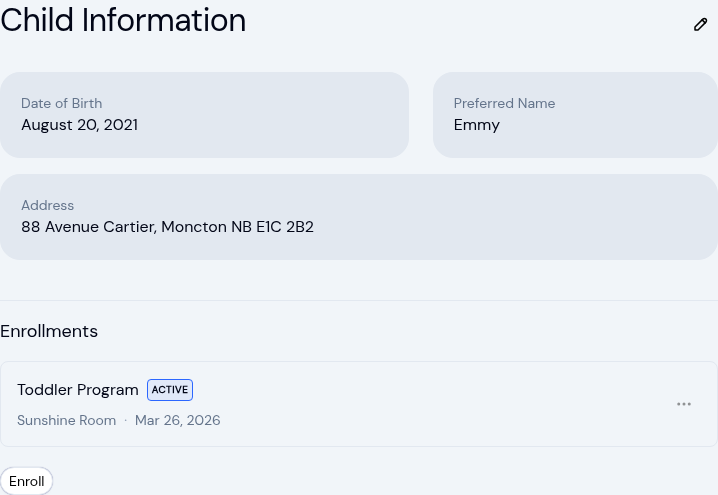
New: A Child's Address and Health Care Provider
The child record now holds the child's own address and their health care provider. Both show on the profile, in Health...
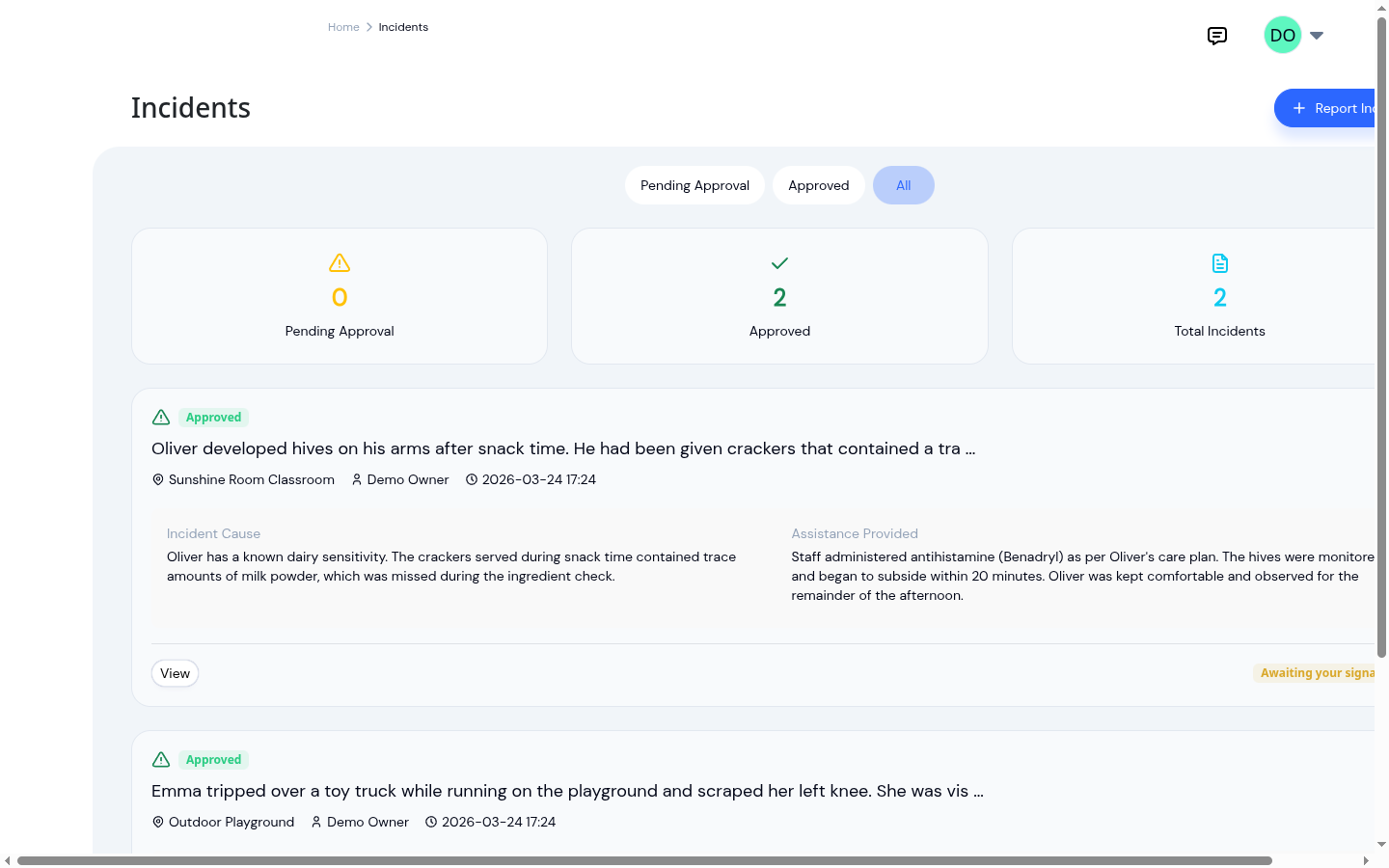
Sorting your incident log by type and severity
A scraped knee and a reportable reaction look identical in most logs. Sorting by type and severity makes a flat record...